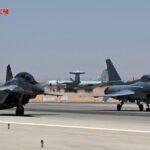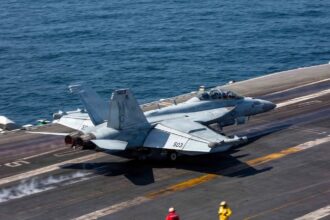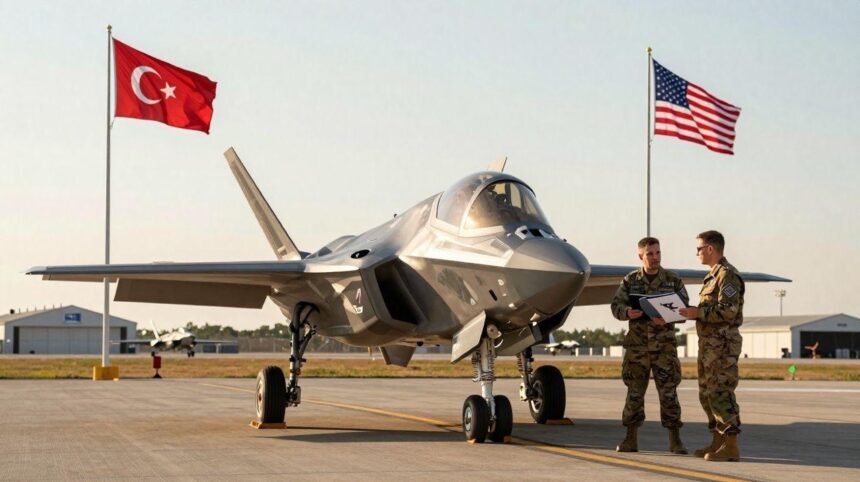
Talks over moving Turkey’s Russian-made S-400 air defence system to the United Arab Emirates have stalled, exposing the deeper problems behind Ankara’s attempt to rejoin the F-35, the advanced U.S. stealth fighter program.
Turkey was removed from the program in 2019 after buying the S-400, with Washington arguing the Russian radar technology could let Moscow learn the F-35’s secrets. Talks with the UAE gained momentum after President Donald Trump visited Turkey in July and signaled openness to lifting restrictions, but according to Semafor, they have not advanced since.
The barrier is legal as much as political. Under Section 1245 of the FY2020 National Defense Authorization Act, Congress requires certification that Turkey no longer possesses the S-400 before any transfer can proceed, a mandatory condition separate from CAATSA sanctions. Any resale would also depend on Russia’s consent as the system’s original supplier under its export agreements, though such consent has been bypassed before: Poland and Slovakia transferred Soviet-era MiG-29 jets to Ukraine in 2023 without Moscow’s approval, prompting Russia’s own arms-export agency to formally object, without preventing the transfers.
Israel has objected publicly. Prime Minister Benjamin Netanyahu told CNN in July that selling F-35s to Turkey would “destroy the power balance in the Middle East,” tying the objection to Washington’s obligation to preserve Israel’s Qualitative Military Edge.
With Congress, Israel and Moscow all holding separate points of leverage over the outcome, the decision no longer rests with Ankara, Washington or Abu Dhabi alone.