
Analysis
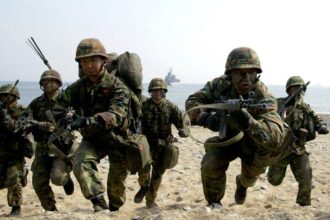
Can South Korea Defend Itself Without America?
President Lee Jae Myung used the start of this year's Ulchi Freedom Shield exercises to make an argument that would once have sounded uncomfortable in Seoul: South Korea needs to become better able to defend itself. His comments came after U.S. President Donald Trump ordered the Pentagon to substantially reduce joint military exercises with South Korea, reviving questions over the future of a military alliance that has underpinned South Korean security for more than 70 years. Lee has not called for the alliance to end. He has instead described it as essential while backing stronger independent defense capabilities, a faster transfer of wartime operational control (OPCON) to Seoul, and accelerated development of nuclear-powered submarines. His message reflects a broader reality emerging across the Indo-Pacific: Washington increasingly expects allies to shoulder more responsibility for their own conventional defense while preserving America's role as the ultimate strategic guarantor. The resulting question is…
Oil Still Flows Around Blocked Hormuz Strait
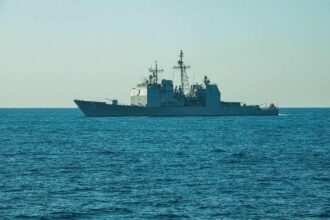
Gulf states have stopped treating dark shipping as an emergency improvisation and started running it as standard business. What began as a workaround has hardened into a parallel export architecture — one that keeps oil moving through a war zone Iran insists is closed, at a price the region's state oil companies have simply built into their operating costs. State Companies Make the Shadow Playbook Official The tactics themselves aren't new — disabling transponders and transferring cargo ship-to-ship have been Iranian and Russian sanctions-evasion staples for years. What's changed is who's using them. Rigzone reported that Adnoc is now offering to shuttle Iraqi crude through Hormuz on its own "dark-transit playbook," using vessels it partly owns through logistics arm Navig8 rather than leased tankers exposed to outside owners' risk tolerance. Egypt Oil & Gas reported that Adnoc's own logistics unit has directly executed AIS-dark exports of Upper Zakum and Das…
Europe Wants a Seat at Ukraine Talks
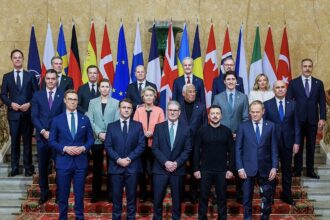
France, Germany and Britain don't trust Washington to negotiate on their behalf, so they're quietly building their own seat at the table. Wary that President Trump could strike a deal with Moscow that leaves Europe out entirely, the three powers are working to lock in a formal European role in any future Russia-Ukraine settlement, according to The New York Times, which cited five European officials. France and Germany are leading the push; Britain, under a new prime minister, is more cautious about testing ties with Washington. The stakes go beyond diplomacy alone: Europe is already funding Ukraine's war effort and is expected to provide security guarantees after any settlement, meaning it has as much riding on the outcome as Kyiv or Moscow. Europe's Real Leverage Europe's push isn't only anxiety. It rests on hard financial leverage. The EU controls roughly €210 billion ($246 billion) of Russia's frozen sovereign assets, the…
Putin’s Next Target After Ukraine Is Moldova
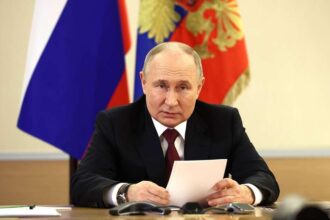
Vladimir Putin does not think the war ends at Ukraine's border. At a secret December briefing, the Russian president told his security services and military commanders that Moscow's goal for 2026 is "the collapse of NATO and the E.U. from within," according to a New York Times investigation published Aug. 14, based on interviews with Moldovan and Western intelligence officials. Moldova, the Times reports, is the next target after Ukraine. That directive is a working method, visible in three places: a decentralized influence machine built to capture Moldova without firing a shot, a diplomatic strategy designed to look open to peace while foreclosing it, and an intensifying bombardment of Ukrainian cities meant to exhaust both Kyiv and its Western backers. The Moldova Playbook: State Capture Without an Invasion What The Times describes in Moldova is not simple bribery. It is a structural attempt at state capture, built to stay…
Taliban Takeover Leaves Afghanistan A Failed State
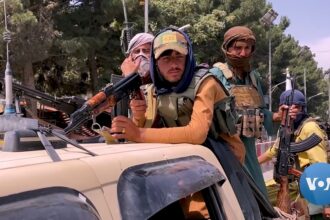
Five years after Taliban fighters walked into Kabul unopposed, Afghanistan stands as a rare case study in the gap between holding a country and governing it with the world's consent. The movement did what many governments before it could not: it won, decisively and completely, and then discovered that winning was the easier half of the task. The Taliban removed the internationally backed Afghan government in August 2021, rebuilt state institutions under its own authority, and reduced the scale of nationwide warfare. Five years on, it controls the entire country. What it does not control is how the rest of the world treats that fact, or whether its own economy and borders can hold. A Legitimacy Nobody Grants The central reason for that gap is the Taliban's human rights record, above all its treatment of women and girls. Since 2021, the movement has imposed some of the most restrictive gender…
Cuba Is No Longer a Cold War Relic
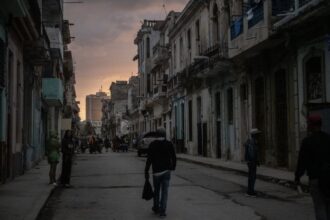
Fidel Castro would have turned 100 on Thursday, and Cuba marked the anniversary with ceremonies in Havana attended by his 95-year-old brother Raúl, who made a rare public appearance. The commemoration unfolded amid one of the most severe economic and political crises in Cuba's modern history, with prolonged blackouts, shortages of food and medicine, and continued mass emigration. Reuters reported that some power cuts now exceed 20 hours a day. The contrast captures a deeper change. Cuba's government remains intact, but the revolutionary model Fidel built is steadily losing both its economic foundations and its hold over younger generations. At the same time, U.S. pressure and renewed Russian and Chinese engagement are making the island strategically relevant again. The Mechanism Behind the Collapse Cuba's problems cannot be reduced to U.S. sanctions. The military-controlled conglomerate Grupo de Administración Empresarial S.A. (GAESA) dominates important hard-currency sectors including tourism, retail and logistics, while…
