
Analysis
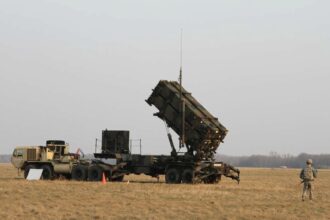
Iran and Russia Exploit Same Air Defense Gap
Two wars, fought thousands of kilometers apart, are converging on the same insight: the United States only has so many Patriot interceptors, and its adversaries have started counting them. From the deserts of Jordan to the skies over Kyiv, Iran and Russia are running versions of the same campaign – pairing cheap, disposable drones with expensive, hard-to-stop ballistic missiles, forcing American and Ukrainian defenders to burn through their most valuable interceptors just to stay even. Neither country is hiding the logic. Both have studied the other's battlefield, and both now know that a stockpile built for a Cold War threat has a bottom, and that bottom is closer than Washington would like to admit. Iran's Layered Assault in the Gulf Iranian forces have spent recent months refining a strike formula built to drain American air defenses rather than simply overwhelm them outright, according to reporting carried by Yahoo News, citing…
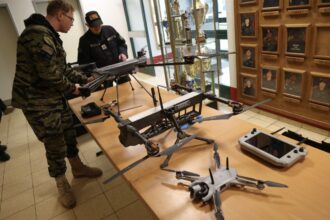
Ukraine Is Rewriting How the U.S. Army Thinks About War
The outcome of a recent U.S. Army training exercise in Germany attracted attention for an unusual reason. According to a Wall Street Journal investigation, Ukrainian drone operators consistently outperformed their American counterparts during the Combined Resolve exercise at Hohenfels in April and May. About 3,500 U.S. personnel, primarily from the 3rd Armored Brigade Combat Team, 1st Cavalry Division, faced an opposing force reinforced by Ukrainian operators from the 412th Regiment of the Unmanned Systems Forces, known as Nemesis. Officials briefed on the exercise told the Journal that the Ukrainian teams effectively eliminated a U.S. armored brigade before American forces adapted. For decades, military knowledge flowed primarily in one direction. The United States developed doctrine, technology and operational concepts that allies absorbed through NATO training, procurement and joint exercises, while Ukraine was largely viewed as a recipient of Western expertise. Today, that relationship is becoming more reciprocal. During the second half…

Germany Arms Its Spy Services
A drone loaded with explosives came down near a Ukrainian Antonov An-124 cargo plane at Leipzig/Halle Airport this month. It fired nothing and killed no one. But for a country whose intelligence services were built, deliberately, to watch and warn rather than to strike back, it exposed exactly the gap Berlin is now racing to close. Germany Faces New Threats The German cabinet approved draft legislation on August 12 giving the foreign intelligence service, the BND, and the domestic security agency, the BfV, wider powers to collect data, use artificial intelligence, access communications and disrupt hostile operations. Reuters reported that Interior Minister Alexander Dobrindt said the measures would "revolutionise Germany's security architecture" and turn the agencies into "genuine secret services." DW reported that Dobrindt called the Leipzig/Halle drone incident "a professional hybrid threat scenario" and "a new level of danger." The phrase "genuine secret services" matters in a country where…

Serbia Walks Line Between Kyiv and Moscow
Volodymyr Zelenskyy's first official visit to Serbia, on August 7 and 8, opened a diplomatic breach in one of Russia's oldest European friendships. Serbia did not join Western sanctions against Moscow, and President Aleksandar Vučić made no promise of military cooperation with Kyiv. He repeated the line he has used for years, that Belgrade pursues a "sovereign and independent" policy between Russia, Ukraine and the European Union. None of that changed. What changed was the picture: Ukraine's wartime president received with full ceremony in the capital Moscow has long treated as its most reliable Balkan partner. For Kyiv, the trip was a diplomatic gain. For Moscow, it was a quiet loss of face. Serbia is learning to hedge, in the same season that Kazakhstan and Montenegro are hedging too, and Russia is discovering that a war it wants to define on its own terms is no longer being read that…
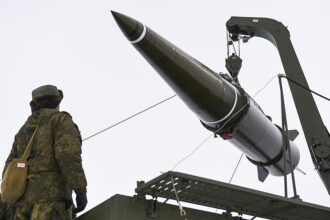
Russia Shifts Missile Production to Beat Ukraine’s Defenses
Almost every night this summer, Kyiv's residents have learned to listen for the difference between a drone's engine and the silence before a ballistic missile hits. That silence may now be shaping Vladimir Putin's calculus on whether to negotiate at all. Retooling the Missile Arsenal Russia has quietly abandoned two missile programs it once relied on. Production of the Kinzhal and Kh-32 has been halted since April, according to Ukrainian military intelligence deputy chief Vadym Skibitsky, after repeated combat failures to fix their accuracy. Kinzhal's deviation from target reportedly runs 30 meters or more, against a required 5–7 meters. Rather than keep chasing that fix, Moscow redirected the freed resources toward missile types it already knows can penetrate Ukraine's depleted Patriot interceptor stock: Iskander-M ballistic missiles and missiles launched from S-400 systems on ballistic trajectories, Kyiv Post reported. The payoff shows in the numbers. By August 3, seven months into…

Mecca Pact Hedges Against Unreliable U.S. Backing
Three leaders converged on Islam's holiest city on August 7 to sign what could become the most consequential Middle Eastern defense pact in a generation. Pakistani Prime Minister Shehbaz Sharif arrived a day early to perform the Umrah pilgrimage in Mecca. Turkish President Recep Tayyip Erdogan flew in to join him and Saudi Crown Prince Mohammed bin Salman for the signing of the Mecca Joint Defense Agreement, a pact born from this year's Iran war and renewed fighting by Saudi Arabia and Yemen's government against Houthi forces. The agreement's core clause is blunt: an armed attack on any one of the three states will be treated as an attack on all three. That mechanism is not unprecedented. Riyadh already led the Islamic Military Counter Terrorism Coalition, a Saudi-led coalition of Muslim-majority states formed in 2015, and Saudi Arabia and Pakistan signed a bilateral mutual-defense pact in 2025 that CSIS described…
