
Iran

Iran Hits Jordan, Bahrain, Kuwait in One Day
Iran's Islamic Revolutionary Guard Corps carried out strikes against US military facilities in Jordan, Bahrain, and Kuwait within hours of each other on July 14, part of an operation the IRGC designated "Operation Nasr 2," according to The Tribune.The IRGC said it destroyed weapons and equipment storage sheds and struck ship and aircraft parts at Bahrain's Sheikh Isa Air Base, while hitting the ramp used to deploy MQ-9 drones at Kuwait's Ali Al Salem Air Base, destroying or damaging several aircraft. Jordan's armed forces said they intercepted and shot down four missiles that entered the kingdom's airspace from Iranian territory, with no casualties reported. The IRGC also called on Jordanians to press for the removal of US bases from the kingdom, describing the facilities as tied to what it called "child-killing" American forces, a reference to the February 28 strike on a primary school in Minab that killed over 100…
U.S. and Iran Trade Strikes as Truce Unravels
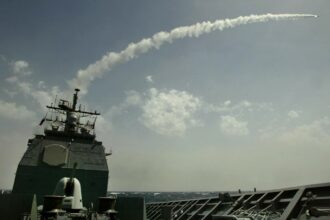
The United States and Iran exchanged another round of strikes on Wednesday, the fourth consecutive night of fighting since the ceasefire framework agreed last month effectively collapsed.U.S. forces struck Iranian military targets near the Strait of Hormuz and along Iran's southern coast as Washington expanded maritime operations aimed at restricting Iranian shipping, according to Reuters. President Donald Trump said the campaign would continue "until I say it's enough."The legal basis for the renewed operation rests on a notification Trump sent Congress on July 10, informing lawmakers that hostilities had resumed on July 7, according to Roll Call. Under the War Powers Resolution, the notification begins a new 60-day period during which U.S. forces can continue military operations without a formal declaration of war unless Congress acts sooner. The administration had previously argued that the earlier 60-day period triggered by February's strikes ended when hostilities ceased under the June ceasefire framework.Military…
Iran War’s True Cost May Near $100 Billion
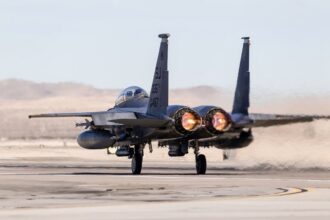
The Pentagon's public estimate of the Iran war's cost captures only part of the financial picture, according to internal Defense Department assessments reported by U.S. media. While officials have publicly put the cost of the campaign at about $30 billion, internal estimates now reportedly place the overall bill between $80 billion and $100 billion.The discrepancy first emerged in April, when CBS News reported that officials familiar with internal Defense Department assessments believed the war had already cost closer to $50 billion, roughly double the $25 billion figure a Pentagon official had given lawmakers days earlier.The gap has continued to widen. NBC News reported that the latest internal estimate now stands between $80 billion and $100 billion, while the Pentagon's public figure remains about $30 billion. Independent tracking by the Iran War Cost Tracker, which follows the Pentagon's operational accounting methodology, estimated total spending at $113.3 billion by the June 16…

US Restarts War Powers Clock on Iran
July 13 showed how far the terms of the US-Iran war have moved since fighting began in February, on three fronts at once: the legal basis for continuing it, the rhetoric justifying it, and the technology used to wage it.The Trump administration formally notified Congress on July 10 that "military action" against Iran had resumed on July 7, according to a letter obtained by CBS News. The notification opens a new 60-day window before congressional authorization is legally required, per Roll Call. Democrats dispute that the clock can be restarted this way, arguing the war has continued uninterrupted since February 28, according to Roll Call.That same day, the administration reversed itself on tolls. Trump announced a 20 percent charge on cargo transiting the Strait of Hormuz, months after Secretary of State Marco Rubio said he did not care whether such a charge was "called a fee or a toll or…
Britain Bans Iran’s IRGC Under New Law
Britain has classified Iran's Islamic Revolutionary Guard Corps a state threat organization, commonly described as proscription, making it a criminal offense to belong to the group, attend its meetings, or carry its logo in public.The designation uses the National Security (State Threats) Act 2026, which received Royal Assent on July 8, according to GOV.UK. The law exists because standard terrorism proscription does not fit a foreign state's military organ. Independent reviewer Jonathan Hall KC found in a May 2025 report that "terrorism proscription charges would not be appropriate" for bodies like the IRGC and recommended a parallel power instead, according to the UK Parliament Hansard record. Supporting or benefiting from a designated body carries up to 14 years in prison, per the House of Commons Library.Prime Minister Keir Starmer said the powers would make it easier to prosecute anyone in Britain carrying out the IRGC's work, according to Al-Monitor. The…

Iran Ceasefire Unravels as Grid Losses Mount
The US-Iran ceasefire that took hold in June is collapsing, with Iranian strikes on Gulf states and mounting damage to Iran's power grid marking the most serious escalation since the truce began.The US and Iran signed the Islamabad Memorandum of Understanding on June 17, establishing a 60-day framework to negotiate a permanent end to the war, according to ABC News. President Trump declared the ceasefire "over" on July 8 after a second consecutive night of US strikes, per ABC News. Iran retaliated by striking US-aligned states across the Gulf, including Bahrain, Kuwait, Oman, and Jordan, with explosions reported in Bandar Abbas, Sirik, and on Qeshm Island into the early hours of July 13, according to Al Jazeera. ABC News described the pattern as one in which Iran strikes shipping, the US retaliates, and Iran then strikes US allies in the Gulf.US Central Command says its strikes have targeted military sites,…
