
Iran
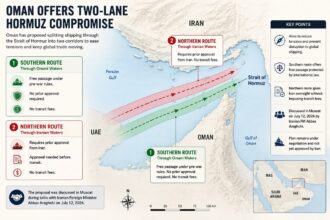
Oman Proposes a Legal Route to Reopen Hormuz
Oman has drafted a plan to split shipping through the Strait of Hormuz into two corridors, an attempt to break the deadlock over one of the world's most important maritime chokepoints. Under the proposal, reported by CNN, vessels taking a southern route through Omani waters would sail freely under pre-war rules, while those using a northern route through Iranian waters would need Tehran's approval but pay no fees.The plan may favour the West more than it first appears. Because the strait's main shipping lanes run largely through Omani waters, Muscat can open the southern route on its own authority. Channelling commercial fleets there gives shipowners a lane protected by international law — and a way around the transit fees of $1–2 million per vessel that Iran's new Persian Gulf Strait Authority has tried to impose, without a direct naval fight.Iranian Foreign Minister Abbas Araghchi brought the plan to Muscat on…
Iran’s Missiles Turn the Gulf Against It
The United States has struck more than 300 Iranian military targets over three nights — radar, launchers, and missile and drone stores — according to CENTCOM, after Iran hit a commercial vessel near the Strait of Hormuz. Iran's strikes have now reached across the Gulf, and its neighbours are turning on it.Kuwait reported a "hostile, criminal attack" on three northern border posts and a drone strike on an offshore oil platform that hurt one worker, Arab News reported. Qatar said shrapnel from intercepted Iranian fire wounded three people, including a child. Jordan and the UAE reported no casualties.The Gulf Cooperation Council (GCC) condemned the attacks on its members and Jordan, with Secretary-General Jasem Albudaiwi calling them a grave violation of international law, Asharq Al-Awsat reported. Qatar and Oman signing on mattered most: both have long been Tehran's quiet channels to the West. Egypt joined too, its foreign minister pressing Qatar…
U.S. and Iran Trade Strikes as Hormuz Ceasefire Formally Collapses
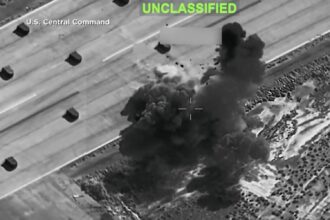
U.S. and Iranian forces struck each other for a third time in a week, an exchange that effectively confirms the collapse of the ceasefire framework established by the June 17 Memorandum of Understanding (MOU), rather than another round in the contained retaliation cycle that had defined the conflict since April. President Donald Trump declared the ceasefire "over" on July 8, and the strikes that followed have expanded in both scale and geographic reach beyond the pattern of previous flare-ups.U.S. Central Command (CENTCOM) said American forces struck approximately 140 military targets across Iran on Saturday, including missile and drone sites, naval capabilities, ammunition depots, communications networks and coastal surveillance positions. According to CENTCOM, the latest operation brings the total number of reported U.S. strike targets this week to more than 300 and is intended to degrade Iran's ability to attack civilian mariners and commercial vessels transiting the Strait of Hormuz. That…

Trump Threatens 1,000 Missiles Over Alleged Iran Plot
US President Donald Trump threatened large-scale missile strikes on Iran on July 11, warning against acting on an alleged plot to assassinate him, a threat with added weight after Iran's Khamenei was killed in the war's opening strike. On Truth Social, he wrote that "1,000 Missiles are Locked and Loaded," with "thousands more" to follow if Tehran acted on the threat, adding that the US military had been ready to strike for a year, with the option to extend.The warning followed a Wall Street Journal report, cited by the Times of Israel, that Israel had shared intelligence with Washington on an alleged new Iranian plan to kill Trump. Iran has not publicly responded to that specific allegation.It lands amid a rapid unraveling of the Islamabad Memorandum, the June 17 deal that lifted the US naval blockade and waived Iranian oil sanctions in exchange for a 60-day toll-free reopening of the…

Qatari Envoys Visit Iran to Revive U.S. Talks
Qatari negotiators have traveled to Iran in coordination with the United States, according to Axios. Qatar is not acting alone. According to the same report, officials from Qatar, Pakistan, Turkey, Egypt and Saudi Arabia have held a wave of calls with both Washington and Tehran, reflecting growing regional concern that the crisis has evolved beyond a bilateral U.S.-Iran confrontation into a Gulf-wide security emergency.The diplomatic push follows a rapid escalation. Iran struck three commercial vessels in the Strait of Hormuz on July 7. The United States responded with retaliatory strikes that expanded from roughly 80 targets on the first night to about 90 on the second, hitting air-defense systems, coastal surveillance sites and naval assets across southern and eastern Iran. Iran's Health Ministry said the strikes killed 14 people and wounded 78. Tehran then retaliated with missile and drone attacks against U.S. military facilities in Bahrain, Kuwait, Qatar and Jordan…
Hormuz Stays Open as Security Risks Disrupt Global Shipping
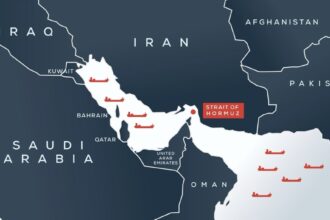
Iran has not issued a formal decree closing the Strait of Hormuz, but the distinction between "open" and "closed" is becoming increasingly misleading. Tracking data compiled by the Center for Strategic and International Studies (CSIS) indicate that commercial traffic through the strait has yet to recover to pre-conflict levels, while some vessels are operating "dark" with their Automatic Identification System (AIS) transponders switched off to reduce their visibility. At the same time, roughly 6,000 seafarers remain stranded in the Gulf, according to the International Maritime Organization, aboard ships still unable to transit safely. Together, those indicators suggest the strait is functioning less like a normal commercial shipping lane and more like a high-risk military transit corridor, regardless of whether Tehran has formally declared a closure.The immediate trigger is the collapse of a peace framework signed barely three weeks ago. On June 17, the United States and Iran signed the Islamabad…
