
Russia’s Long-Range Strike Campaign Is Becoming a War of Industrial Attrition
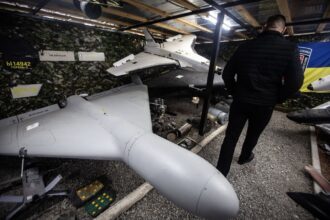
More than four years into Russia's full-scale invasion, the struggle for control of Ukraine's skies has become one of the defining contests of the war. Moscow is no longer seeking decisive effects from individual missile barrages. Instead, it is using sustained waves of drones and missiles to wear down Ukraine's air defenses, exhaust Western interceptor production and force Kyiv into a prolonged war of industrial attrition.The campaign's scale illustrates that shift. Russia launched a record 8,150 long-range drones against Ukraine in May, according to an AFP analysis of Ukrainian Air Force data. That represented a 24 percent increase from April and reflected Moscow's growing ability to sustain high-tempo attacks over consecutive months. Ukrainian authorities reported intercepting 7,476 of those drones – 91.7 percent of the total – but the headline figure conceals an increasingly important reality: Russia is no longer trying simply to penetrate Ukrainian air defenses. It is trying…
Ukraine Claims New Sea of Azov Strikes as Russia Suspends Canal Traffic
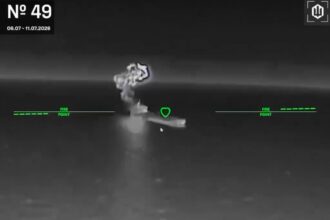
Ukraine's Unmanned Systems Forces (USF) said they struck at least 28 more Russian-linked vessels in the Sea of Azov overnight, bringing the total number targeted over the past six days to 76, according to USF commander Robert "Magyar" Brovdi. The figures have not been independently verified.Reuters reported that Russia's border service has stopped accepting new transit applications through the Azov-Don Canal following the recent attacks. Rostov region Governor Yury Slyusar said four vessels, including a tanker, were damaged near Taganrog and one sailor was killed. Reuters could not independently verify the full scale of Ukraine's reported overnight operation.The USF has not yet released a breakdown of the vessel types reportedly struck on Saturday, saying additional reconnaissance is underway.Maritime security consultancy Ambrey said video from previous attacks showed Ukrainian drones consistently targeting ships' bridges and accommodation blocks rather than their hulls—a tactic it said mirrors Russian attacks on merchant shipping and…

Trump Threatens 1,000 Missiles Over Alleged Iran Plot
US President Donald Trump threatened large-scale missile strikes on Iran on July 11, warning against acting on an alleged plot to assassinate him, a threat with added weight after Iran's Khamenei was killed in the war's opening strike. On Truth Social, he wrote that "1,000 Missiles are Locked and Loaded," with "thousands more" to follow if Tehran acted on the threat, adding that the US military had been ready to strike for a year, with the option to extend.The warning followed a Wall Street Journal report, cited by the Times of Israel, that Israel had shared intelligence with Washington on an alleged new Iranian plan to kill Trump. Iran has not publicly responded to that specific allegation.It lands amid a rapid unraveling of the Islamabad Memorandum, the June 17 deal that lifted the US naval blockade and waived Iranian oil sanctions in exchange for a 60-day toll-free reopening of the…
How Ukraine’s Drones Are Draining Russia’s Fuel Tanks
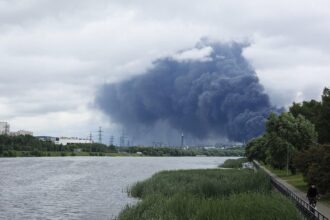
Ukraine's long-range strike campaign has pushed Russia into its most widespread fuel crisis of the war, disabling as much as 40% of the country's refining capacity and splitting Russia into rationing zones and stockpiling zones. The pressure now extends beyond refineries to the tankers supplying occupied Crimea, isolating the peninsula's Russian garrison even as Moscow answers with a deliberate campaign against Ukrainian civilian fuel stations and cities.The crisis has been building since 2025, when Ukraine expanded a campaign of drone and missile strikes against Russian oil refineries, terminals and pipelines deep inside Russian territory. Estimates of the damage diverge sharply, and the gap is not just measurement noise. Ukraine's General Staff put disabled capacity at 42.74% as of early July, while the International Energy Agency cited "more than 20%." According to UNN, citing the General Staff, the higher Ukrainian figure reflects a deliberate shift in targeting: strikes now concentrate on…

Qatari Envoys Visit Iran to Revive U.S. Talks
Qatari negotiators have traveled to Iran in coordination with the United States, according to Axios. Qatar is not acting alone. According to the same report, officials from Qatar, Pakistan, Turkey, Egypt and Saudi Arabia have held a wave of calls with both Washington and Tehran, reflecting growing regional concern that the crisis has evolved beyond a bilateral U.S.-Iran confrontation into a Gulf-wide security emergency.The diplomatic push follows a rapid escalation. Iran struck three commercial vessels in the Strait of Hormuz on July 7. The United States responded with retaliatory strikes that expanded from roughly 80 targets on the first night to about 90 on the second, hitting air-defense systems, coastal surveillance sites and naval assets across southern and eastern Iran. Iran's Health Ministry said the strikes killed 14 people and wounded 78. Tehran then retaliated with missile and drone attacks against U.S. military facilities in Bahrain, Kuwait, Qatar and Jordan…
Hormuz Stays Open as Security Risks Disrupt Global Shipping
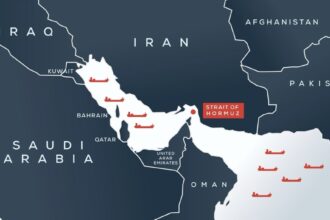
Iran has not issued a formal decree closing the Strait of Hormuz, but the distinction between "open" and "closed" is becoming increasingly misleading. Tracking data compiled by the Center for Strategic and International Studies (CSIS) indicate that commercial traffic through the strait has yet to recover to pre-conflict levels, while some vessels are operating "dark" with their Automatic Identification System (AIS) transponders switched off to reduce their visibility. At the same time, roughly 6,000 seafarers remain stranded in the Gulf, according to the International Maritime Organization, aboard ships still unable to transit safely. Together, those indicators suggest the strait is functioning less like a normal commercial shipping lane and more like a high-risk military transit corridor, regardless of whether Tehran has formally declared a closure.The immediate trigger is the collapse of a peace framework signed barely three weeks ago. On June 17, the United States and Iran signed the Islamabad…
