
Situational Report
Congo Cobalt Likely Carried Uranium Into China
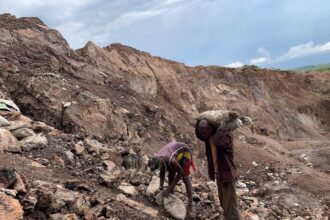
Between 2,000 and 5,000 metric tonnes of natural uranium may have left the Democratic Republic of Congo inside cobalt-hydroxide exports between 2000 and 2024, according to a peer-reviewed study published in Nature Communications by Princeton and University of Wisconsin-Madison researchers. That quantity could fuel a light-water reactor for 10 to 25 years, or, if enriched, yield fissile material for roughly 600 to 1,500 nuclear weapons, co-author Sébastien Philippe said. The study does not claim deliberate smuggling or weapons diversion.Researchers estimate that around 65% of the affected shipments, and therefore much of the embedded uranium, went to Chinese-owned companies. China is home to about 95% of the world's cobalt refineries. Uranium must be removed when cobalt hydroxide is refined into metal, creating a potentially valuable byproduct that researchers say has largely gone undeclared to the International Atomic Energy Agency (IAEA) and remained outside international safeguards.Less than 10% was declared, and researchers…
SAF Road Gains Do Not Decide El Obeid
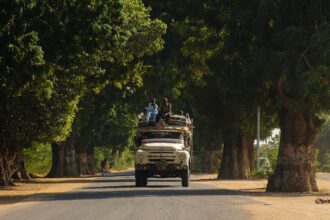
During the final week of July, the Sudanese Armed Forces (SAF) and allied formations captured a chain of towns along the road between Omdurman and El Obeid, dislodging the Rapid Support Forces (RSF) from several positions east of the North Kordofan capital.The advance restored a more direct supply connection between SAF’s forces in the capital region and its Fifth Infantry Division in El Obeid. It also disrupted a corridor the RSF had used to move personnel and supplies.But the available evidence does not show that the entire road had become safe for regular civilian, commercial or humanitarian traffic by the end of the week. Nor does control of the eastern approach end the broader pressure on El Obeid. The result is an important operational gain for SAF, but not yet a decisive victory in North Kordofan.How the front changedOn July 25, SAF units and allied forces reported capturing Bara, Um…
Ukraine Still Faces Years Waiting for Patriot Missiles
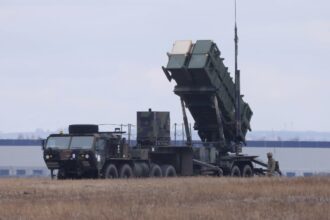
President Donald Trump said Friday that the United States has not agreed to allow Ukraine to manufacture Patriot missile interceptors, reopening questions over a production license he publicly promised just three weeks earlier. Even if Washington ultimately approves the plan, however, industrial bottlenecks mean Ukrainian-built interceptors would remain years away from reaching the battlefield.Speaking during a Cabinet meeting at Camp David, Trump was asked about reports that Ukraine would be permitted to produce Patriot missiles under license. "We haven't agreed to that," he replied, adding that discussions were continuing but that Washington needed to be cautious about transferring advanced military technology.The remarks contrast with Trump's announcement at the NATO summit in Ankara on July 8, when he told President Volodymyr Zelensky that the United States would license Ukraine to manufacture Patriot interceptors. "We are gonna give a license to you to make Patriots... Make them yourself," Trump said at the…
U.S. Locks In Massive Patriot Production Expansion
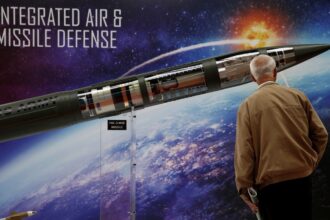
The U.S. government has awarded Lockheed Martin a seven-year contract modification worth up to $53.86 billion for Patriot PAC-3 MSE interceptors, bringing the total multiyear program to $58.62 billion after an initial $4.7 billion award in April.The money buys time, not missiles. Lockheed delivered 620 PAC-3 MSE interceptors in 2025 and plans to raise annual production capacity from roughly 600 to 2,000 by the end of 2030. At Camden, Arkansas, where final interceptor assembly takes place, the company plans to expand its workforce from about 1,200 to 1,850.Demand is already competing for that output. The U.S. must rebuild its own stocks while continuing deliveries to Ukraine and meeting allied orders. The Navy is adding another requirement, requesting 405 PAC-3 MSE interceptors for fiscal 2027 as it integrates the missile into Aegis-equipped warships.A July CSIS assessment estimates that U.S. Patriot inventories have fallen below 1,000 after heavy use in the Middle…

Saudi Arabia Is Being Pulled Back Into Yemen’s War
Saudi Arabia spent years trying to extract itself from the war in Yemen. That strategy is now under mounting pressure.Since mid-July, Yemen's Iran-aligned Houthis have resumed attacks on Saudi territory and shipping, declared a naval blockade against the kingdom and targeted oil infrastructure along the Red Sea coast. Forces aligned with Saudi Arabia have struck Houthi positions inside Yemen, while both sides have reportedly mobilized along front lines largely frozen since the 2022 truce. Reuters described Yemen last week as edging toward renewed war.The U.N.-brokered truce halted most major Saudi-Houthi fighting in 2022. Although it formally expired that October, large-scale cross-border warfare did not resume, and subsequent Saudi engagement with the Houthis focused on preventing another open conflict. The wider Iran war is now eroding that relative calm.The confrontation intensified on July 20, when the Houthis declared a maritime blockade against Saudi Arabia. Days later, the group claimed attacks on…

U.S. Boat Strikes Fail to Dent Cocaine Supply
Since September, U.S. forces have attacked at least 67 suspected drug-trafficking vessels and killed at least 221 people under Operation Southern Spear. Yet internal assessments by the Drug Enforcement Administration and Pentagon officials found that the campaign has not reduced the price, availability or purity of cocaine in the United States, according to The Washington Post, which reviewed the DEA assessment and reported details of a closed Pentagon briefing to senators.The findings contrast with President Donald Trump’s repeated claims that the strikes have cut maritime drug trafficking by 97% or 98%. Whatever effect the campaign has had on particular sea routes, it has not produced a corresponding reduction in the cocaine reaching the U.S. market, according to the government’s own indicators.Instead, traffickers have adapted. The DEA assessment found that criminal networks were moving away from go-fast boats vulnerable in international waters and shifting cargo onto larger vessels, closer to coastlines…
