During the final week of July, the Sudanese Armed Forces (SAF) and allied formations captured a chain of towns along the road between Omdurman and El Obeid, dislodging the Rapid Support Forces (RSF) from several positions east of the North Kordofan capital.
The advance restored a more direct supply connection between SAF’s forces in the capital region and its Fifth Infantry Division in El Obeid. It also disrupted a corridor the RSF had used to move personnel and supplies.
But the available evidence does not show that the entire road had become safe for regular civilian, commercial or humanitarian traffic by the end of the week. Nor does control of the eastern approach end the broader pressure on El Obeid. The result is an important operational gain for SAF, but not yet a decisive victory in North Kordofan.
How the front changed
On July 25, SAF units and allied forces reported capturing Bara, Um Sayala, Al-Baraka, Um Qurfa and Jabrat al-Sheikh after heavy fighting with the RSF, according to Sudan Tribune.
The operation involved the Darfur Joint Force, a coalition of former rebel movements aligned with SAF, and the Sudan Shield Forces led by Abu Agla Keikel. SAF’s reliance on such allies has expanded its available manpower and brought fighters with local knowledge into its campaigns.
However, the arrangement also leaves parts of the army’s battlefield presence dependent on formations with separate command structures and sometimes shifting loyalties. The Sudan Shield Forces, for example, moved from SAF to the RSF in August 2023 before returning to SAF in October 2024, according to ACLED and the Africa Center for Strategic Studies.
Bara, roughly 45 kilometres east of El Obeid, has changed hands repeatedly during the war. Its location makes it both a defensive position for El Obeid and a staging point for forces seeking to attack the city.
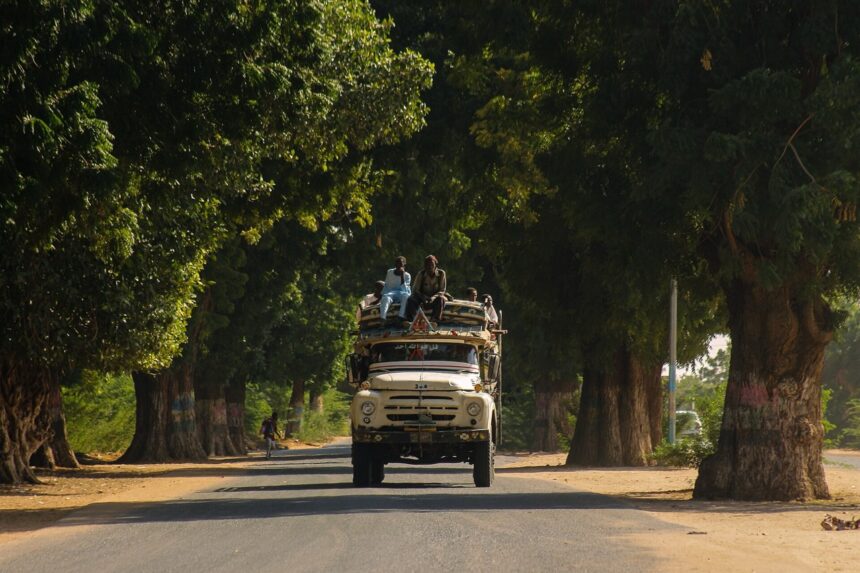
On July 26, troops advancing westwards from the Omdurman direction reportedly linked up at Jabrat al-Sheikh with forces advancing from El Obeid. SAF then announced full control of the Export Road.
Army commander Abdel Fattah al-Burhan visited Um Sayala and Jabrat al-Sheikh the following day, signalling confidence in the immediate battlefield result. On July 31, state media also reported that a group of RSF fighters had surrendered after leaving Bara. The size of that group was not independently confirmed, however. SAF claims concerning RSF casualties and destroyed or captured vehicles also remain difficult to verify.
Why the corridor matters
The road provides SAF with a shorter and more efficient route into North Kordofan than its previous connection through White Nile State. It should improve the army’s ability to move troops, fuel, ammunition and other supplies to El Obeid. It also removes RSF staging positions from the city’s eastern side and expands the defensive buffer between RSF-held areas and Omdurman.
An ACLED assessment published on July 27 described the captures as a major strategic shift at the regional level because they linked the El Obeid garrison with SAF-aligned forces farther east. The assessment nevertheless predicted that the RSF would attempt a counteroffensive.
A captured road and an open road are different things. On July 27, local sources told Radio Dabanga that fighting continued along parts of the route and civilian movement remained unsafe. They also disputed SAF’s account of control around Rahid al-Nuba. Those reports do not erase the army’s territorial gains. They do mean that SAF’s claim of complete control should not automatically be interpreted as evidence of a secure, functioning corridor.
For civilians, sustained access could eventually improve the movement of food, medicine and fuel. But conditions around El Obeid remained severe. In June, an El Obeid resident told AFP that families in a displacement camp were walking long distances to collect water that was often undrinkable.
Emergency Lawyers also accused parties to the conflict of carrying out aerial attacks against civilian vehicles, water infrastructure, a health centre and a school in North Kordofan between July 24 and 26. Its allegations, reported by Darfur24, were not independently verified and did not assign responsibility for every strike. The incidents underline why territorial control alone does not guarantee humanitarian access.
The RSF retains options
An RSF military source claimed on July 28 that its forces remained on El Obeid’s northern and western approaches through Jebel Eisa and El Hashaba and continued to control important water sources. The claim, reported by Radio Dabanga, has not been independently verified. It is nevertheless consistent with the broader evidence that the RSF withdrew from important eastern positions without abandoning the wider El Obeid campaign.
Before SAF’s advance, the United Nations had reported substantial RSF reinforcements around the city and warned of preparations for a possible ground offensive. The late-July setbacks weakened that immediate threat but did not remove RSF forces from North and West Kordofan or eliminate their strategic depth in Darfur.
Drones remain a central RSF tool. Such weapons allow the RSF to threaten logistics, infrastructure and vehicle movements without holding every town along the corridor.
What comes next
SAF’s immediate task is to hold Bara, Jabrat al-Sheikh and the smaller settlements along the corridor. It must protect convoys, secure the surrounding countryside and prevent RSF forces from infiltrating between fixed positions.
Any attempt to advance towards Sodari, West Kordofan or Darfur would lengthen supply lines that the army has only recently re-established. It could also expose SAF and its allies to raids or concentrated counterattacks.
The RSF is likely to test the new line through drones, mobile attacks or an effort to retake one of the corridor’s main junctions. Bara’s repeated changes of control show why holding the town over time will matter more than capturing it during a single offensive.
Sustained civilian and commercial traffic, independently confirmed humanitarian access, fewer attacks on the road and SAF’s ability to withstand an RSF counteroffensive would indicate a durable change.
None of those conditions has yet been established. SAF has won an important battle for the Omdurman–El Obeid corridor. It has not settled the campaign for El Obeid – and certainly not Sudan’s war.