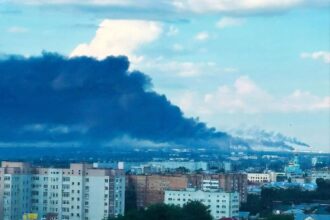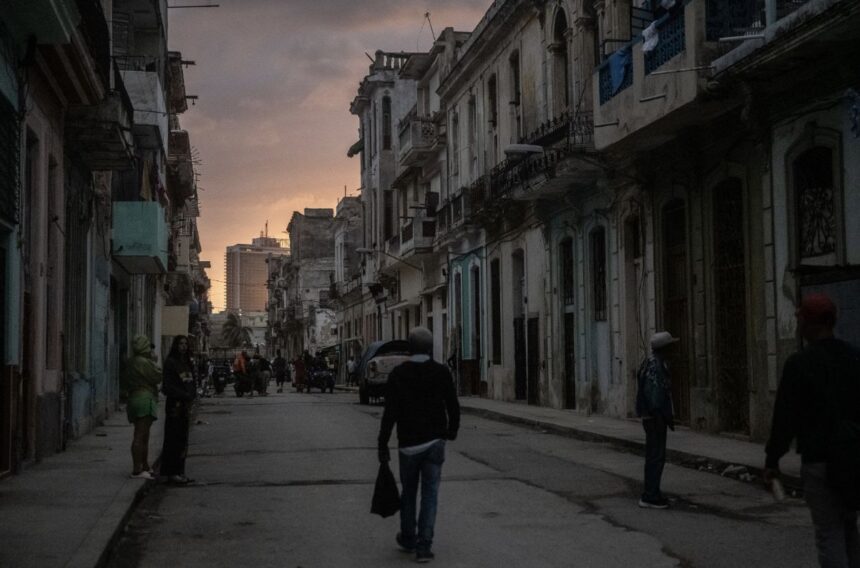
Fidel Castro would have turned 100 on Thursday, and Cuba marked the anniversary with ceremonies in Havana attended by his 95-year-old brother Raúl, who made a rare public appearance. The commemoration unfolded amid one of the most severe economic and political crises in Cuba’s modern history, with prolonged blackouts, shortages of food and medicine, and continued mass emigration. Reuters reported that some power cuts now exceed 20 hours a day.
The contrast captures a deeper change. Cuba’s government remains intact, but the revolutionary model Fidel built is steadily losing both its economic foundations and its hold over younger generations. At the same time, U.S. pressure and renewed Russian and Chinese engagement are making the island strategically relevant again.
The Mechanism Behind the Collapse
Cuba’s problems cannot be reduced to U.S. sanctions. The military-controlled conglomerate Grupo de Administración Empresarial S.A. (GAESA) dominates important hard-currency sectors including tourism, retail and logistics, while chronic underinvestment has left electricity generation and other basic infrastructure increasingly fragile. Havana has responded with limited market reforms, including greater space for private and foreign investment—steps that themselves illustrate how far today’s economic model has moved from Fidel Castro’s centralized system.
Energy has become the immediate pressure point. Cuba produces only about 40% of the fuel it consumes, while traditional supplies from Venezuela and Mexico have sharply declined. A sanctioned Russian tanker carrying about 730,000 barrels of crude reached Matanzas in March after Washington allowed the shipment on humanitarian grounds, providing temporary relief rather than a durable solution.
The deeper threat is demographic. Years of emigration have disproportionately removed younger workers and professionals who would be needed for any future recovery. The party and armed forces remain cohesive, but a system that once derived legitimacy from healthcare, education and national sovereignty is increasingly watching the generation raised under those institutions leave the country.
Washington Turns Up the Pressure
The Trump administration has intensified that strain. On January 29, Executive Order 14380 declared a national emergency over Cuba and established a mechanism for imposing tariffs on countries supplying oil to the island. After the Supreme Court rejected the administration’s broader use of emergency powers to impose such duties, the White House ended the tariff measures under EO 14380 on February 20, while explicitly leaving the underlying national emergency in place.
Washington then shifted toward targeted financial pressure. Executive Order 14404, signed May 1, authorized blocking sanctions against actors linked to repression, corruption and specified sectors of the Cuban economy. The State Department designated GAESA on May 7; by June, GAESA, the Interior Ministry and the Revolutionary Armed Forces Ministry were blocked under the order. OFAC says foreign companies and financial institutions can also face sanctions for dealings with designated entities.
That distinction matters. Unlike the traditional embargo, the newer measures seek to influence the behavior of foreign banks and companies by making dealings with sanctioned Cuban institutions potentially costly. Six decades of U.S. pressure have failed to topple Havana, and sanctions give the government a powerful explanation for domestic hardship. But today’s measures are landing on an economy with weaker external support, an aging population and far less capacity to absorb another shock.
A Contested Island Again
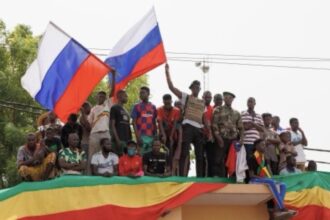
Russia has sought to partially fill the energy gap. Beyond the March oil delivery, Moscow and Havana have discussed expanding Russian participation in Cuban energy projects, while Russian naval vessels have made high-profile visits to the island. The relationship does not restore the Soviet-era subsidy system, but it gives Moscow another means of demonstrating strategic reach close to the United States.
China’s role is quieter but potentially more consequential. Satellite imagery analyzed by the Center for Strategic and International Studies has documented continued development at suspected China-linked intelligence facilities, including a large circular antenna array at Bejucal near Havana. CSIS assesses that such infrastructure could expand Cuba’s capacity to collect signals from the United States and the wider region. Havana has rejected claims that it hosts Chinese military facilities targeting Washington.
Cuba’s geography guarantees that these developments receive attention. The island sits near Florida, the entrance to the Gulf of Mexico and major Caribbean shipping routes. For Russia and China, that location offers political and intelligence value; for Washington, it turns Cuba’s internal deterioration into a security question rather than simply a dispute over sanctions.
A Slow-Burning Security Crisis
A sudden Cuban collapse remains far from inevitable. State institutions remain cohesive, and the government has survived severe shocks before. Private-sector reforms, limited foreign investment and occasional energy support may allow Havana to manage prolonged decline rather than face immediate political breakdown.
The more plausible danger is gradual erosion. Continued emigration can further hollow out the workforce, repeated energy crises can weaken basic services, and deteriorating living conditions can drive migration and create opportunities for trafficking and smuggling networks across the Caribbean.
Cuba is therefore unlikely to resemble another 1962 missile crisis. It is emerging instead as a chronic source of migration pressure, economic instability, intelligence competition and strategic rivalry close to the U.S. mainland. Fidel Castro’s state may endure, but the political and economic order that gave it resilience is disappearing – and what replaces it will matter far beyond Havana.