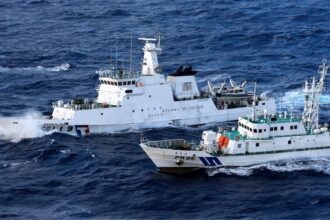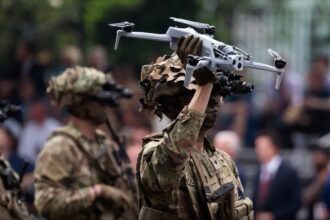
Taiwan’s government pushed back this week on the idea that its own military preparations are provocative, arguing Beijing’s near-constant show of force is the real source of tension. Lin Fei-fan, deputy secretary-general of Taiwan’s National Security Council, made the case at a Taipei security forum on July 7, according to Outlook India, citing wire reporting. He said Taiwan sends no aircraft or ships into Chinese airspace or waters, unlike China, which conducted 134 aerial incursions into Taiwan’s air defense zone in June alone, though Taiwan’s defense ministry also logged 12 incursion-free days that month, according to the American Enterprise Institute.
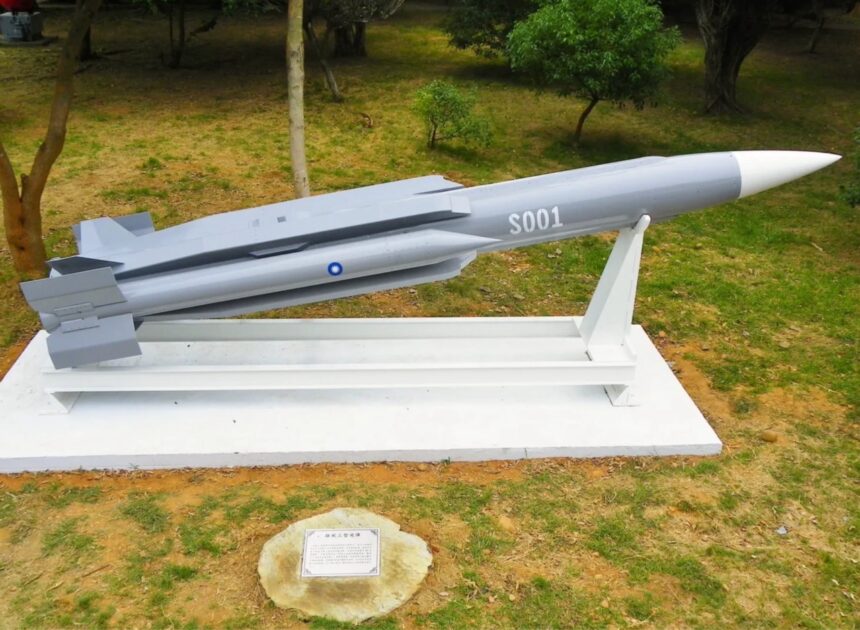
The statement lands alongside a harder shift. On July 1, Taiwan activated a new Littoral Combat Command, reorganizing its Hai Feng anti-ship missile units into four regional strike groups combining Taiwan’s Hsiung Feng missiles with US-supplied Harpoons, a setup analysts call a “littoral kill web” designed to overwhelm ship defenses with layered strikes, per IgMp. Taiwan’s anti-ship missile inventory is projected to top 1,400 by year’s end.
That buildup continues despite a funding setback. President Lai Ching-te’s government requested a NT$1.25 trillion special defense budget last November, but the opposition KMT-TPP legislative majority passed a reduced NT$780 billion version on May 8, cutting nearly 40% and excluding domestic programs, including the Strong Bow anti-ballistic missile shield, in favor of already-certified US arms purchases, per the Jamestown Foundation. Washington warned the cuts risked signaling a concession to Beijing; the KMT called it budget oversight, not disarmament.
Taiwan’s civilian resilience push, which Lin also helps run, is increasingly framed as a counter to psychological pressure as much as to missiles: its planning assumes “virtually all dimensions of Taiwanese life,” including the information space, will come under strain in any crisis, per the Prospect Foundation.
China’s Taiwan Affairs Office did not respond to Lin’s remarks. Beijing has previously dismissed similar statements in sharper terms, with spokesperson Chen Binhua calling Lai “a saboteur of peace, a troublemaker and a warmonger,” per Xinhua, cited by NPR.
Whether Beijing answers this round with fresh drills or whether Taipei’s legislature revisits the defunded defense items is what to watch next.