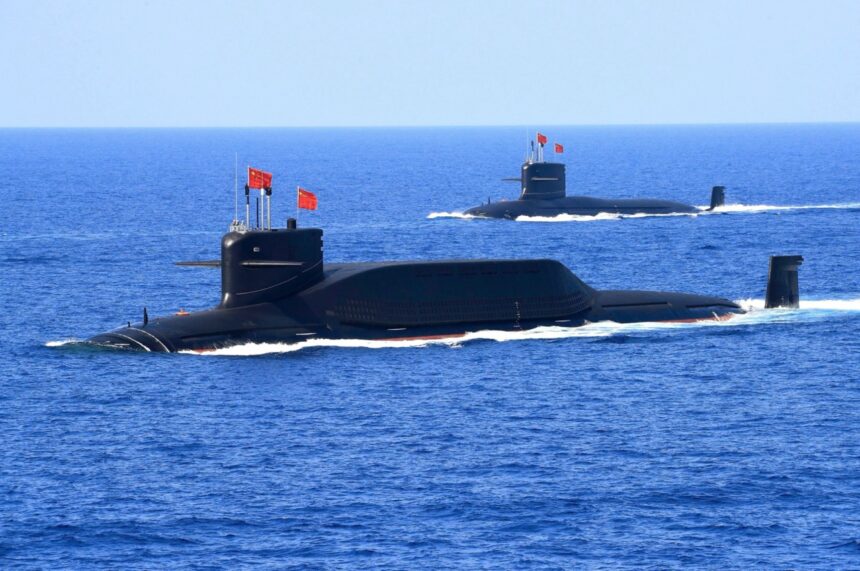
A Chinese navy nuclear-powered submarine test-fired a long-range ballistic missile carrying a dummy warhead into the Pacific on July 6, drawing concern from Japan, Australia, New Zealand and Taiwan as regional governments tracked wider Chinese and Russian naval activity across the Indo-Pacific, Reuters reported.
China’s Xinhua news agency said the missile was launched at 12:01 p.m. Beijing time and landed in designated international waters. Beijing called the launch routine annual training, said relevant countries had been notified in advance, and said the test was not directed at any country or target, according to Channel NewsAsia.
China did not identify the missile, submarine or launch site. Reuters reported that the missile was believed to be the JL-3, China’s most advanced submarine-launched missile, while the Wall Street Journal said analysts described the weapon as likely either a JL-2 or newer JL-3 and placed the flight at more than 7,000 kilometers toward the South Pacific.
New Zealand Foreign Minister Winston Peters said Wellington had only hours’ notice and called the launch concerning. Australian Foreign Minister Penny Wong said Canberra regarded the test as destabilising, especially given China’s rapid and opaque military build-up. Japan also raised concern before the launch, saying it had urged Beijing not to endanger Japanese security.
The test came the same day Australia and Fiji signed the Ocean of Peace Alliance, a mutual defence pact that commits each country to support the other if attacked. It also coincided with the start of annual China-Russia naval drills near Qingdao, which Moscow said were defensive and not aimed at any country.
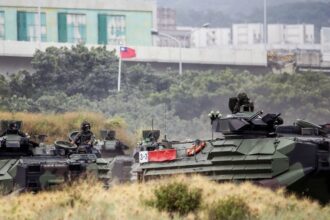
Taiwan separately said it was tracking an upward trend in Chinese naval activity, including more than 110 Chinese military and coast guard ships along the First Island Chain.
The launch does not indicate immediate conflict. But it adds sea-based nuclear signalling to a broader pattern of Chinese military expansion, China-Russia naval coordination and rising pressure around Taiwan, Japan and the South Pacific.