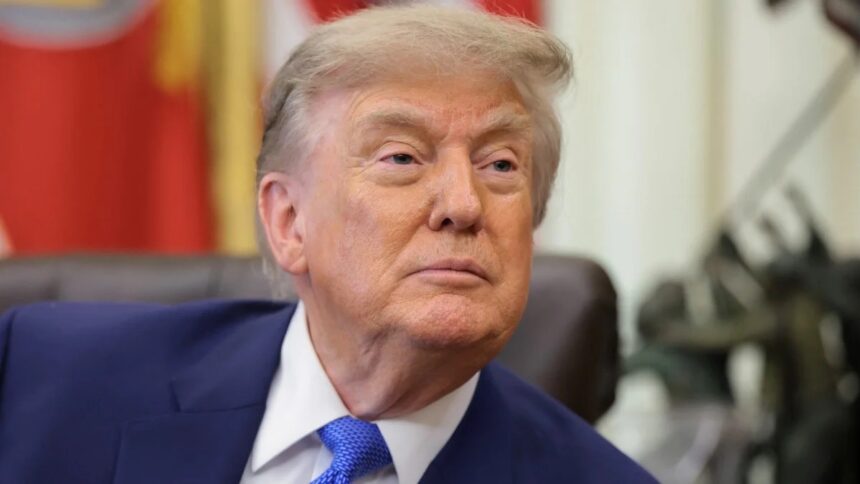
President Donald Trump has rejected Iran’s demand for compensation over war damages, saying on Truth Social that Iran “should be responsible for the damages and death caused to the people of Lebanon, Syria, Yemen, and Gaza.” The exchange added a new obstacle to talks over reopening the Strait of Hormuz, severely constrained since the U.S.-Israel war on Iran began in February. Trump separately told reporters at the White House that his administration would seek compensation covering roughly 50 years of alleged Iranian-linked deaths, including American and regional casualties.
The dispute escalated after Iran tied the strait’s reopening to a list of U.S. concessions. Reuters reported that Iranian security officials said Washington must end the war and unfreeze Iranian assets, while earlier Iranian demands included lifting the naval blockade and paying compensation for war damage. AP reported that the Trump administration is pivoting back toward sanctions and economic pressure as other strategies to end the war have stalled.
The economic stakes are already visible. The Wall Street Journal reported that crude exports through the strait fell to about 2.2 million barrels a day last week, down from roughly 8.5 million a month earlier, against the roughly 20 million barrels a day of oil and petroleum products that moved through Hormuz before the conflict. Brent crude edged back toward $90 a barrel this week on fading hopes of a near-term deal.
Gulf producers are adjusting to that reality. The same Wall Street Journal reporting said regional officials increasingly view Iranian control of the strait as durable, with some now judging it preferable to renewed fighting that could put Gulf energy infrastructure at risk. Gulf states, the report noted, have no reliable way to guarantee the strait’s safety or openness independent of Tehran’s cooperation.
For now, both sides are speaking the language of payment, leverage and punishment rather than de-escalation. That leaves the strait constrained and energy markets exposed to further shocks, pulling negotiators away from any narrow shipping-access compromise.