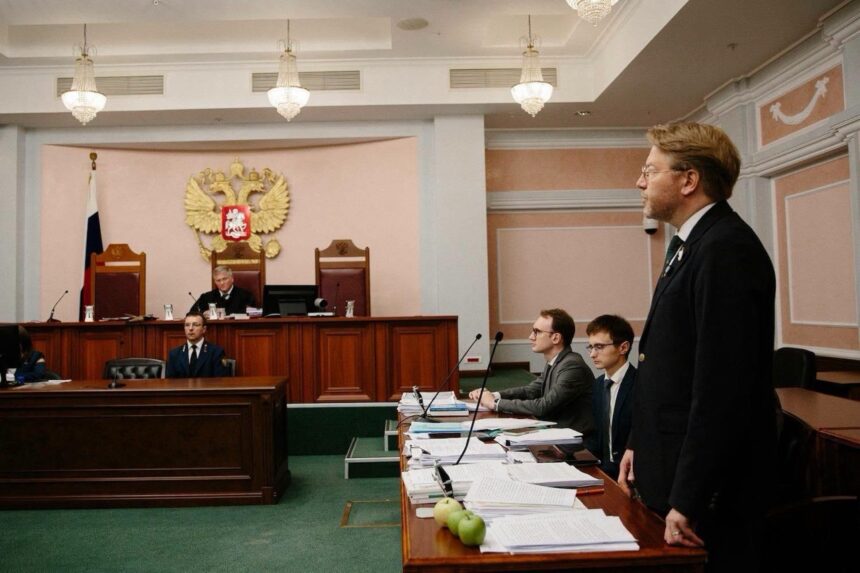
Russia’s Supreme Court on August 10 canceled the registration of Yabloko’s federal candidate list for next month’s State Duma elections, removing Russia’s oldest liberal party from the national ballot, AP reported. Judge Vyacheslav Kirillov granted a lawsuit filed three days earlier by the nationalist Rodina party. Yabloko said it would appeal within the required five-day window, and the ruling does not take legal effect until that process concludes.
The Rodina party, led by State Duma deputy Alexei Zhuravlyov, accused Yabloko candidates of receiving foreign funding, violating copyright law in campaign materials and promoting extremism. Russia’s Central Election Commission told the court that data from the financial watchdog Rosfinmonitoring showed foreign transfers to several Yabloko candidates through third parties in the United States and Germany. Yabloko chairman Nikolai Rybakov rejected the accusations and told supporters outside the courthouse that he could see how many people in Russia wanted peace and an end to the loss of life.
The ruling extends a broader pattern of pressure on the party this year. By Yabloko’s own count, 12 members face criminal charges and eight are in detention, 12 have been placed on Russia’s “foreign agent” registry, and 14, including Rybakov himself, have been convicted of “displaying extremist symbols,” a charge that carries an automatic one-year election ban. AP reported, citing political analyst Nikolay Petrov, that authorities may have initially registered Yabloko’s list to demonstrate the weakness of anti-war sentiment, only removing it once the party appeared to be drawing more attention than expected.
No party has been removed from a Duma race since 1999. It follows the case of Boris Nadezhdin, the liberal politician known for his failed 2024 anti-war presidential bid, who left Russia for Paris on August 3 after being designated a “foreign agent” and convicted of displaying “extremist symbols.” The disqualification comes as Russian officials continue to reject any ceasefire in Ukraine on anything but Moscow’s own terms. Even symbolic anti-war dissent is being narrowed at home as the Kremlin holds to maximalist terms abroad.