Trading Blood for Blueprints
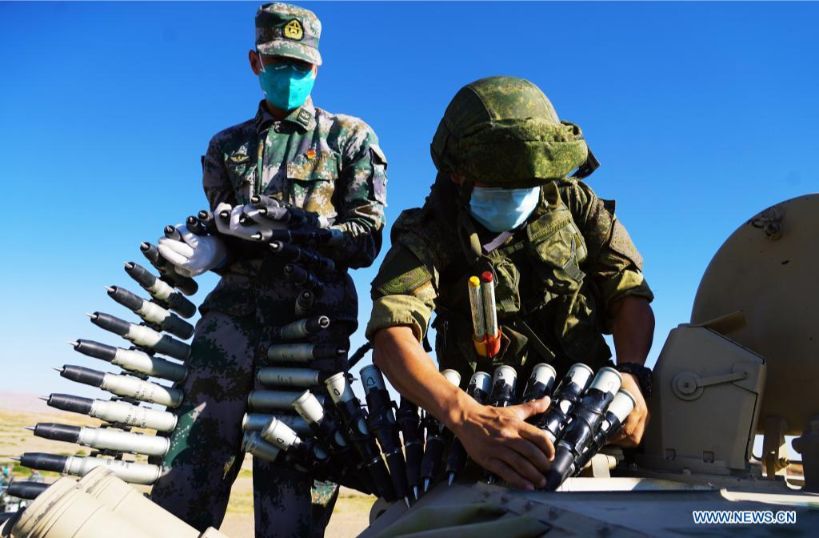
Since 2024, Chinese personnel have trained at a facility near Volgograd also used by Russia’s 8th Combined Arms Army, one of the formations that has fought in eastern Ukraine – The Economist reported, citing European intelligence. The confirmed curriculum there covers drone warfare and urban combat. Separately, the two militaries are reported to be cooperating on electronic warfare, air defense, missile defense and technology for reducing the detectability of nuclear submarines – distinct tracks of cooperation, not part of the same training program. China denies sending personnel to study the war, but is separately reported to be studying Russian data on how Western weapons, including the HIMARS rocket system (High Mobility Artillery Rocket System), also fielded by Taiwan, perform under Russian jamming and countermeasures. Documents reviewed by the Royal United Services Institute (RUSI) indicate Moscow agreed to give China airborne equipment and training relevant to, though not proof of, an operation against Taiwan.
The traffic runs both ways. Reuters reported that China secretly trained roughly 200 Russian personnel in drone warfare in late 2025, some of whom later returned to fight in Ukraine. A separate Reuters investigation found that Russian arms maker Kupol built and tested its Garpiya-3 attack drone inside China with local specialists, and claimed it could manufacture the aircraft there at scale; Beijing says it was unaware and maintains control over military exports. The result is circular: Chinese parts and manufacturing sustain Russia’s war, and Russia converts the results into tactics and data China can study without paying the price of combat itself.
The Iran Test
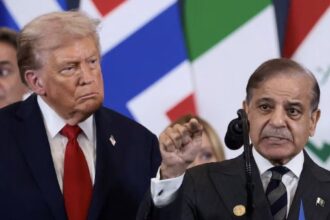
On July 24, Donald Trump said Xi Jinping and Vladimir Putin had personally promised him neither country would arm Iran, including through Chinese companies. The pledge isn’t proof nothing has moved – it’s proof Washington considers it plausible enough to demand assurances from two heads of state directly. The US-China Economic and Security Review Commission, a congressional body, assessed in March that Beijing is more likely to offer Tehran diplomatic and dual-use support than weapons outright. But Iran’s need to rebuild its air defenses gives it a natural slot in a supply chain already running between Moscow and Beijing.
What Pyongyang Provides
North Korea supplies the one input China cannot buy: soldiers who have already been shot at. Pyongyang has sent troops, artillery shells and ballistic missiles to Russia since 2023; the missiles’ battlefield performance has reportedly improved as a direct result of the scale of strikes fired into Ukraine. Zelensky said on July 25 that Moscow is preparing to receive 30,000 more North Korean troops, on top of an estimated 11,000–15,000 already deployed since 2024; the new figure’s arrival and location remain unconfirmed. Beijing holds enormous economic leverage over Pyongyang and almost certainly watches this cooperation closely – that is not evidence it approved the deployments, and there is no sign Chinese officers sit inside North Korean units.
The Russia-North Korea bond, in any case, needs no inference. North Korea has opened a memorial museum in Pyongyang for the roughly 2,000 soldiers South Korean intelligence estimates died fighting for Russia in Kursk. Ukraine has captured and interrogated North Korean prisoners of war. North Korean troops marched in Moscow’s Victory Day parade this May – the first time Pyongyang’s soldiers have appeared in that ceremony.
Iran belongs in this picture too, on a different footing. Its missile arsenal owes its foundations to North Korea, not Russia: Pyongyang has supplied Scud, No Dong and Hwasong-derived technology to Tehran since the 1980s, and Iran’s current ballistic inventory is built substantially on that transferred design base. Whether the cooperation now extends to nuclear-weapon design is unconfirmed – analysts describe persistent rumors of North Korean help on warhead work, not verified evidence of it. What can be said is narrower and still significant: a decades-old Iran-North Korea missile relationship, a newer Russia-North Korea troop-for-technology exchange, and a Russia-China battlefield-knowledge pipeline are now overlapping in the same war. That is not a formal axis with a joint command structure. But it functions like one in practice – three sanctioned states and one rising power, each drawing capability from the others’ conflicts, each free to deny the arrangement exists at all.