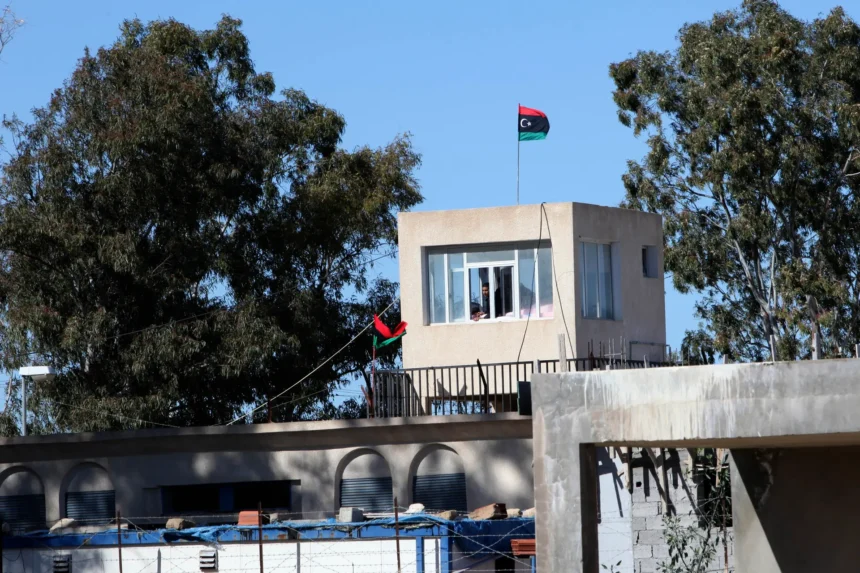
Hundreds of inmates escaped from a prison in western Libya after heavy fighting between rival armed groups spread to the facility, exposing the continuing fragility of the country’s security institutions.
Libya’s Judicial Police Authority said inmates broke out of Al-Jadida prison after clashes erupted in the surrounding area. The prison houses around 3,000 detainees, including prisoners convicted of serious crimes and suspects awaiting trial. Authorities said officials lost control of the facility as the security situation deteriorated, allowing large numbers of inmates to flee.
It remains unclear whether the prison became caught up in nearby fighting or whether armed groups deliberately sought to exploit the chaos to free specific detainees. Libyan detention facilities have previously featured in militia struggles, but officials have not indicated that this escape was an organized prison raid. Reuters reported that authorities had not disclosed how many prisoners escaped or whether any had been recaptured, leaving the circumstances of the breakout unresolved.
The clashes occurred amid renewed violence between rival armed factions in western Libya, where competing militias continue to wield significant influence despite repeated efforts by the internationally recognized Government of National Unity (GNU) to consolidate control over the capital and surrounding areas. Tripoli’s security landscape has for years been shaped by a small number of heavily armed groups that were incorporated into state payrolls under GNU-brokered arrangements rather than fully disarmed or demobilized. Although these formations operate under the nominal authority of state institutions, command structures and loyalties often remain tied to militia leaders, allowing localized confrontations to escalate rapidly even without a broader political crisis.
The prison break follows months of heightened tensions among Tripoli’s armed groups after successive attempts to restructure the capital’s security architecture. Although major clashes have become less frequent than in previous years, rival factions continue to control key neighborhoods, strategic infrastructure and detention facilities, limiting the government’s ability to establish a monopoly on the use of force. Repeated efforts to integrate armed groups into formal security institutions have stalled short of genuine disarmament, demobilization and reintegration, leaving the capital’s security dependent on fragile understandings between competing commanders.
The escape raises concerns that convicted criminals and suspects awaiting trial could re-enter armed networks or organized criminal groups at a time when Libya continues to struggle with fragmented governance and weak law enforcement. Authorities urged security agencies to help locate the escaped inmates and restore order around the prison.
The incident illustrates how Libya’s unresolved militia system continues to undermine state authority. Even as the risk of a return to nationwide civil war has receded, localized clashes remain capable of rapidly spilling into institutions that should be under exclusive government control, complicating efforts to build a unified security sector and reinforcing the country’s chronic instability.