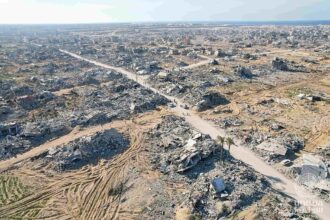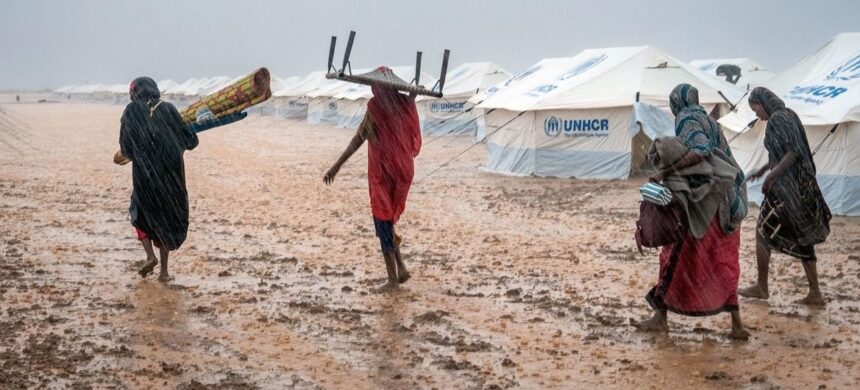
A renewed attempt to secure a humanitarian truce in Sudan has stalled over whether the Rapid Support Forces (RSF) must withdraw from captured cities before broader negotiations begin. The United States told the UN Security Council that it had repeatedly presented the belligerents with a proposal for a nationwide humanitarian truce guaranteeing relief access across front lines and international borders. According to Reuters, which reviewed diplomatic documents related to the proposal, SAF accepted several elements of the U.S.-backed framework but objected to provisions that did not require a full RSF withdrawal from occupied cities.
Territorial Control, State Authority and the Negotiating Impasse
The disagreement is not simply about sequencing. Territory provides military depth, political leverage and access to revenue. The RSF’s positions across Darfur and parts of Kordofan connect gold-producing areas, livestock routes, agricultural zones and informal cross-border trade. SAF-aligned authorities, operating from Port Sudan, retain the Central Bank, customs administration, formal import and export channels and revenues associated with Red Sea commerce.
These parallel political economies reduce the value of compromise. The RSF risks losing taxation, extraction and trading networks if it withdraws before receiving guarantees. SAF, meanwhile, can use state institutions and formal revenues to sustain its military campaign while presenting itself internationally as Sudan’s sovereign authority.
The battlefield reinforces this deadlock. SAF has reportedly sought to secure the Kosti – El Obeid logistical axis, while RSF pressure around El Obeid is assessed to threaten a strategic hub connecting central Sudan with Kordofan and Darfur. The Security Council’s June briefing warned that escalating drone warfare and military mobilisation around El Obeid could expose hundreds of thousands of civilians to patterns of siege and mass violence.
SAF carries differentiated responsibilities because it exercises the functions of Sudan’s internationally recognised governing authority. It controls the country’s principal state institutions, including the Central Bank, customs administration and diplomatic representation. Those functions place greater obligations on SAF under international humanitarian law to facilitate humanitarian access, protect civilians under its jurisdiction and cooperate with international relief operations. The RSF likewise bears obligations in territories under its effective control.
Humanitarian Access, Famine and Foreign Support
Aid obstruction is not merely a by-product of insecurity. Human Rights Watch has documented violations by all sides in the conflict, including SAF-aligned authorities’ use of permits and administrative controls to limit cross-line and cross-border deliveries into RSF-held territory.
The food emergency is also more severe than the phrase “food insecurity” suggests. Under the Integrated Food Security Phase Classification (IPC), Phase 4 denotes Emergency conditions, while Phase 5 includes household-level Catastrophe and area-level Famine. IPC assessments confirmed famine in Zamzam camp and later assessed famine conditions or serious famine risk in additional parts of Darfur and Kordofan. Restricted access limits surveys, so the absence of a nationwide famine declaration does not mean catastrophic hunger has ended.
The Port Sudan authorities have previously resisted or delayed cross-border access through routes such as Adré, on the Chad border. By emphasising incomplete data or the absence of a nationwide famine classification, SAF-aligned officials can downplay the crisis and defend tighter control over aid corridors. As the authority claiming to represent Sudan, SAF bears heightened responsibility for facilitating relief to Sudanese civilians regardless of which armed actor controls their location.
External support further weakens incentives for a truce. An Amnesty International weapons investigation identified arms originating from China, Russia, Serbia, Türkiye, the United Arab Emirates and Yemen.
Diplomatic Prospects and Conditions for a Truce
A durable truce would require independently monitored access across borders and front lines, restrictions on troop and drone movements, protection for aid convoys and an agreed sequence for territorial withdrawals. It would also require pressure on external suppliers and genuine participation by civilian organisations, not an agreement negotiated exclusively between armed commanders. The central obstacle is whether SAF, as the power claiming state authority, will accept the responsibility to facilitate relief and political compromise, and whether the RSF will relinquish territory and coercive economic networks without converting them into permanent political power. Until those calculations change, negotiations will likely follow battlefield developments rather than restrain them.