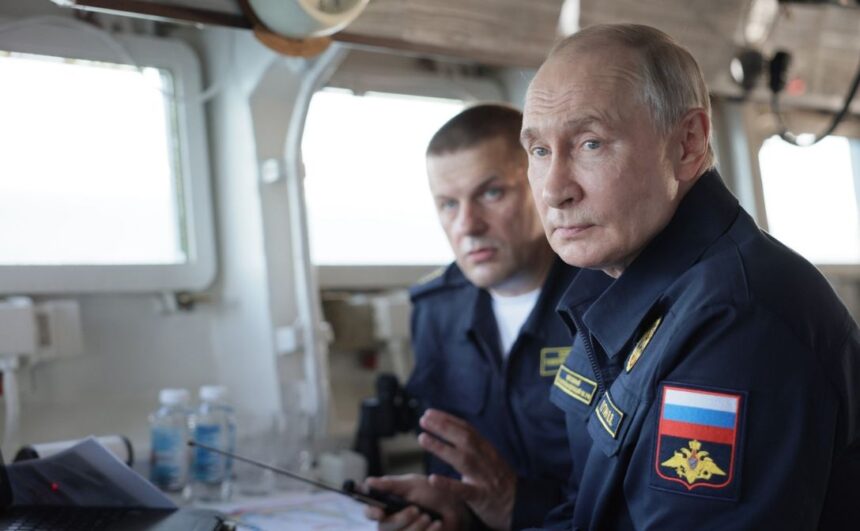
Russian President Vladimir Putin has threatened retaliation against European shipping if Russian-linked vessels are seized, escalating a maritime confrontation that now connects sanctions enforcement, commercial shipping and military operations in the Black Sea. Putin made the remarks while visiting a Russian warship during Pacific Fleet exercises near Sakhalin Island on August 12, then travelled to Iturup in the disputed Kuril Islands on August 13, according to AP and the Financial Times. The Iturup visit, which Japan condemned as unacceptable, reinforced Moscow’s message of military strength and territorial defiance.
Putin’s warning came as European states expanded efforts against Russia’s shadow fleet, the network of vessels used to move sanctioned Russian oil through opaque ownership structures and flags of convenience. He described possible seizures of Russian vessels as “piracy” and said Moscow could respond beyond the waters where Russian ships were targeted, according to AP and Reuters. The threat surfaced against a separate Black Sea flashpoint: the Financial Times reported that U.S. Vice President JD Vance spoke with President Volodymyr Zelenskyy on July 31 after Washington raised concerns about Ukrainian strikes affecting the Caspian Pipeline Consortium terminal at Novorossiysk and the interests of U.S. energy companies.
Ukraine later struck Novorossiysk, targeting Russian naval assets but also damaging commercial port infrastructure, including grain export facilities, according to the Financial Times. The attack demonstrated Ukraine’s capacity to threaten Russia’s Black Sea military position. It also added pressure on global agricultural markets already strained by the war, the Guardian reported.
Russia has simultaneously intensified attacks on Ukrainian maritime export routes, including Odesa and Danube infrastructure. Ukraine then proposed, through an unnamed intermediary, a mutual halt to attacks on civilian targets in the Black Sea. Moscow said it had not received a formal proposal, Reuters reported.
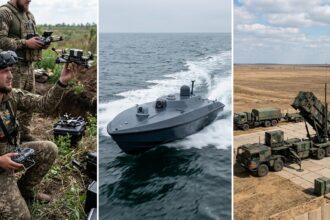
The confrontation now spans two connected fronts: Ukraine uses drones and missiles to challenge Russian naval dominance and Black Sea logistics, while Moscow presses for leverage through threats against international shipping and global trade routes. Putin’s vessel-seizure warning extends that leverage beyond the immediate battlefield, tying the fate of commercial shipping to the wider sanctions and shadow-fleet enforcement campaign. Whether Moscow follows through with retaliatory action against European shipping remains the unresolved variable shaping the Black Sea theater.