Latvia declared an airspace threat before dawn on Friday after a foreign drone entered its territory over the Balvi region in the country’s northeast, prompting NATO fighters to scramble and shoot the aircraft down within roughly an hour. The incident is the latest in a series of drone incursions that has tested the alliance’s Baltic air defenses since a Ukrainian drone struck an oil facility near Rēzekne in May, prompting a major review of Latvia’s air-defense posture, and it comes days after monitoring groups reported a sharp rise in Russian jamming activity across the Baltic Sea.
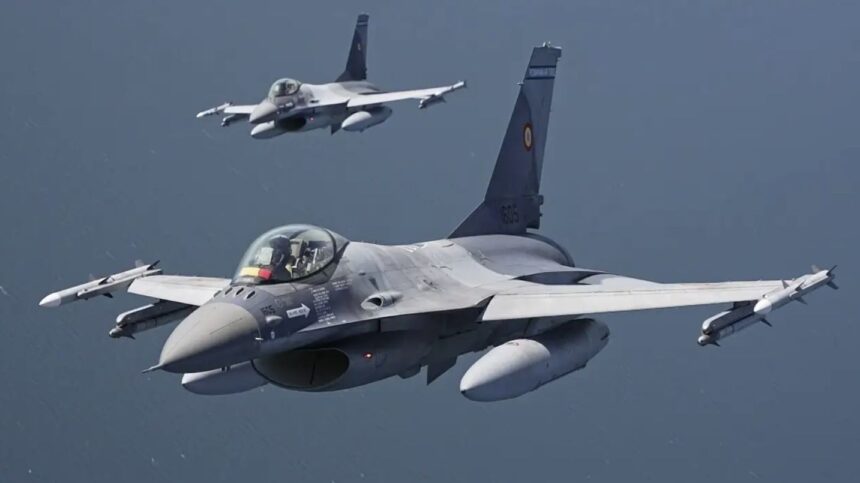
According to Latvia’s National Armed Forces (NBS), the drone entered Latvian airspace in the Balvi region in the early hours of Friday, triggering an orange alert shortly before 04:00 across Augšdaugava, Preiļi, Rēzekne, Balvi and Alūksne municipalities, with cell-broadcast warnings sent to residents in the affected areas. NBS confirmed roughly an hour later that allied fighters had destroyed the aircraft and that the threat had ended. Latvian authorities did not disclose the drone’s point of origin or its intended target, and no casualties or property damage were reported.
It remains unclear which allied air force carried out the interception. A Reuters dispatch citing Latvia’s military said it was not immediately clear which fighter jets had shot down the drone, and neither NBS nor NATO Allied Air Command had identified the intercepting nation or disclosed the interception method as of publication. That contrasts with a similar incident on June 8, when the Latvian Ministry of Defence confirmed that fighters from France’s Baltic Air Policing rotation had destroyed a drone over the Latgale region after it crossed the border as a result of what the ministry described as Russian electromagnetic warfare.
Latvian officials have consistently attributed these incursions to navigation disruption rather than deliberate attack, describing them as drones diverted off course by Russian jamming rather than intentional violations of Latvian airspace. EU sanctions, independent technical research and repeated incidents have increasingly linked widespread GNSS disruption in the Baltic region to Russian electronic warfare systems operating from Kaliningrad. Researchers using signal-triangulation techniques have traced multiple jamming and spoofing events to fixed antenna sites along the exclave’s coast. While investigators have not attributed every individual drone incursion to the same mechanism, the broader pattern points to a sustained Russian electronic warfare campaign affecting both civilian and military navigation.
The incident also highlights the changing role of NATO’s Baltic Air Policing mission. Originally established in 2004 to safeguard the airspace of Latvia, Lithuania and Estonia, the mission was redesignated as an air defense operation on August 1 as drone incursions and electronic warfare became a more persistent feature of the alliance’s eastern flank. Repeated interceptions have also intensified calls from Baltic governments for layered ground-based air defenses that would reduce reliance on scrambling high-performance fighter aircraft against relatively inexpensive unmanned systems.
Friday’s interception caused no reported casualties or damage, but it underscored a broader shift in NATO’s eastern airspace. Drone incursions that were once treated as isolated anomalies are increasingly becoming a routine consequence of Russia’s war against Ukraine and the electronic warfare contest unfolding along the Alliance’s border with Russia.