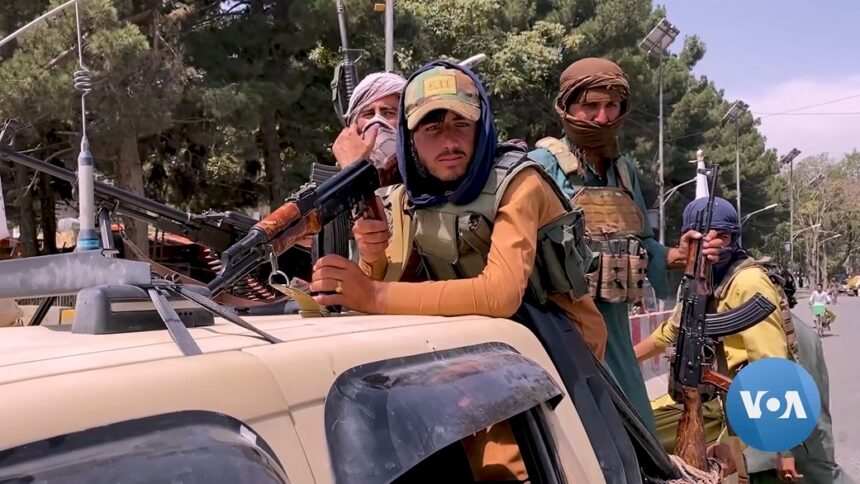
Five years after Taliban fighters walked into Kabul unopposed, Afghanistan stands as a rare case study in the gap between holding a country and governing it with the world’s consent. The movement did what many governments before it could not: it won, decisively and completely, and then discovered that winning was the easier half of the task.
The Taliban removed the internationally backed Afghan government in August 2021, rebuilt state institutions under its own authority, and reduced the scale of nationwide warfare. Five years on, it controls the entire country. What it does not control is how the rest of the world treats that fact, or whether its own economy and borders can hold.
A Legitimacy Nobody Grants
The central reason for that gap is the Taliban’s human rights record, above all its treatment of women and girls. Since 2021, the movement has imposed some of the most restrictive gender policies anywhere in the world, banning girls from secondary and higher education, limiting women’s employment and curbing participation in public life. According to UNESCO reporting, about 2.4 million Afghan girls remain excluded from secondary education, a figure that could approach 4 million if current restrictions continue. A Human Rights Watch assessment documented continued arbitrary detention, repression of civil society and the erosion of legal protections for women, five years into the movement’s second period of governance.
The economic record undercuts Taliban claims of stability as much as the human rights record undercuts claims of legitimacy. A UN Development Programme review found that roughly 28 million Afghans were living in poverty in 2025, while the country’s trade deficit widened to a record $11.3 billion, equivalent to about 60 percent of nominal GDP. The same review recorded real GDP growth of just 1.9 percent in 2025 against population growth of 6.5 percent, producing a decline in GDP per capita even as the economy nominally expanded, and found that international aid fell 16.5 percent the same year, forcing more than 440 clinics to close or cut services.
The opium ban the Taliban imposed in 2022 cut cultivation by roughly 95 percent, according to UN drug-monitoring data, eliminating a crop that once accounted for up to 14 percent of GDP without providing farmers a comparable substitute. Five years in, Afghanistan remains one of the world’s poorest countries, dependent on aid and remittances rather than any Taliban-led economic transformation.
A Border War With Pakistan
Control inside Afghanistan has also proven incomplete at its edges. Since late February 2026, Afghanistan and Pakistan have fought an open, at times conventional border conflict, after Pakistani airstrikes on Taliban and militant targets triggered retaliatory ground assaults along the Durand Line. According to AP reporting, Pakistan’s defense minister, Khawaja Asif, declared the countries in a state of “open war” after strikes hit Kabul, Kandahar and Paktia province, a sequence CNN separately confirmed. By mid-March, the UN mission in Afghanistan had recorded 75 people killed and 193 injured since the fighting began, with both militaries disputing each other’s casualty figures. Islamabad accuses the Taliban of sheltering Tehrik-i-Taliban Pakistan militants who attack Pakistani forces from Afghan soil, an allegation Kabul denies.
Diplomacy Without Recognition
The Taliban has nonetheless moved gradually away from complete diplomatic isolation, without securing anything close to broad international acceptance. Reuters reported that Russia formally recognized the Taliban government in July 2025, after removing the movement from its list of banned organizations, and deepened that relationship in May 2026 by signing a military-technical cooperation agreement with Kabul. Analysts describe the pact as part of a broader Russian effort to build ties with states willing to defy Western pressure, alongside Iran and North Korea, though no public evidence indicates the Taliban has committed manpower to Russia’s war effort, unlike North Korea.
Moscow’s outreach reflects strategic calculation rather than a verdict on Taliban governance. China and several Central Asian states share Russia’s priorities: border security, counterterrorism cooperation against Islamic State-Khorasan Province, trade routes and regional stability, ahead of any assessment of Afghanistan’s internal politics. That calculation has produced a diplomatic grey zone in which the Taliban gains economic contacts and political engagement while remaining locked out of the international financial systems that supported Afghanistan before 2021.
The Taliban has sought standing in the Middle East mainly through rhetorical solidarity rather than material involvement. Senior officials have periodically criticized Western and Israeli policy toward Gaza and maintained informal contacts with Hamas figures, but the movement has stopped short of the sustained public engagement Iran maintains, and has no known role in supplying arms or fighters to regional conflicts there.
Cracks Inside Kandahar’s Rule
The Taliban’s most serious long-term challenge may originate inside its own governing structure. The movement that fought for two decades as a decentralized insurgency is now attempting to rule through a centralized bureaucracy, and that shift has created friction between Kabul’s leadership and the regional commanders who once controlled local networks, armed forces and economic resources on their own terms.
Badakhshan has become the clearest example of that friction. A dispute involving Juma Khan Fateh, a dissident Tajik Taliban commander in the northeast, began over authority, appointments and control of gold-mining revenue in the region. Fighting broke out on the night of August 11 after Taliban forces attacked positions held by Fateh’s supporters in Nusay district, and by August 13 a Taliban military helicopter had reportedly been shot down by Fateh’s fighters near the district center, according to Afghanistan International. The same outlet’s on-the-ground sourcing reported that Fateh’s forces had captured multiple Taliban outposts and that both sides had suffered significant casualties, with some Taliban sources citing at least seven special-forces personnel killed. Taliban leadership in Kandahar has sought to bring local mining and revenue networks under central state control, while regional commanders who built influence through those same local structures have resisted losing their economic autonomy.
The tension also touches Afghanistan’s unresolved ethnic balance: Taliban ranks include fighters from multiple ethnic backgrounds, but its core leadership remains rooted in the Kandahar-based Pashtun hierarchy that has historically controlled it, and centralization from Kandahar generates armed resistance rather than compliance in northern provinces where Tajik and other communities hold local influence.
Five years after its return to Kabul, the Taliban has secured what it fought two decades for: survival, territorial control and the reluctant engagement of neighboring states and global powers who calculate their own interests separately from Afghanistan’s internal condition. What it has not secured is recognition on terms it can claim as vindication, an economy that can support its own population, or a border at peace. For the millions of Afghan girls still barred from a classroom, the communities in Badakhshan now living beside armed men loyal to two different chains of command, and the families along the Durand Line counting their dead from a war neither government will call by its name, the anniversary carries little of the finality the Taliban has claimed. The war for Kabul ended five years ago. The harder war, over what kind of state Afghanistan becomes, is still being fought.