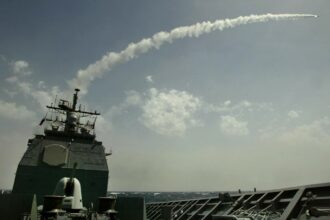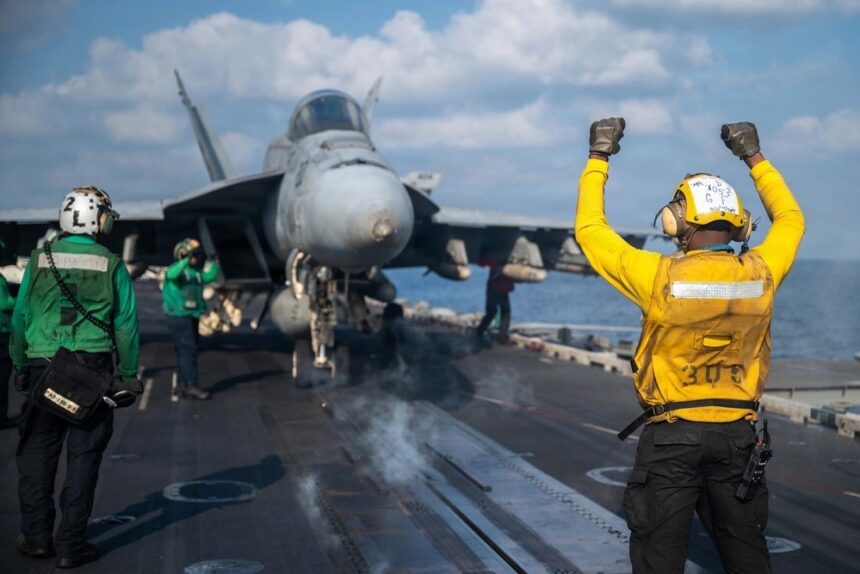
The United States is sending the USS George Washington toward the Middle East to relieve the USS Abraham Lincoln, opening a temporary carrier gap in the western Pacific as China tests American attention elsewhere. The Wall Street Journal first reported the rotation, and the Associated Press confirmed that George Washington was in the Strait of Malacca, on course toward the Indian Ocean after visiting Da Nang, Vietnam. The Lincoln has spent more than 240 consecutive days at sea and more than 260 days deployed, an unusually long stretch for a modern carrier, according to AP, after being redirected to the Middle East in January to support the Iran war.
The deployment has drawn congressional scrutiny. Sen. Richard Blumenthal wrote to Defense Secretary Pete Hegseth citing reports of “shortages of basic supplies, water contamination, plumbing issues, deteriorating mental health, deck safety concerns and disruptions of the mail system,” Reuters reported. Hegseth called the reports “completely misrepresented,” according to The Hill, while Trump said a retired admiral had assured him the Lincoln was “beautifully maintained and beautifully taken care of,” according to AP.
The George Washington’s departure leaves the Pacific without a forward-deployed U.S. carrier as Chinese naval activity intensifies, Axios reported, noting allied concern about the deterrence gap. Washington still operates bases, submarines, bombers and allied forces across the region, but a carrier’s absence removes a visible deterrence marker. The underlying constraint is force generation: the Navy has 11 carriers, but only a fraction are deployable at any time as ships rotate through maintenance and crew recovery.
“The carrier swap exposes a structural tradeoff in U.S. force posture. Sustaining an open-ended war in the Middle East is drawing directly on the ships and crews built up for Pacific deterrence, even as Washington insists it can manage both theaters at once.”