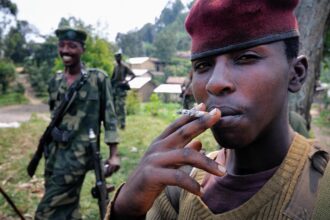
The Rwanda-backed M23 rebel alliance has imposed new civilian movement restrictions in eastern Democratic Republic of Congo as an Ebola outbreak caused by the Bundibugyo species of the virus spreads through a country divided between rival authorities. M23 said shared taxis between Goma and Kirumba will be suspended for one month starting Saturday, while pirogue travel will be halted on some Lake Edward routes, after two travelers from government-held Lubero tested positive in M23-controlled territory.
The restrictions also show how M23 is using public-health administration to reinforce its role as a de facto governing authority. By running an Ebola response largely separate from Kinshasa, declaring its territory disease-free in June and now regulating movement from government-held areas, the rebels are exercising functions normally performed by the state. That parallel system adds another layer of fragmentation to an outbreak response already hampered by insecurity, displacement and difficulties tracing contacts across areas controlled by different authorities.
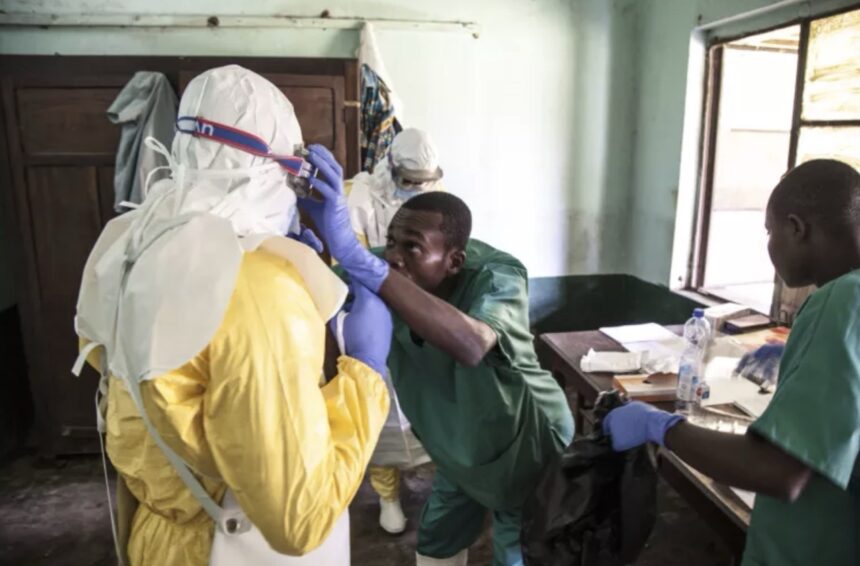
The epidemic is already Congo’s largest on record. As of August 18, the country had recorded 5,208 confirmed cases and 2,476 deaths across 56 health zones in six provinces, according to the European Centre for Disease Prevention and Control, citing Congolese government data. The World Health Organization has described the outbreak as being in a phase of “intense transmission” and says insecurity and attacks on health facilities have disrupted surveillance and restricted access for response teams.
No vaccine or specific treatment is currently approved for Bundibugyo virus disease. Congo is, however, set to receive 70,000 doses of Merck’s Ervebo vaccine, which is approved against Zaire ebolavirus but is being evaluated for possible protection against the Bundibugyo species. Twenty thousand doses are intended for a Phase 3 trial and another 50,000 for frontline and healthcare workers.
WHO advises against general restrictions on travel to or trade with Ebola-affected countries, emphasizing surveillance, early case detection and contact tracing instead. In eastern Congo, restrictions on formal routes carry an additional risk if travelers shift to less monitored alternatives, further complicating surveillance.
The arrival of experimental vaccine protection may give health authorities another tool, but it does not solve the political problem underneath the outbreak. Containing Ebola still depends on whether Kinshasa, international health agencies and M23 can track infections and civilian movement across a conflict zone divided between rival authorities.