A new U.S. intelligence assessment concludes that President Vladimir Putin could test NATO’s resolve with limited military or hybrid actions before 2029, marking a significant shift in Washington’s assessment of Russian escalation risks. According to The Wall Street Journal, U.S. officials no longer assume that Russia’s war against Ukraine will, by itself, deter the Kremlin from challenging the Alliance elsewhere. Instead, intelligence analysts reportedly assess that the overall risk of Moscow probing NATO’s cohesion has increased, even though a conventional ground incursion remains the least likely scenario.
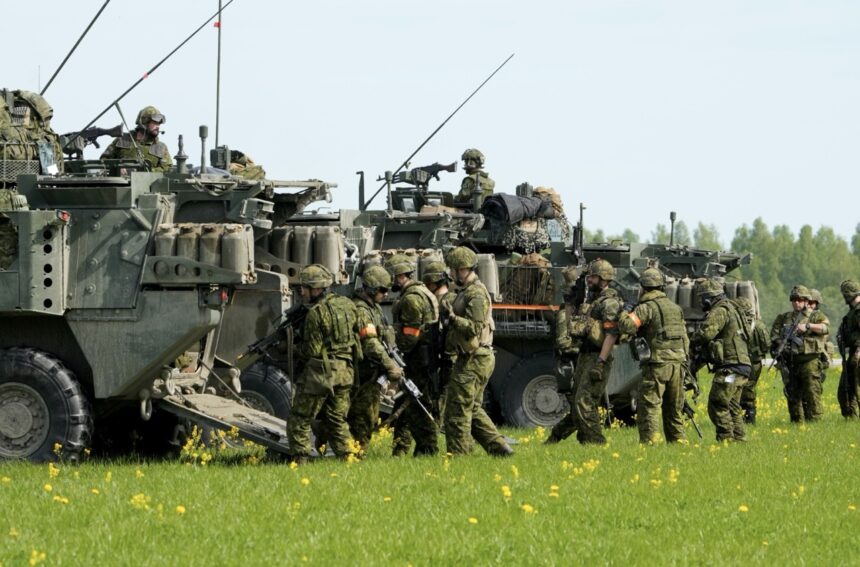
The assessment examines a spectrum of possible actions over the period from this autumn through 2029, ranging from major cyberattacks, sabotage and other hybrid operations to a limited military incursion against a NATO member on the Alliance’s eastern flank. Rather than predicting a specific course of action, it reflects a reassessment of how Russian leaders may calculate risk as the war in Ukraine enters a prolonged phase. According to the report, officials increasingly believe the Kremlin could seek opportunities to challenge NATO in ways that remain limited, deniable and politically ambiguous.
The reassessment reflects a broader change in how U.S. analysts view Russian decision-making. Previous intelligence estimates generally assumed that the scale of Russia’s military commitment in Ukraine would discourage Moscow from opening additional confrontations with NATO. The new assessment reportedly argues the opposite may increasingly be true: prolonged battlefield pressure, slow territorial gains and Ukraine’s expanding long-range strike campaign inside Russia could encourage the Kremlin to pursue carefully calibrated actions elsewhere if they are judged unlikely to trigger a united Allied military response.
According to the assessment, Moscow’s objective would not be to launch a wider war with NATO but to test the credibility of Article 5 – the Alliance’s collective defence clause – and expose political divisions among member states. Article 5 obliges NATO members to regard an attack on one Ally as an attack on all, but it does not prescribe an automatic military response. Decisions on how to respond remain political, making ambiguous hybrid operations particularly attractive to adversaries seeking to exploit differences in threat perception or willingness to escalate.
That assessment broadly aligns with warnings from several European intelligence services that Russia increasingly relies on cyber operations, sabotage and other hybrid tactics to pressure NATO members while remaining below the threshold of open interstate conflict. In late 2024, Germany’s foreign intelligence chief warned that sustained Russian hybrid attacks could eventually become serious enough to force debate over invoking NATO’s Article 5, according to Reuters.
The U.S. intelligence assessment does not conclude that a Russian attack on NATO is imminent. Rather, it suggests Western planners should prepare for a period in which the Kremlin increasingly relies on limited, deniable and politically ambiguous actions designed to test Alliance cohesion without crossing the threshold of full-scale war. For NATO, the challenge may prove less about defending territory than demonstrating that even carefully calibrated aggression – whether cyber, covert or military – would still trigger a unified collective response.