The Kremlin is expanding an established global influence network by training foreign journalists, supporting state-backed media programmes and investing in digital tools designed to spread Russian narratives abroad, according to assessments by the Institute for the Study of War (ISW) and European counter-disinformation institutions.
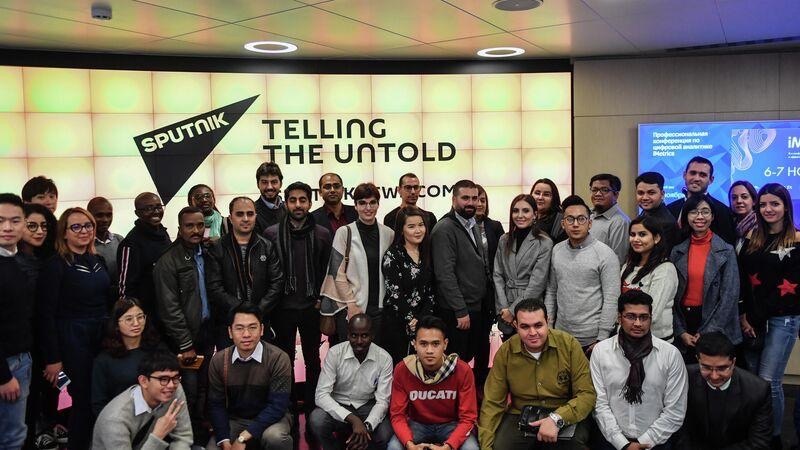
Russia’s influence infrastructure has moved beyond traditional state broadcasting. A SputnikPro internship session held in Moscow in July 2026 drew young journalists from sub-Saharan Africa, run jointly with Rossotrudnichestvo’s “New Generation” project, Russia’s state agency for cultural and humanitarian cooperation abroad. RT Academy runs a parallel track, training journalists from ASEAN, South Asian and African countries with Rossotrudnichestvo’s support. The programmes aim to cultivate local voices that can distribute Kremlin-aligned narratives even where Russian state media face formal restrictions.
European governments have moved to counter that expansion. On July 29, 2026, the French Interior Ministry issued an expulsion order against Xenia Fedorova, former head of RT France, accusing her of acting as “a conduit for disinformation campaigns orchestrated by the Russian authorities,” according to Le Monde. Fedorova has appealed and remains under administrative restrictions.
Russia’s digital campaigns show an industrial model. In September 2024, the U.S. Department of Justice announced the seizure of 32 domains tied to the Doppelgänger operation, which used cloned websites impersonating outlets like the Washington Post, fabricated influencer content and inauthentic account networks. The department linked Russian companies Social Design Agency and Structura National Technology to the Russian Presidential Administration under Sergei Kiriyenko, aimed at reducing support for Ukraine and influencing elections.
A related campaign, Matryoshka, has targeted journalists and fact-checkers since September 2023, distributing fabricated content designed to prompt verification and amplification. France’s VIGINUM technical report, published in June 2024, found targets in more than 60 countries, with operational similarities and infrastructure overlaps with wider Russian influence campaigns.
The pattern reflects deliberate strategy: Moscow treats the information sphere as a distinct front, run alongside its military campaign in Ukraine, built to survive individual takedowns since removing domains or expelling commentators does not eliminate the state infrastructure funding the wider network.