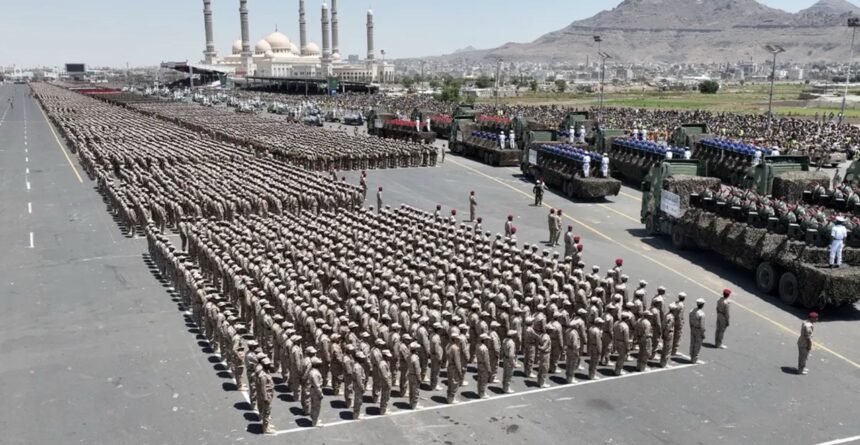
Yemen is again moving toward a more dangerous phase of its decade-long war. The UN-brokered truce in 2022 sharply reduced large-scale hostilities but never produced a political settlement, leaving the country’s core military and political divisions intact. During the years of relative calm, Ansar Allah, the formal name of the Houthi movement, consolidated its administration across northern Yemen while maintaining and expanding missile, drone and maritime-strike capabilities that are now being employed again as regional tensions rise. Reuters reported in July that forces on both sides were mobilizing and reinforcing several front lines as the Saudi-Houthi truce broke down.
The latest escalation unfolded in two waves of missile and drone attacks on the government-held Red Sea port city of Mocha, known locally as al-Makha, within less than 24 hours. An earlier barrage killed at least 11 people, including eight military personnel and three civilians, according to an AFP toll reported by Al Jazeera. A second attack later on Sunday killed seven more people – four soldiers and three civilians – and wounded 30, most of them civilians. Yemen’s armed forces said air defences intercepted 11 Houthi drones during the later assault, which also extended to al-Khokha district south of Hodeidah.
Government authorities said the attacks damaged civilian infrastructure, electricity facilities and residential areas, while AP reporting cited by Al Jazeera described damage to port infrastructure, commercial goods and food supplies. On the same day, the Houthis also attacked Saudi Aramco’s Jazan refinery with a drone. Saudi Arabia’s Energy Ministry said the strike caused a fire that was extinguished without casualties. Reuters reported that the refinery attack came amid the Houthis’ broader campaign against Saudi energy and maritime infrastructure.
Together, the attacks show how Yemen’s internal war and the wider confrontation involving Iran are increasingly overlapping.
The Ground War Is Stirring Again
The Houthis retain control of Sanaa and most of Yemen’s populous north-west, while forces aligned with the internationally recognized government hold much of the south and east. Reuters estimates that Houthi-held territory contains roughly 60-65% of Yemen’s population. The anti-Houthi camp remains divided among the Presidential Leadership Council, government forces, southern factions and other armed formations that have received varying levels of support from Saudi Arabia and the United Arab Emirates.
That fragmentation helped freeze rather than resolve the conflict after 2022. Large-scale Saudi-Houthi fighting subsided and negotiations focused increasingly on a political settlement, but neither the competing centres of power nor the military front lines disappeared.
That equilibrium began to break down in July. On July 13, the Houthis fired missiles toward Saudi Arabia after accusing Saudi-backed forces of preventing an Iranian aircraft from landing in Houthi-controlled territory, ending years of relative calm along the Saudi-Houthi front. Reuters reported that Saudi forces intercepted missiles launched toward the kingdom’s southern region. Subsequent attacks and counterstrikes were accompanied by military buildups on several Yemeni front lines.
There is still no clear evidence that either side has committed to a nationwide ground offensive. But mobilization, renewed cross-border attacks and strikes on military infrastructure have raised the risk that fronts left comparatively quiet for years could reopen.
The Red Sea Has Become a Second Front
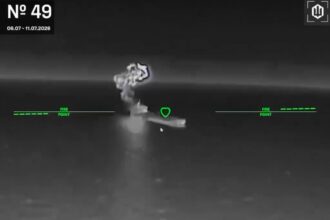
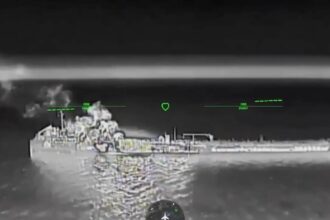
The Houthis’ most strategically consequential capability may now lie beyond Yemen’s traditional front lines. On July 20, the movement declared a naval blockade against Saudi Arabia, threatening vessels linked to Saudi ports and prompting Riyadh to warn that it would respond forcefully.
The Houthis have since claimed attacks on Saudi-linked tankers and energy infrastructure in the Red Sea and Gulf of Aden. Saudi-backed forces have responded with strikes on Houthi missile launch sites, drone facilities and arms depots, including targets around Hodeidah, Marib and al-Jawf.
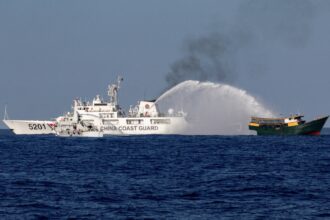
Commercial shipping has reacted rapidly. Kpler data cited by Reuters showed only one vessel transiting Bab el-Mandeb on August 5, compared with 20 the previous day. The route had already failed to recover fully from the Houthi attacks on commercial shipping that began in late 2023. War-risk insurance costs have also risen as renewed attacks increase the prospect of prolonged disruption.
The strategic danger is that Bab el-Mandeb is increasingly connected to the crisis around the Strait of Hormuz. In July, Reuters reported that Iranian officials had asked the Houthis to stand ready to close the Red Sea gateway if the United States attacked Iranian power infrastructure. The report does not establish Iranian command over individual Houthi operations, but it demonstrates the strategic value Yemen’s geography and Houthi capabilities offer Tehran.
How the Houthis Sustain the War
The Houthis’ endurance cannot be explained by Iranian weapons alone. Over more than a decade, the movement has developed many attributes of a de facto state, including territorial administration, taxation, customs collection and control over commercial activity across much of northern Yemen. These structures provide domestic revenue and give the movement access to institutions, businesses and population centres that conventional insurgent groups generally lack.
U.S. sanctions authorities assess that external financing remains substantial. In January, the U.S. Treasury said Houthi-linked illicit oil sales generate more than $2 billion annually. The Treasury said Iran both sells and supplies monthly shipments of oil through affiliated companies, with proceeds moving through trading firms, exchange houses and financial intermediaries. The figure is a U.S. government assessment underpinning sanctions designations rather than an independently audited account of Houthi finances.
Previous U.S. sanctions actions have also identified networks centred on Iran-based Houthi financier Sa’id al-Jamal that move revenue from Iranian petroleum and other commodities through companies, exchange houses, shipping firms and financial intermediaries across multiple jurisdictions.
Weapons procurement relies on similarly dispersed networks. A Treasury sanctions action identified China-based companies accused of supplying chemical precursors, dual-use electronics and other materials used in Houthi ballistic missiles, explosives and unmanned aerial vehicles. The Treasury said some suppliers falsified or mislabelled shipping documents to conceal the movement of goods into Houthi-controlled Yemen.
Many Houthi missile and drone systems therefore increasingly function as supply-chain products rather than complete weapons arriving from a single foreign supplier. Commercial components and military-grade materials can be acquired abroad, moved through intermediaries and incorporated into systems assembled or modified inside Yemen with Iranian technical knowledge and assistance. That model makes interdiction substantially more difficult than simply intercepting finished missiles or drones.
The direct Iranian role may also be increasing. Reuters reported in July that a Mahan Air flight carried IRGC commanders and advisers, missile- and drone-related equipment and gold into Houthi-controlled Yemen. Four sources told Reuters that military personnel and equipment were aboard, while two Iranian sources put the number of IRGC personnel at between 10 and 21. Iranian officials denied supplying missile capabilities, while a Houthi media official who said he was on the aircraft rejected claims that Iranian military experts had travelled on the flight and said the passengers were civilians.
The result is a force sustained through several overlapping systems: taxation and economic control inside Yemen, Iranian-linked financing, overseas procurement networks, local weapons assembly and external technical support. That combination helps explain why years of air strikes, sanctions and maritime interdiction have not eliminated the Houthis’ ability to threaten Yemen’s neighbours or international shipping.
The Humanitarian Cost Is Already Severe
Another major war would hit a population whose capacity to absorb further disruption is extremely limited. OCHA said in July that more than 18 million people across Yemen were hungry, many of them acutely so.
UNICEF estimates that approximately 19.7 million people require humanitarian assistance in 2026. It projects that around 500,000 children will suffer severe wasting, while 18.1 million people are expected to face crisis-level or worse food insecurity.
Economic fragmentation compounds the crisis. The World Bank’s May 2026 Yemen Economic Monitor said the economy remained under severe strain after contracting again in 2025, with conflict, blocked oil exports and broader regional instability placing further pressure on households and public finances. The bank has repeatedly warned that institutional fragmentation, inflation and weakening purchasing power are deepening poverty and food insecurity.
Renewed ground warfare or prolonged disruption to Red Sea ports would therefore have consequences well beyond battlefield casualties. Yemen relies heavily on imports for food, fuel and essential goods, making ports and transport routes inseparable from civilian survival.
What to Watch Next
The immediate indicator is whether the current exchange of missiles, drones and localized strikes develops into sustained ground operations along established front lines.
Saudi Arabia’s response will be equally important. Riyadh spent years trying to reduce its direct involvement in the Yemen war and negotiate an accommodation with the Houthis. Renewed attacks on Saudi territory, shipping and energy infrastructure now create pressure for stronger military action without removing the strategic reasons Saudi leaders previously sought disengagement.
The third indicator is Iran. The Houthis are capable of pursuing their own interests, but Iranian financing, technology, procurement assistance and military expertise substantially expand what the movement can threaten. As tensions around Hormuz continue, Yemen gives Tehran and its partners another means of imposing costs across a separate maritime chokepoint.
The central question is therefore no longer simply whether Yemen’s old civil war resumes. It is whether that unresolved war is being absorbed into a wider regional confrontation – turning a conflict that had been partially contained since 2022 back into a threat to Saudi Arabia, Red Sea commerce and international energy security.