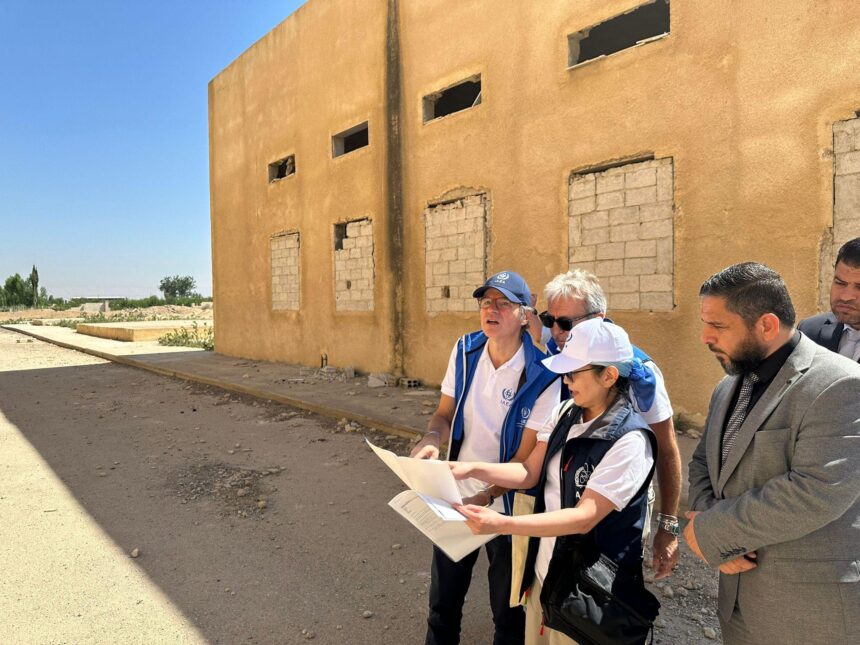
Syria has voluntarily disclosed previously undeclared nuclear material from the Assad-era program, seeking to reopen cooperation with the International Atomic Energy Agency (IAEA). Syrian Foreign Minister Asaad al-Shaibani said Damascus sent the agency an official letter on July 17, 2026, declaring “of our own free will the presence of nuclear materials at an undeclared site within the legacy left by the former regime.” IAEA Director General Rafael Grossi confirmed after a two-day Damascus visit that inspectors had accessed the site, calling the find “a few tons of nuclear material that could be put to bad use.”
Inspectors visited the former Al-Kibar reactor site in Deir Ezzor, destroyed by Israel in a 2007 airstrike after the United States and IAEA assessed that the site was likely a covert nuclear reactor project with suspected North Korean assistance, plus a second undisclosed location. Regional security sources identified the separate storage location as “Site 99,” where yellowcake uranium linked to the Al-Kibar project was reportedly held, according to Axios. Syria says the material is not weapons-grade and has asserted its right under the Non-Proliferation Treaty to peaceful use.
The breakthrough followed months of quiet diplomacy: Axios reported the Trump administration brokered the Syria-Israel-IAEA agreement to avert a crisis that officials feared could have drawn in Turkey. President Ahmed al-Sharaa’s government, in power since Assad’s December 2024 fall, has pursued IAEA cooperation to end Syria’s international isolation. The disclosure does not resolve broader regional security tensions, including Israeli concerns over undeclared military infrastructure in Syria. The case demonstrates both the value and the limits of the nuclear safeguards system: transparency can reopen diplomatic channels, but verification alone cannot resolve the geopolitical conflicts that drive nuclear risk.