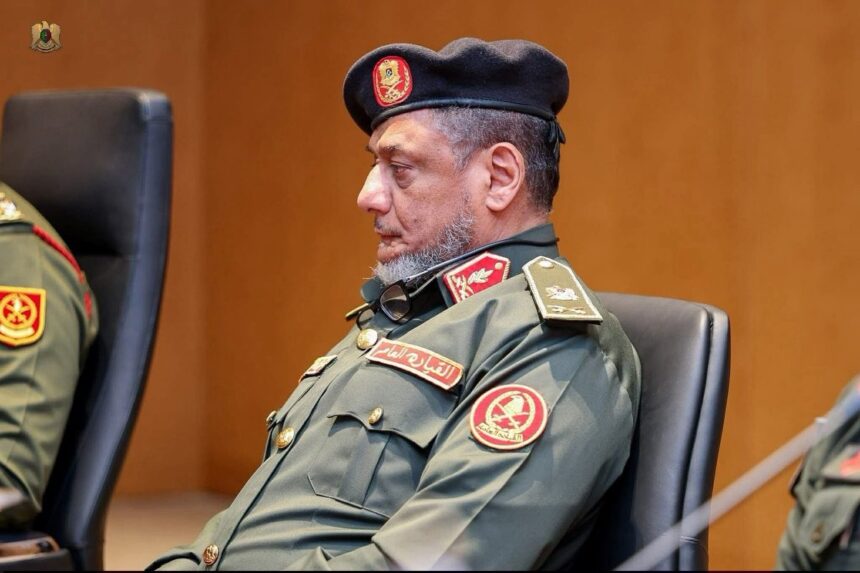
A bombing killed Fawzi al-Mansouri, the military intelligence chief of Khalifa Haftar’s Libyan National Army, when an explosive device detonated in his vehicle outside his home in Benghazi’s Hawari district on August 10, Reuters reported, citing two security sources. Haftar’s command described him as a “martyr” and vowed to punish those responsible. No group has claimed responsibility.
Mansouri had led LNA military intelligence since 2024, after previously commanding forces in the southern Sebha region. His killing is a shock less for his rank than for its location. Benghazi is the administrative and security core of Haftar’s eastern command, and a successful bombing there exposes vulnerabilities inside a security structure that has projected control for years.
The timing is politically sensitive. Libya has spent months on renewed efforts to bridge its east-west divide, including UNSMIL-led security-unification talks in Benghazi and a previously unreported Pakistani mediation effort, Reuters reported in July, that has floated a 36-month transition plan that would make Haftar’s son, Saddam, chairman of a joint Presidential Council while Haftar retains authority over the budget. Massad Boulos, the U.S. presidential advisor for Africa, has separately pushed for economic and military integration between the rival camps, according to Libya’s state news agency. Any instability in Benghazi risks spilling into the command structure that helps secure the Oil Crescent and eastern export terminals, complicating that U.S.-backed framework.
Libya’s alignments remain mixed rather than cleanly pro-West or pro-Russia. Haftar’s eastern bloc has long drawn backing from Russia, Egypt and the UAE, even as it engages Washington’s current diplomacy. The Tripoli-based Government of National Unity remains internationally recognized and closer to Turkey. Mansouri’s killing is unlikely to end the negotiations on its own, but it is a reminder that Libya’s political opening still rests on a brittle security foundation.