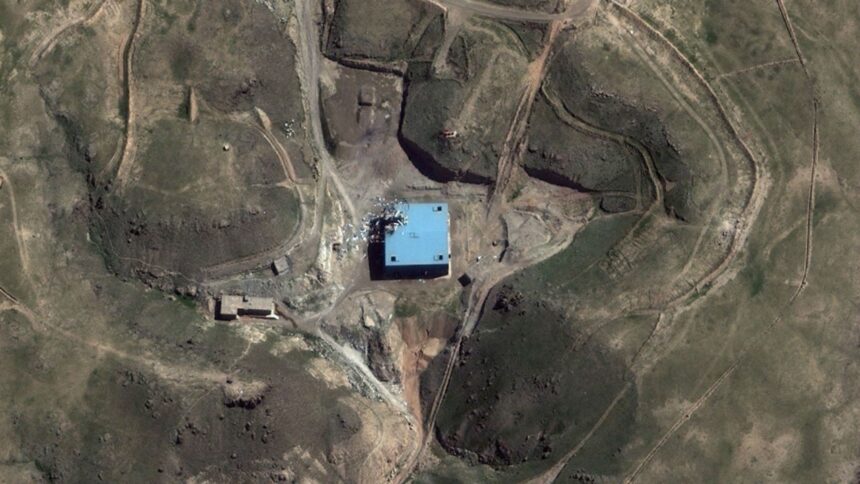
The United States has reportedly brokered separate understandings with Syria and Israel aimed at removing nuclear material from a clandestine site known as “Site 99,” Axios reported August 10, citing U.S. and Israeli officials. The International Atomic Energy Agency (IAEA) and Syria’s government separately signed an agreement three weeks earlier to carry it out.
Site 99 is linked to the Assad government’s clandestine Al-Kibar nuclear program, centered on a reactor Israel destroyed in a 2007 airstrike. U.S. officials told Axios the site held yellowcake and other residue from the Al-Kibar program. The material cannot be used directly in a nuclear weapon, but a U.S. official cited by Axios said it could be used in a radiological dispersal device, or “dirty bomb.”
Israeli officials told Axios they detected activity around the site in recent weeks that raised concern Syria’s government might be trying to regain access, possibly with Turkish help. Those officials said Israel had earlier threatened to strike the site again if the material were not removed. The Trump administration asked Israel to hold off and brought the IAEA into talks with Syria’s government, led by President Ahmed al-Sharaa.
The removal has not yet started. A U.S. official told Axios the administration hopes to “kick off the removal process soon and end it before the end of the year.” The reported deal follows a broader, public push to resolve Syria’s nuclear safeguards case: in June, the European Union welcomed IAEA efforts to inspect the Deir Ezzor site, including environmental sampling.