
Analysis
Ankara Missile Deals Aim to Close NATO’s Firepower Gap
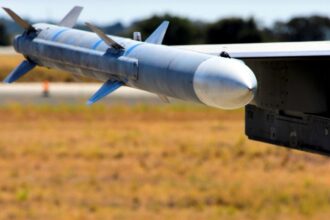
NATO’s Ankara summit produced a series of missile-production deals designed to ease pressure on U.S. factories and push Europe toward a more durable defence-industrial base.The most immediate track concerns air defence. Reuters reported that the United States is moving closer to European co-production of Raytheon’s AIM-120 AMRAAM missile and plans to establish a European maintenance facility for Lockheed Martin’s PAC-3 interceptor, used in Patriot air-defence systems. Both missiles are in high demand because of Ukraine’s need to defend against Russian air attacks.The AMRAAM initiative involves Belgium, Canada, Finland, Germany, the Netherlands, Norway and Britain, according to Reuters. The Wall Street Journal reported that Raytheon and NATO partners are seeking to qualify European suppliers for key AMRAAM components, expanding the missile’s production footprint in Europe. Idle State: A live AIM-120 interceptor locked into the wingtip launcher rail of a multirole fighter jet. Source: mtcurado / Getty ImagesThe PAC-3 plan is more…
Ukraine Strikes Russian Shadow Fleet Tankers
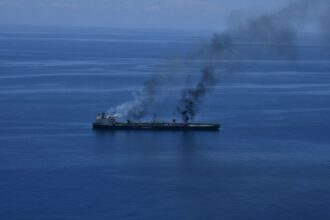
Ukraine said it struck Russian shadow fleet tankers in the Sea of Azov, targeting a fuel route used to supply occupied Crimea and Russian forces in southern Ukraine.Ukraine’s Unmanned Systems Forces said drones hit eight tankers overnight on July 6–7, after two vessels were struck a day earlier. The tankers, each with a deadweight of about 7,000 metric tons, were carrying fuel from Taganrog to occupied Crimea, according to Reuters.The attack points to a widening Ukrainian effort to pressure Russia’s maritime logistics, not only its front-line positions. The Sea of Azov has become a key supply corridor for Russian forces because it connects Russian ports with Crimea and occupied parts of southern Ukraine, Reuters reported.Kyiv describes the targeted vessels as part of Russia’s shadow fleet – the opaque network of tankers used to move fuel and oil despite sanctions and maritime restrictions. Reuters has reported, however, that only two of…
From Kyiv to Damascus: Europe’s New Interconnected Security Agenda
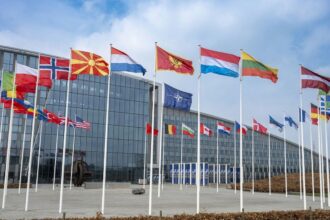
Europe’s Security Agenda Widens The NATO summit opening in Ankara this week is formally focused on defence spending, industrial production and continued support for Ukraine. Yet the week's wider diplomacy – from French President Emmanuel Macron's visit to Damascus to planned meetings between U.S. President Donald Trump, Ukrainian President Volodymyr Zelenskyy and Syrian President Ahmad al-Sharaa – illustrates a broader reality: Europe's security agenda is no longer confined to a single conflict or region. Ukraine remains NATO's central strategic challenge: a European state resisting Russia's full-scale invasion and the principal test of the Alliance's credibility in collective defence and deterrence. Syria presents a different kind of challenge. Following the collapse of Bashar al-Assad's government in December 2024, the country's transitional authorities are attempting to restore state institutions, attract foreign investment and contain persistent internal violence while seeking gradual diplomatic normalization with Europe. NATO has not folded these crises into a…

Kostyantynivka Wasn’t Taken. That Was Never Really the Point
Vladimir Putin told Donald Trump on July 4 that Russian forces had seized Kostyantynivka. They had not. The gap between claim and reality is the product here, not incidental noise. What Moscow staged in the days before that call was cognitive engineering built for a specific window inside a 90-minute phone call, according to CNN, timed to land just before a NATO summit in Turkey that Trump was set to attend. A claim built for one specific audience According to the Institute for the Study of War's July 5 assessment, Putin staged meetings with Russian military commanders on July 3 in which he claimed the Kostyantynivka seizure, timed deliberately ahead of the July 4 call that the Kremlin says Washington itself initiated. Russian Security Council Deputy Chairman Dmitry Medvedev amplified the claim the same day on his English-language Telegram channel, worth noting on its own: that channel exists to reach…
Russia Scrambles Su-57 to Hunt Ukrainian Drones Over Omsk
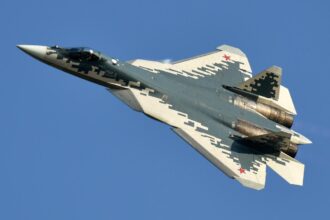
A Russian Su-57 fighter was photographed over Omsk during a Ukrainian drone strike on the city's oil refinery, Russia's largest, on July 6, according to the Ukrainian monitoring channel Exilenova+, a claim not yet independently corroborated by wire services or Russian officials. The same channel reported that Russia also scrambled an A-50U airborne early warning and control aircraft. If true, that raises a real question: why commit a large-area radar platform, designed to manage an entire air battle, to intercepting a handful of drones headed for one city? One plausible answer is a gap in ground-based radar coverage over Siberia, a region that has never needed dense air-defense infrastructure because no threat had ever reached it. That remains speculative, but it's the kind of gap this sighting, if confirmed, would point to. Whatever flew that day, it didn't work. Ukrainian drones struck the ELOU-AVT-11 primary crude distillation unit at the…

Hamas Gives Up Gaza’s Civil Administration, Not Necessarily Political Power
Hamas has agreed to relinquish its role as Gaza's civilian administrator for the first time since seizing the territory in 2007. But the move does not resolve the question that has blocked every major post-war plan for Gaza: who will ultimately control the force inside the enclave. The group announced Monday that it was dissolving the Government Emergency Committee that has overseen Gaza's civilian administration for nearly two decades. Mohammed al-Farra, the committee's head, submitted his resignation, according to Ismail al-Thawabta, director of Hamas' Government Media Office. Hamas said existing civil servants would remain in place to ensure continuity while civilian authority is transferred to the National Committee for the Administration of Gaza (NCAG), a technocratic body chaired by Ali Shaath. The decision is intended to advance one track of the post-war peace framework endorsed by the UN Security Council in November 2025 by transferring civilian administration to a technocratic…
