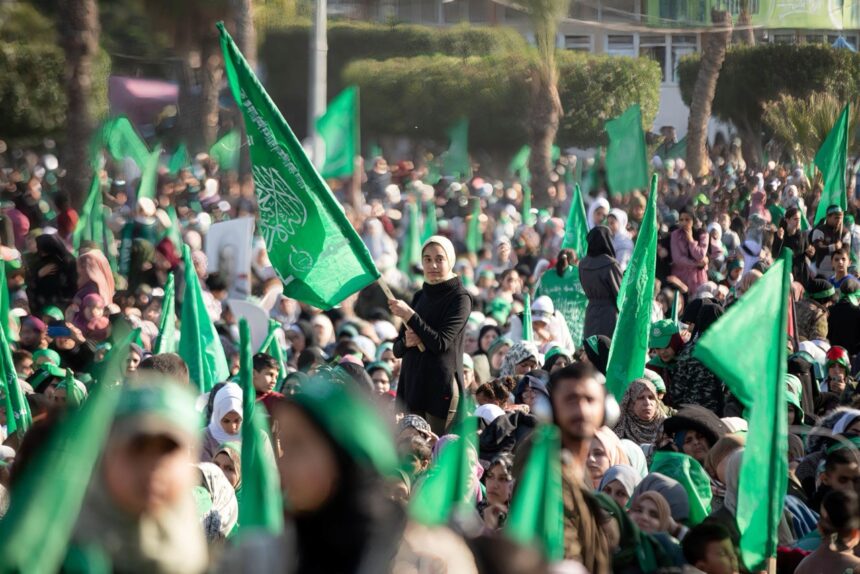
Hamas has agreed to relinquish its role as Gaza’s civilian administrator for the first time since seizing the territory in 2007. But the move does not resolve the question that has blocked every major post-war plan for Gaza: who will ultimately control the force inside the enclave.
The group announced Monday that it was dissolving the Government Emergency Committee that has overseen Gaza’s civilian administration for nearly two decades. Mohammed al-Farra, the committee’s head, submitted his resignation, according to Ismail al-Thawabta, director of Hamas’ Government Media Office. Hamas said existing civil servants would remain in place to ensure continuity while civilian authority is transferred to the National Committee for the Administration of Gaza (NCAG), a technocratic body chaired by Ali Shaath.
The decision is intended to advance one track of the post-war peace framework endorsed by the UN Security Council in November 2025 by transferring civilian administration to a technocratic authority, while leaving its most contentious provisions – Israeli withdrawal, Hamas’ military future and Gaza’s long-term security arrangements – for subsequent negotiations.
Monday’s announcement therefore addresses only one element of that framework. It transfers responsibility for governing Gaza’s civilian institutions – not the question of who ultimately controls weapons, security forces and political authority.
That distinction is likely to determine whether the announcement becomes a genuine political transition or simply an administrative restructuring.
Administration and power are not the same
The announcement appears significant because it ends nearly two decades of direct Hamas administration over Gaza’s ministries, municipal services and civilian bureaucracy.
However, governing institutions and political power are not synonymous.
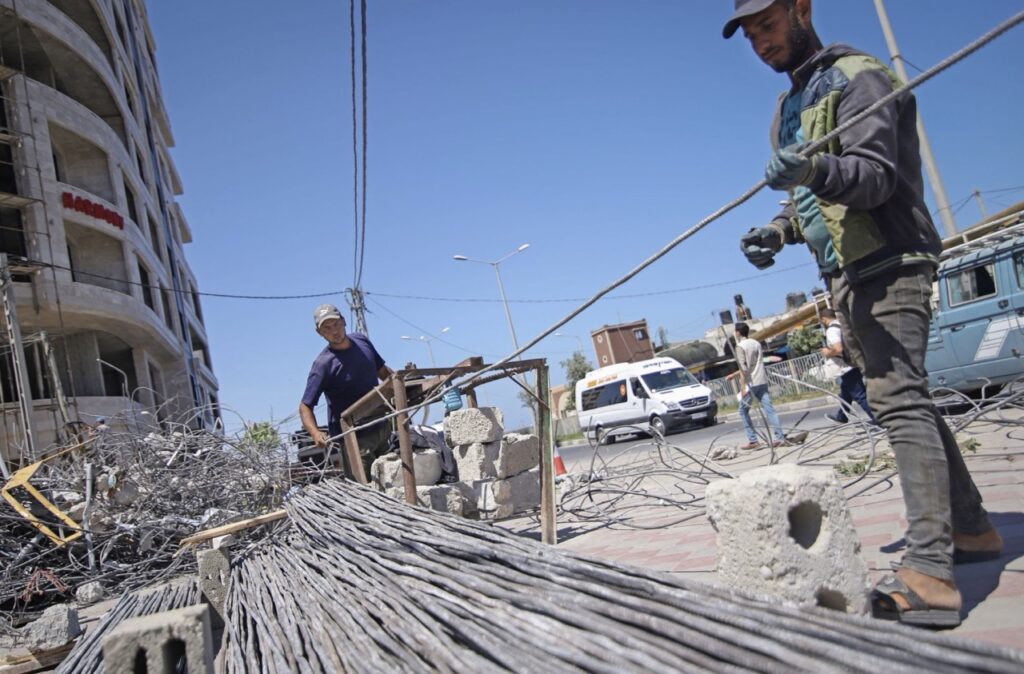
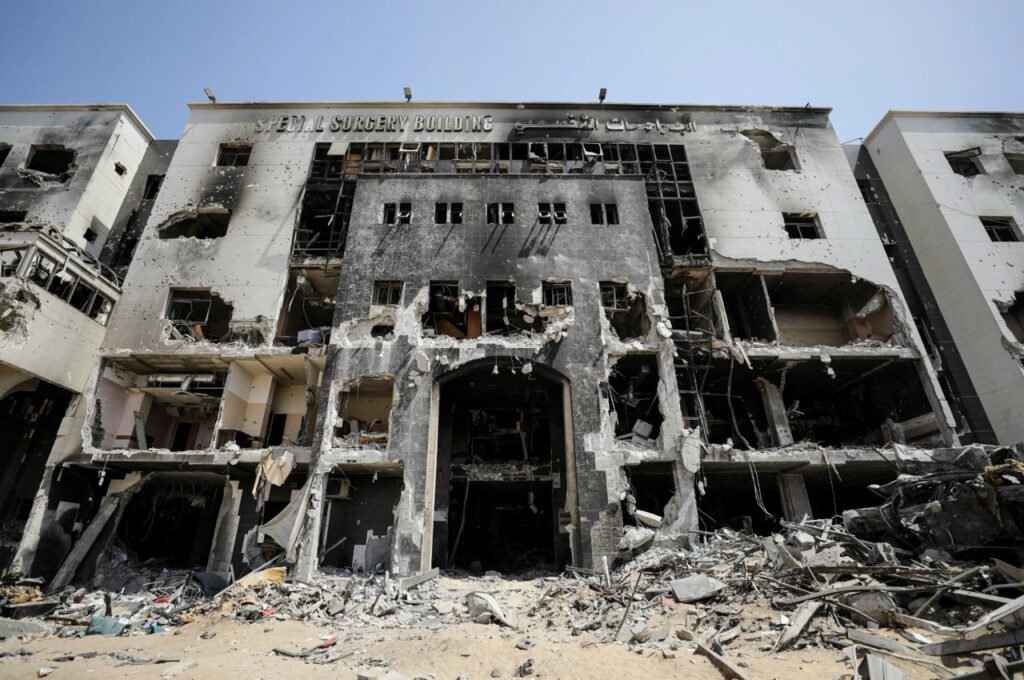
The Government Emergency Committee managed civilian affairs: ministries, local administration, municipal services and coordination with humanitarian organizations. Those responsibilities have become increasingly difficult to sustain after nearly two years of war that have devastated Gaza’s infrastructure, displaced much of its population and left public institutions struggling to function.
Nothing announced Monday suggests Hamas has agreed to dismantle its military wing, surrender its command structure or relinquish political influence over Gaza.
That distinction explains why Israeli officials reacted cautiously.
Mkhaimar Abusada, a Gaza-based political analyst, told AFP that the move remained “still a symbolic gesture,” adding that “the problem is not with dissolving their governmental committee, but with agreeing to disarmament.”
An Israeli official offered an even harsher assessment, telling Israel’s Kan public broadcaster that the announcement was “a spin that means absolutely nothing” because it did not address Hamas’ military capabilities.
Those reactions underscore the issue that has repeatedly stalled ceasefire negotiations: civilian governance is negotiable; control over force remains far more contentious.
Why Hamas can afford to make this move
The decision also reflects changing political incentives. For much of Hamas’ rule, governing Gaza reinforced its claim to political legitimacy. After nearly two years of war, however, civilian administration has become an increasingly expensive burden rather than a strategic asset. Public infrastructure has been devastated, municipal services have largely collapsed and reconstruction will require billions of dollars in international assistance that Hamas is unlikely to secure on its own.
Much of Hamas’ leverage now derives less from administering ministries than from its armed organization, political networks and continued influence within Palestinian politics. Relinquishing responsibility for daily governance therefore allows the movement to reduce the political and financial costs of administering a devastated territory without necessarily surrendering the sources of influence that matter most in future negotiations.
Read strategically, the decision appears less like a retreat than a redistribution of responsibility.
By transferring civilian administration to a technocratic committee acceptable to Arab mediators and international donors, Hamas may improve prospects for reconstruction funding and humanitarian coordination while avoiding an explicit concession on its military capabilities.
Why the NCAG matters
The proposed technocratic administration also serves a practical diplomatic purpose. International donors need an institution capable of receiving reconstruction funds, coordinating humanitarian assistance and rebuilding civilian infrastructure. Arab mediators require a governing body that can engage with international organizations without immediately resolving Gaza’s contested political future. Israel, meanwhile, has rejected any post-war arrangement that leaves Hamas formally administering the territory.
The NCAG is intended to bridge those competing requirements by separating civilian governance from the unresolved negotiations over security and armed power. Whether it can do so depends on agreements that have yet to be reached.
Territorial reality limits the immediate impact
The practical consequences of Monday’s announcement are also constrained by conditions on the ground.
According to Reuters, Israeli forces currently control more than 60 percent of the Gaza Strip, while Prime Minister Benjamin Netanyahu has said he has instructed the military to expand that control toward roughly 70 percent.
Any transfer of civilian authority can therefore affect only those areas where Palestinian administrative institutions are still able to operate.
Across much of Gaza, movement, access and security remain determined primarily by Israeli military operations rather than by any Palestinian governing body.
Control of territory ultimately determines the reach of any civilian administration. A governing body can appoint officials and issue directives only where it is able to operate. As long as Israeli military operations continue across large parts of Gaza, the authority of any future technocratic administration will depend not only on political agreements but also on the security conditions that allow civilian institutions to function.
That means the dissolution of Hamas’ civilian administration is politically significant but operationally limited until broader arrangements governing territorial control are agreed.
Politics on both sides continue to shape negotiations
The timing of Hamas’ announcement is also notable. Israel is expected to enter an election campaign later this month if the Knesset dissolves as anticipated, with voting expected in late October. Netanyahu has repeatedly argued that although Hamas’ military capacity has been severely degraded, its civilian rule has not been fully dismantled.
That position keeps disarmament – not civilian administration – at the centre of Israeli political debate.
For Hamas, extending negotiations while transferring civilian responsibilities may preserve room for future bargaining as Israeli domestic politics and regional diplomacy continue to evolve.
Whether that calculation succeeds will depend less on administrative reforms than on whether negotiators can bridge the far more difficult dispute over security arrangements.
The real negotiation has yet to begin
Monday’s announcement should therefore not be interpreted as Hamas withdrawing from Gaza.
Instead, it represents an attempt to separate civilian governance from the unresolved question of political and military authority.
A technocratic administration may eventually oversee ministries, reconstruction projects and public services. It cannot, by itself, determine who controls armed groups, commands security forces or exercises ultimate political authority inside Gaza.
Monday’s announcement moves Gaza’s post-war planning forward by addressing one of its most immediate administrative challenges. But it does not answer the question that has repeatedly blocked efforts to end the conflict: who will control security after the fighting ends.
Until that issue is resolved, the transfer of civilian administration should be understood as an important diplomatic step rather than a transfer of political power.