
Analysis
El Obeid Exposes Sudan’s Missing Peace Strategy
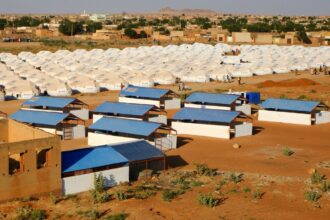
El Obeid, the capital of Sudan's North Kordofan state, is home to approximately half a million people, including more than 100,000 displaced by the civil war. It links Darfur, held by the Rapid Support Forces (RSF), to army-controlled central and eastern Sudan, and has faced intensifying RSF pressure in recent weeks. Control of El Obeid would give either side a major advantage over the corridor linking RSF-held Darfur with army-controlled central and eastern Sudan.The escalation comes amid a concentrated diplomatic week: the G7 called for a halt to attacks on the city and a wider arms embargo, the European Union banned Sudanese gold and Washington circulated a ceasefire framework. Each instrument is real, but none yet reaches the decentralized war economy that sustains both belligerents. A genuinely national political dialogue remains a distant goal.The war's vocabulary obscures part of the problem. The Sudanese Armed Forces (SAF) are the army-led de…

Azerbaijan’s Iran War Balancing Act Faces Limits
From Karabakh to the Iran war, Baku keeps testing its own limits.Azerbaijan’s conduct through the 2026 war between the United States, Israel, and Iran fits a pattern stretching back years: a small state repeatedly testing how far it can push bigger neighbors before pulling back. A new Institute for National Security Studies assessment by Elie Houé describes Baku’s wartime posture as alignment tempered by restraint rather than genuine neutrality. Read together with the years before it, that same formula- assert forcefully, then de-escalate before the cost outruns the gain- looks like the throughline of Azerbaijan’s rise.Karabakh Set the TemplateThe pattern began with Nagorno-Karabakh. Azerbaijan’s 2020 offensive and the final campaign that dismantled the breakaway republic in 2023 ended three decades of stalemate and reversed a defeat that had defined the country’s post-Soviet identity. It was the first time Baku demonstrated that it would use force to settle a frozen conflict…
When AI Starts Replacing People at War
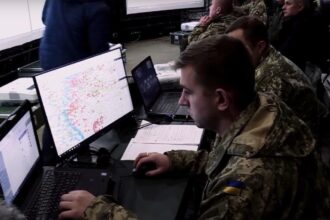
The debate over artificial intelligence has mostly asked whether machines will replace people at work. In Ukraine, a different kind of substitution is already under way. Short of soldiers, ammunition and time, a country fighting a much larger enemy has turned to drones, software and AI to do the work that once required far more people. That logic is now spreading past conventional armies. New research suggests Boko Haram and its Islamic State-linked faction in Nigeria have used leading AI chatbots to help plan attacks, troubleshoot weapons and run day-to-day operations. The stakes are wider than terrorism. AI is starting to cut the amount of human expertise, manpower and organisation a group needs to wage war. From Drone Warfare to Digital Coordination More than four years into Russia's full-scale invasion, Ukraine has been fighting an enemy with far more soldiers, guns and shells than it can match. That pressure drove…
Ukraine Is Forcing Europe to Rethink Air Defence
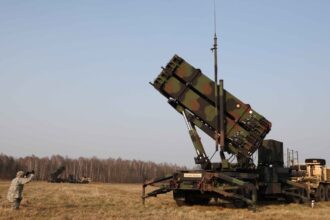
More for Ukraine, more for themselvesWestern leaders gathering in Paris on Monday are trying to secure more air-defence systems for Ukraine. The shortage they face, however, is not simply one of missiles or launchers. It reflects a defence-industrial model built for decades of peacetime efficiency rather than sustained high-intensity war. Russian missile attacks have exposed a structural weakness that Europe can no longer solve through emergency transfers alone.The immediate task facing the Coalition of the Willing is to protect Ukrainian cities from an intensifying mix of ballistic missiles, cruise missiles and long-range drones. The longer-term consequence is far more significant. Ukraine's defence is pushing European governments toward something they have debated for years but never fully built: a continent-wide approach to air and missile defence that links procurement, industrial production, operational experience and battlefield innovation into a more coherent system.Europe does not yet possess such a system. National militaries continue…
Ankara Summit Shows NATO Rediscovering Its Purpose
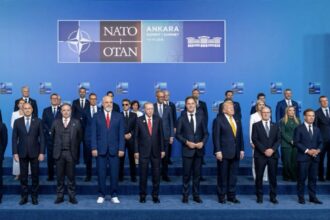
NATO was built in 1949 to contain a Soviet threat its founders believed diplomacy alone could not hold. When the Soviet Union collapsed, the Alliance spent three decades answering a nagging question: what was it still for? The Ankara summit declaration gave an unusually direct answer.NATO names Russia and rediscovers its missionThe declaration defines Russia as a long-term threat to Euro-Atlantic security, reaffirms Article 5 unanimously, and commits European Allies and Canada to carry more of the load. NATO pledged €70 billion in military support for Ukraine in 2026, with at least as much promised for 2027, and announced more than $50 billion in new procurement – prioritising long-range strike, air and missile defence, drones, artificial intelligence and a shared transatlantic "combat cloud." NATO carries less raw mass than it did during the Cold War, but mass is no longer the measure. What Ankara showed is an alliance more focused,…
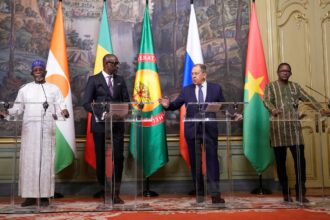
Lavrov’s Africa Tour Signals Trouble for Moscow’s Sahel Allies
Russian Foreign Minister Sergei Lavrov arrived in Niger this week promising deeper military cooperation with Mali, Niger and Burkina Faso, the three military governments that make up the Alliance of Sahel States, or AES. The timing tells its own story. Moscow’s closest partners in the region are under pressure, and in Mali especially, Russian-backed forces are struggling to turn deeper military involvement into durable battlefield gains.A reassurance mission, not a victory lapThe July 8 talks in Niamey were billed as another step in a growing partnership. In his opening remarks at the Russia-AES ministerial meeting, Lavrov praised closer cooperation with the three Sahel governments, while Moscow and the AES states committed themselves to strengthening military and military-technical ties.Lavrov also accused Ukraine and France of colluding with what he called terrorist groups in the Sahel, a sweeping charge for which no credible public evidence has been produced. The accusation shifts attention…
