
Analysis

Russia Speeds Up Its Own Version of Starlink
Russia doesn't need to finish building its own Starlink to start using it. That's the uncomfortable detail buried in an August 10 interview with Ukraine's Defense Intelligence (GUR) Deputy Chief Vadym Skibitsky, published by RBC-Ukraine. Moscow's Rassvet satellite constellation is going up faster than its own planners expected, and even in its current, half-built state, it's already flying over Ukraine with enough reach to matter. A structural workaround, not just a space race Rassvet exists because of one exploited dependency. Russian forces used Starlink informally earlier in the war, until Ukraine and SpaceX cut that access off. That loss taught Moscow, mid-conflict, exactly how much leverage comes from depending on someone else's satellites and someone else's geofencing decisions. Built by Bureau 1440 under Roscosmos oversight, the project shifted from a commercial broadband pitch into a deliberate mechanism for engineering around that vulnerability. That mechanism operates on two fronts at once.…

Why Modern Wars No Longer End
The world's biggest wars are increasingly difficult to win. That does not necessarily make them easier to end. Russia has failed to conquer Ukraine, but still believes military pressure can improve the terms of any eventual settlement. Ukraine has prevented Russian victory but sees a ceasefire without credible security guarantees as a potential interval before another invasion. The United States and Iran have repeatedly moved between military confrontation and negotiations without resolving the sanctions, nuclear, maritime and regional-security disputes driving their conflict. Israel and Hezbollah have accepted ceasefires while continuing to disagree over Israeli deployments, Hezbollah's weapons and who ultimately controls southern Lebanon. Again and again, diplomacy reaches the same obstacle: neither side can obtain everything it wants militarily, but neither believes it has lost enough to accept what the other side demands. Conflict-resolution scholars have long described one potential opening for negotiations as a "mutually hurting stalemate" – the…
China Is Rewriting the Rules of Coercion Without Firing a Shot
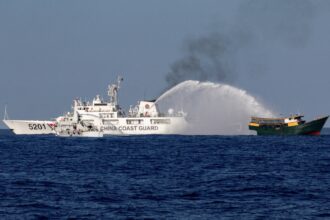
China's most effective military strategy may be the one that avoids war. Across the Indo-Pacific, Beijing is increasingly using coast guard vessels, economic restrictions, administrative claims and political pressure to alter the behavior of other governments without triggering the costs and uncertainty of direct military conflict. The method is incremental: create new facts on the ground or at sea, normalize them through repetition, and force rivals to decide whether each individual incident is serious enough to justify escalation. Recent developments show how broad that toolkit has become. In July, the Philippine Coast Guard reported that a China Coast Guard vessel used water cannons against two Philippine government vessels near the disputed Scarborough Shoal during a mission delivering fuel subsidies and assistance to Filipino fishermen. The Chinese ship reportedly closed to within about seven meters of one of the Philippine vessels before using the water cannon. The confrontation was significant not…

Russia Is Bringing the War to Europe’s Defense Industry
When German authorities disrupted an alleged Russian intelligence operation targeting Stefan Thumann, founder of Bavarian drone manufacturer Donaustahl, the immediate story appeared to concern one company and one suspected plot. According to a Die Zeit investigation, investigators believe the operation progressed beyond routine intelligence gathering and was intended to culminate in Thumann's assassination after months of surveillance conducted by two suspected operatives. Prosecutors ultimately charged the suspects with acting on behalf of a foreign intelligence service, while the alleged murder plot itself has not been included in the current arrest warrants because investigators say the available evidence did not yet satisfy the legal threshold for that charge. The Battlefield Behind the Front Line According to ZEIT, the operation began to unravel after a partner intelligence service warned German authorities in December 2025 that Thumann had become the target of a Russian operation. Bavarian investigators arrested one suspect, identified as Serhii…

The New Resource Wars Have Already Begun
For much of the twentieth century, control over oil shaped alliances, wars and global trade. The twenty-first century is increasingly being defined by a different set of strategic resources. Cobalt, lithium, graphite and rare earth elements have become indispensable for manufacturing electric vehicles, semiconductors, drones, precision-guided missiles and advanced military electronics. As governments race to secure them, competition over critical minerals is reshaping industrial policy, trade relations and geopolitical strategy.That transformation is becoming increasingly visible in international diplomacy. Late last month, WTO Director-General Ngozi Okonjo-Iweala warned the U.N. Security Council that critical minerals are no longer treated as ordinary commodities but as strategic assets capable of influencing global stability.U.N. Secretary-General António Guterres told the same session that competition for lithium, cobalt, nickel and rare earths has enabled armed groups to profit from illegal mining and smuggling, particularly in eastern Democratic Republic of the Congo. Okonjo-Iweala noted that Africa holds roughly…
India Rejects Su-57 as Russia Loses Ground in Fighter Market
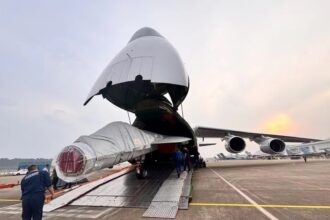
India has ruled out purchasing new-build Russian Su-57 fighters in the near term, closing the most obvious channel for Moscow to sell its flagship stealth jet to New Delhi. Defence Secretary Rajesh Kumar Singh said India had "not thought about" acquiring a new Sukhoi variant, telling reporters the country was instead pursuing further upgrades to its existing, licence-built Su-30MKI fleet, which he described as a successful and important platform. The remark is the clearest official signal yet against a near-term Su-57 purchase, a sharper stance than the ambiguity officials had maintained earlier this year.A Programme Foreclosed by PrecedentThe decision carries the weight of an earlier failure. India withdrew in 2018 from the joint Russian-Indian Fifth Generation Fighter Aircraft programme, based on an earlier Su-57 variant, after prolonged disputes over cost-sharing, industrial workshare, technology access and the aircraft's engine and stealth performance. That collapse left New Delhi wary of tying its…
