
Analysis
Proxy Wars Are Escaping Their Sponsors
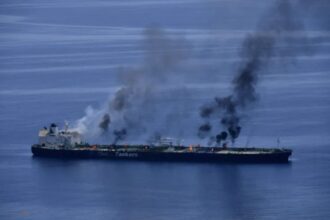
Diplomacy has returned to the Gulf. Violence has not. As American and Iranian negotiators discuss reopening the Strait of Hormuz after months of war, Iranian-backed armed groups continue attacking commercial shipping hundreds of kilometres away in the Red Sea. The contrast highlights an increasingly important feature of Middle Eastern security: even when governments seek de-escalation, the armed movements they spent decades cultivating do not necessarily follow.That contradiction was on display again this week. While President Donald Trump told Fox News that Washington and Tehran had held "very good discussions" during an all-day negotiating session aimed at reopening the Strait of Hormuz and ending the five-month conflict, Yemen's Houthi movement said it had struck the Saudi oil tanker Wafa with ballistic missiles near Yanbu. A day earlier, the Indian-flagged cargo vessel MSV Faize Noore Oliya capsized after being struck by a projectile in the Red Sea. Yemen's internationally recognized government blamed…
Territorial Deadlock Blocks Sudan Ceasefire Talks
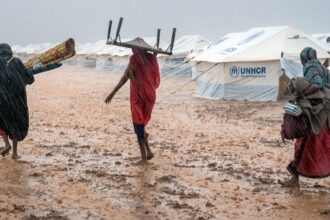
A renewed attempt to secure a humanitarian truce in Sudan has stalled over whether the Rapid Support Forces (RSF) must withdraw from captured cities before broader negotiations begin. The United States told the UN Security Council that it had repeatedly presented the belligerents with a proposal for a nationwide humanitarian truce guaranteeing relief access across front lines and international borders. According to Reuters, which reviewed diplomatic documents related to the proposal, SAF accepted several elements of the U.S.-backed framework but objected to provisions that did not require a full RSF withdrawal from occupied cities.Territorial Control, State Authority and the Negotiating ImpasseThe disagreement is not simply about sequencing. Territory provides military depth, political leverage and access to revenue. The RSF's positions across Darfur and parts of Kordofan connect gold-producing areas, livestock routes, agricultural zones and informal cross-border trade. SAF-aligned authorities, operating from Port Sudan, retain the Central Bank, customs administration, formal…
Civil Wars Are Becoming Battles for Critical Minerals
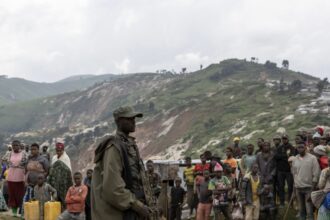
The world's race to secure critical minerals is changing the geography of civil wars. Deposits of rare earths, coltan, gold and uranium are no longer merely sources of wartime revenue; they are becoming strategic assets whose control affects military supply chains, industrial policy and competition between major powers. As governments seek secure access to these materials, local battlefields are becoming increasingly entangled with global geopolitics.Civil wars have always been influenced by natural resources. Oil, diamonds, timber and narcotics have financed armed groups, rewarded territorial conquest and attracted foreign patrons. What distinguishes today's conflicts is the strategic value of the resources themselves.Minerals once regarded primarily as commercial commodities are now indispensable to batteries, semiconductors, aerospace systems, precision weapons and energy infrastructure. Rare earths, coltan, cobalt, copper, lithium, uranium and gold have become matters of national security. Political exclusion, ethnic tensions and state collapse remain the principal causes of most civil wars,…
Trump Turns Dependence on America Into Leverage
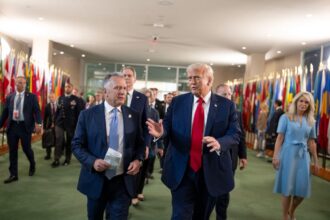
Donald Trump's foreign policy increasingly rests on a simple proposition: identify what another government cannot easily obtain without the United States, offer access to it and keep delivery conditional.The mechanism is conditional access, not simply hard power. Export licences, technology transfer, sanctions relief, market access and military supply become instruments of coercive diplomacy. Washington creates an expectation of reward, preserves its ability to withdraw it, and uses the resulting dependence to extract movement on a larger objective.This is not soft power, built on other countries wanting to follow the United States. It functions closer to liquidation: decades of accumulated American capital, dollar clearing, defense umbrellas, technology monopolies, spent down for immediate tactical wins rather than reinvested in the relationships that built them.Leverage Follows Every OfferWashington signed a civilian nuclear-cooperation agreement with Riyadh on July 22, but the deal did not conclusively authorize enrichment. It set up a two-year joint study…
The Age of Isolated Wars Is Ending
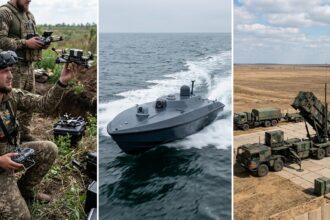
For decades, policymakers treated wars as largely regional events. Fighting in the Balkans rarely altered military planning in East Asia. A conflict in the Middle East might disrupt oil markets but have little influence on defence procurement in Europe. That assumption no longer holds.Ukraine, the Middle East, Taiwan and the Korean Peninsula are increasingly linked by shared supply chains, transactional military partnerships and battlefield lessons that move across theatres within months, sometimes weeks. The result is not one global war but an interconnected conflict ecosystem, in which a decision made in Pyongyang or Tehran can reshape a procurement debate in Washington or Warsaw.Ukraine as co-developer, not laboratoryRussia’s full-scale invasion did not simply turn Ukraine into a passive testing ground. Ukrainian defence firms and military units have become active co-developers of doctrine, iterating first-person-view drone software, electronic-warfare countermeasures, command systems and naval drone tactics in combat cycles measured in weeks rather…
Trump Blinks as Iran Tests American Power
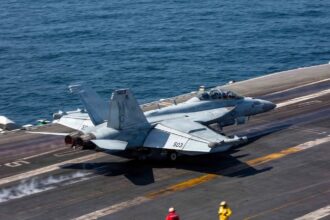
An EA-18G Growler launches from the aircraft carrier USS Abraham Lincoln in support of strikes against Iran on February 28, 2026. Source U.S. Central Command / U.S. Navy, public domain.The US President Donald Trump threatened Iran with a massive new attack, assembled the option, then called it off, in a now-familiar pattern. Saudi Crown Prince Mohammed bin Salman cautioned him against the strikes, according to CBS News, echoing an earlier episode in March when Reuters reported that Gulf states warned Trump directly that strikes on Iran's power plants would trigger Iranian retaliation against their own energy and desalination infrastructure, targets Washington cannot guarantee to defend.Trump said on Truth Social that Iran and other Middle Eastern countries had asked him to hold off because “the perimeters of a deal has been agreed to,” and that he had agreed to cancel the attack “subject to being able to rapidly make a DEAL.”…
