
Analysis

Maritime Trade Enters the Age of Armed Passage
The modern maritime order is designed to separate a ship's right of passage from the nationality of its owner, the origin of its cargo and the political allegiance of its customer. Across several of the world's most important sea lanes, that separation is beginning to break down.Iran is seeking payments connected to passage through the Strait of Hormuz. Yemen's Houthis are weighing fees on shipping through Bab el-Mandeb. Russia is considering putting soldiers and heavy weapons aboard grain carriers and is already escorting its own sanctioned tankers with warships. In the South China Sea, coast-guard vessels increasingly use physical force to determine who may fish, resupply an outpost or maintain a government presence. These are different conflicts with different legal foundations. Together, they point toward a system in which passage depends increasingly on political clearance, military protection or an armed actor's restraint.Access Replaces Navigation RightsAn Omani proposal backed by Gulf…
Private Industry Storms the Missile Age
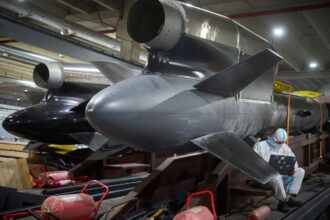
The missile is again becoming an organizing weapon of conventional war. Ukraine and the Middle East have shown that states with modest air forces can impose military and economic costs at long range. Precision strike has turned into an industrial competition built around mixed salvos, production speed and the ability to replace what is fired.Drones widened that competition rather than closing it. New companies are entering work once reserved for national design bureaus and established defence groups, while interceptor shortages now constrain even the United States.New Producers Enter The FieldLockheed Martin, RTX and MBDA — the established Western missile manufacturers — have long operated as private or partly private firms under state contracts, so missiles never really "went private" in the way the phrase implies. What changed is the market structure. Startups and firms using commercial components are moving into strike and air-defence work once closed to new entrants, while…

Intelligence Rearmament Spreads as States Prepare for Conflict
Sweden is creating an independent civilian foreign intelligence service. Japan is establishing a central intelligence bureau and proposing its first standalone postwar foreign-intelligence agency. Germany is debating powers that could take its foreign intelligence agency beyond gathering information and into sabotage, cyber disruption and, only in a constitutionally declared state of defense, kinetic measures.These are not isolated bureaucratic reforms. They amount to an intelligence rearmament: governments are treating strategic information, clandestine collection and operational disruption as sovereign capabilities alongside armed forces, weapons production and civil defense.The Political Intelligence GapSweden's reform exposes the central problem. The country already possessed substantial foreign-intelligence capacity through the military's Must organization, the signals-intelligence agency FRA and the clandestine collection office KSI. What it lacked was a separate civilian service focused on the government's political and strategic requirements.The government has submitted legislation enabling Sveriges utrikes underrättelsetjänst, or UND, to begin operating on January 1, 2027 (details…

Four Countries Protest Russia Over War’s Fallout
Over the past ten days, Russia has drawn formal diplomatic protests from three countries with little in common except geography, India, Azerbaijan, and Botswana, plus a fourth incident involving Romania that Bucharest has linked to Moscow's war. Read together, the four episodes trace back to three distinct features of how Russia is waging this war: missile strikes on Black Sea shipping lanes, a maritime environment beyond Ukraine's waters where sea mines and drone debris create separate and less attributable hazards, and a foreign recruitment drive built to avoid a politically costly domestic mobilization.India: A Targeted StrikeIndia's protest followed a clearly attributable, targeted strike. On July 19, a Russian strike using three Kh-59/Kh-69 cruise missiles hit the bulk carrier MV Golden Leo as it left the port of Odesa, within Ukrainian-controlled waters, killing four Indian crew members and critically injuring a fifth. India's Ministry of External Affairs said the deaths caused…
Drone War Is Pushing Beyond Electronic Jamming
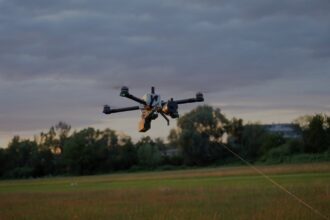
For much of the drone war in Ukraine, electronic warfare offered one of the cheapest answers to one of the battlefield's cheapest threats. Jam the radio link between an FPV drone and its pilot, disrupt satellite navigation or flood the relevant frequencies, and a weapon costing hundreds or thousands of dollars could be stopped without firing an expensive interceptor.Russia and Ukraine are increasingly designing drones around that defense.The Cable as a Workaround – and a ConstraintRussian forces are now using fiber-optic FPV drones to strike Ukrainian infrastructure behind the front line. Instead of receiving commands over a radio link, the drone unreels a thin cable as it flies, carrying the control signal directly between aircraft and operator. That makes the control link resistant to the conventional radio-frequency jamming used against ordinary FPVs.That solution is not free. The cable adds weight, can snag or break mid-flight, and limits how sharply the…

How Silicon Valley Billionaires Now Talk About War
A small circle of the world's richest technologists has started speaking about war, deterrence, and global order in the same register they use for product launches: as engineering problems with technical solutions, where the state is a slow, sentimental client and the software company is the one actually keeping the peace. Elon Musk, Palantir's Alex Karp, and Google's former chief Eric Schmidt do not agree on much, and they are not a coordinated bloc. But laid side by side, their interviews, manifestos, and conference remarks describe a consistent worldview, and, just as consistently, a business model: cast state institutions as too slow to manage existential risk, then sell the acceleration that only a private technology firm can supposedly provide.Musk’s Techno-FatalismMusk's version of the worldview surfaced most vividly in a combative sit-down with The Economist's editor-in-chief, Zanny Minton Beddoes, published this week and broken down by Gizmodo. Pressed on the future…
