
Iran
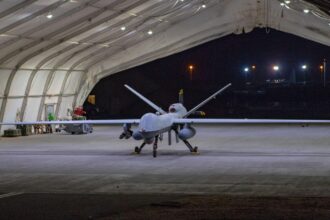
Trump Puts New Tariffs on Drone Imports
President Donald Trump has signed a proclamation imposing tariffs of up to 100 percent on imported drones and their components, a move the White House frames as reducing US reliance on foreign, largely Chinese-made unmanned aircraft. The order landed one day after Washington's costliest known drone losses of the Iran war became public. That timing overlap between trade policy and battlefield attrition has drawn added attention, even though the two actions are not officially linked. Under the White House proclamation, drones and components judged to pose the greatest security risk face a 100 percent tariff, a category covering drones with a maximum takeoff weight above 25 kilograms and any drone with thermal-imaging capability, along with their docking stations. Smaller drones outside those specs, and other components, face a 25 percent tariff. Close allies get preferential rates: drones and components from EU member states, Japan, Liechtenstein, South Korea, Switzerland and Taiwan…
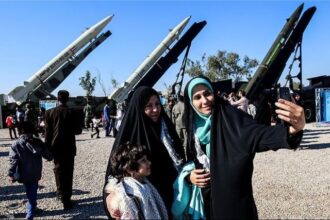
Iran Hardens War Doctrine
Iran's leadership is reorganizing its military command for a longer, more offensive confrontation with the United States and Israel, merging key command structures and installing IRGC-aligned officials in top security posts. Bloomberg reported that IRGC General Mohammad Reza Naqdi described a shift to an "offensive doctrine" aimed at taking operations "into enemy territory" when ordered, and said Iran's ballistic missile and drone production remains well above current use. The same reporting said Khamenei named IRGC veteran Mohsen Rezaei to head the Supreme National Security Council and ordered Major General Ali Abdollahi to complete a merger of the Armed Forces General Staff with the Khatam al-Anbiya Central Headquarters, reversing a 2016 split. Newly appointed IRGC commander Ahmad Vahidi has taken a hardline public stance against U.S. concessions on reopening the Strait of Hormuz. The command merger brings strategic planning and wartime execution under one structure, reducing friction between headquarters and field…
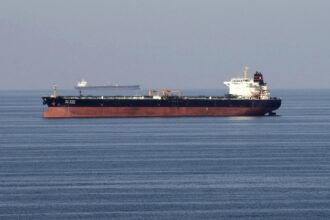
IEA Slashes Oil Supply Forecast as Hormuz Remains Closed
The International Energy Agency (IEA) on Wednesday sharply lowered its forecast for global oil supply in 2026, warning that continued disruption in the Middle East is pushing the market deeper into deficit. The revision, published in the IEA's August Oil Market Report and reported by Reuters, projects global oil supply will fall by 4.3 million barrels per day this year, a steeper decline than the 3.7 million bpd contraction forecast in July, bringing total 2026 supply to 102.02 million bpd. The IEA attributed the downgrade to the continuing closure of the Strait of Hormuz, the U.S. blockade of Iranian exports, renewed attacks in the Bab el-Mandeb Strait and lower Kazakh CPC Blend exports. A ceasefire and memorandum of understanding aimed at ending the Iran war collapsed last month, after which tanker attacks in Hormuz resumed alongside renewed Houthi strikes in the Red Sea. Gulf oil loadings through Hormuz peaked at…
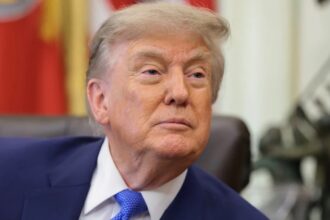
Trump Turns Iran’s Compensation Demand Around
President Donald Trump has rejected Iran's demand for compensation over war damages, saying on Truth Social that Iran "should be responsible for the damages and death caused to the people of Lebanon, Syria, Yemen, and Gaza." The exchange added a new obstacle to talks over reopening the Strait of Hormuz, severely constrained since the U.S.-Israel war on Iran began in February. Trump separately told reporters at the White House that his administration would seek compensation covering roughly 50 years of alleged Iranian-linked deaths, including American and regional casualties. The dispute escalated after Iran tied the strait's reopening to a list of U.S. concessions. Reuters reported that Iranian security officials said Washington must end the war and unfreeze Iranian assets, while earlier Iranian demands included lifting the naval blockade and paying compensation for war damage. AP reported that the Trump administration is pivoting back toward sanctions and economic pressure as other…
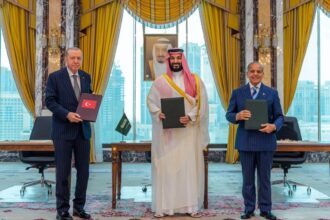
Mecca Pact Hedges Against Unreliable U.S. Backing
Three leaders converged on Islam's holiest city on August 7 to sign what could become the most consequential Middle Eastern defense pact in a generation. Pakistani Prime Minister Shehbaz Sharif arrived a day early to perform the Umrah pilgrimage in Mecca. Turkish President Recep Tayyip Erdogan flew in to join him and Saudi Crown Prince Mohammed bin Salman for the signing of the Mecca Joint Defense Agreement, a pact born from this year's Iran war and renewed fighting by Saudi Arabia and Yemen's government against Houthi forces. The agreement's core clause is blunt: an armed attack on any one of the three states will be treated as an attack on all three. That mechanism is not unprecedented. Riyadh already led the Islamic Military Counter Terrorism Coalition, a Saudi-led coalition of Muslim-majority states formed in 2015, and Saudi Arabia and Pakistan signed a bilateral mutual-defense pact in 2025 that CSIS described…
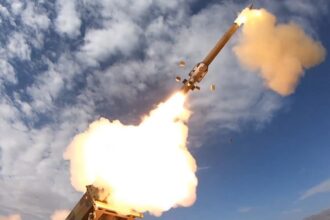
US Sells 5,250 Interceptors to Gulf States
The United States has approved the sale of 5,250 Patriot and Terminal High Altitude Area Defense (THAAD) interceptors to Bahrain, Kuwait, Qatar and the UAE, Reuters reported on August 7, as Washington replenishes Gulf stockpiles drained by five months of war between Israel, the US and Iran. The country breakdown and delivery schedule remain undisclosed. The approval follows $25.8 billion in expedited sales to the same four states plus Israel that Secretary of State Marco Rubio cleared in May under an emergency waiver of congressional review. The number is an approval, not a delivery date. Building a single Patriot interceptor takes two to three years from contract award, according to defense manufacturing expert Jerry McGinn. A CSIS analysis from July 27 put current US Patriot stocks under 1,000, down from about 2,330 before the war, and THAAD stocks at roughly 250, down from 452. The bottleneck is specific. A Department…
