
Iran
Iran Rejects Trump’s New Ceasefire Offer
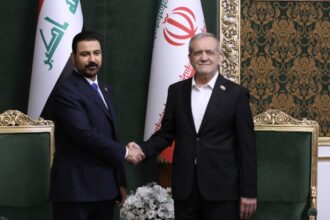
Iran has rejected a new U.S. ceasefire proposal delivered to Tehran by Iraqi Prime Minister Ali al-Zaidi after his White House meeting with President Donald Trump, according to Iranian and Iraqi officials cited by The New York Times. The White House has not publicly confirmed the proposal or disclosed its terms.Iranian officials reportedly described the offer as a temporary arrangement that failed to resolve the future status of the Strait of Hormuz, the central dispute in repeated attempts to halt the fighting. They said Tehran was not interested in accepting another short pause without a broader settlement.Al-Zaidi met President Masoud Pezeshkian and Foreign Minister Abbas Araghchi during his visit to Tehran. His office said he called for dialogue and pledged that Iraqi territory would not be used to facilitate attacks on Iran. Araghchi said the obstacle was not a lack of diplomatic channels but Washington’s approach.Two Iranian officials also told…
US Launches Twelfth Night of Iran Strikes
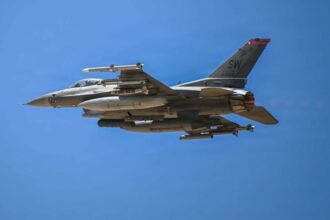
U.S. forces began a new wave of strikes against Iranian military targets at 5:30 p.m. ET Wednesday, "at the Commander in Chief's direction," according to a statement from U.S. Central Command posted on X. The statement said the mission would continue to "further degrade Iran's ability to threaten civilian mariners and commercial vessels transiting regional waters."The strikes follow the eleventh consecutive night of U.S. attacks on Iranian sites, which targeted military command centers, air defense systems, and maritime capabilities, according to a statement cited by NewsNation. Iran's Fars news agency reported that strikes also hit a site near Tabriz in northwestern Iran, with explosions reported in Tehran, a departure from the pattern of recent nights, which had focused on southern Iran and the Strait of Hormuz.In retaliation, Iran's military said it struck U.S.-linked sites in Kuwait, Jordan, and Bahrain, according to Al Jazeera. Iran also attacked a tanker in the…

Trump Faces War-Funding Standoff in Congress
The US House has approved a $95 billion budget framework for President Donald Trump's priorities – about $60 billion for the Pentagon and $13 billion for intelligence and national security – but the money is far from secured. The 216-214 vote, opposed by every Democrat along with two Republicans and one independent, only sets reconciliation instructions; it does not itself release the money, which cannot flow until a final bill clears both chambers.That path is contested. Reconciliation would let the Senate pass a bill by simple majority, but Republicans there are split over its cost and structure, and fiscal hawks and Democrats are digging in. The House has left Washington until September.Defence Secretary Pete Hegseth put the war's cost so far at $37.5 billion and is seeking tens of billions more to replenish weapons stocks. Semafor reported that the estimate is seen internally as an undercount, quoting a US official…
Hormuz Traffic Falls to Just Three Vessels
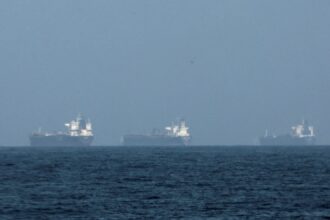
Commercial traffic through the Strait of Hormuz fell to just three commodity vessels on Tuesday, down from four the previous day, according to shipping data cited by Reuters. No very large crude carriers or liquefied natural gas (LNG) carriers were observed making the transit.The decline is not primarily a story of cautious captains. It is a story of insurance math. War-risk premiums for Gulf transits have surged to between 3% and 10% of a vessel's hull value, up from roughly 0.25% before the war, after the Joint War Committee of the Lloyd's Market Association expanded its high-risk designation across the Persian Gulf. For a $100 million tanker, that turns a single transit into a $3 million-to-$10 million bet – an expense many owners and charterers are unwilling to absorb, regardless of naval escorts. Iran does not necessarily have to sink ships to cripple traffic through Hormuz. Keeping the perceived risk…
Trump Warns Iran Over Strait Attacks
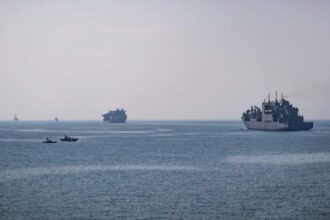
President Donald Trump warned Wednesday that the United States will strike an Iranian bridge or power plant each time Iran fires on a vessel in the Strait of Hormuz, according to the Washington Post. Trump said on social media that any Iranian missile, rocket, drone, or other weapon fired at a ship would prompt the United States to "bomb and destroy ONE BRIDGE OR POWER PLANT."The warning followed an eleventh consecutive night of U.S. airstrikes on Iran, whose air defenses opened fire over Tehran. Iran also launched a missile and drone attack on the Jordanian city of Aqaba, within sight of Israel's border city of Eilat, while air raid alerts sounded in Bahrain and Saudi Arabia.Jordan's military intercepted four Iranian missiles and four Iranian drones over Aqaba, with two additional missiles landing in uninhabited areas. The strike on Aqaba underscored Jordan's position as a frontline buffer state absorbing attacks aimed…
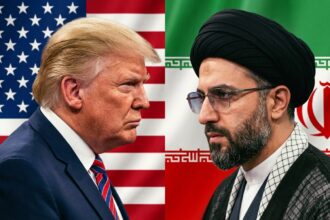
Can Iran Be Defeated Without a Ground War?
The United States can almost certainly destroy more of Iran's military than Iran can destroy America's. That, however, does not answer the question now confronting Washington: can overwhelming military superiority produce political victory without putting American troops inside Iran?After eleven consecutive nights of strikes, U.S. forces have demonstrated that they can penetrate Iranian airspace almost at will, repeatedly attacking command centers, missile infrastructure, air-defense systems and military facilities across the country. Yet every additional wave of bombing exposes the same strategic dilemma. Destroying targets is relatively straightforward. Deciding what political outcome those strikes are meant to achieve is considerably harder.Whether Iran can be defeated without a ground war depends almost entirely on what Washington means by "defeat."The answer changes depending on which objective the United States is pursuing.Defeating Iran could mean:destroying its conventional military;forcing political concessions;overthrowing the Islamic Republic;permanently eliminating its nuclear and missile programs.Only the first objective is clearly…
