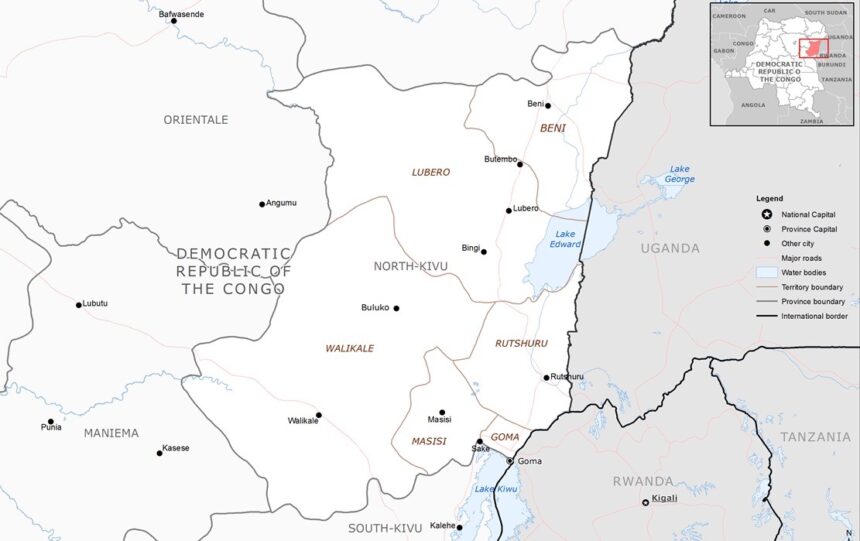
The International Committee of the Red Cross facilitated the transfer of 15 detainees from Congolese government custody to the AFC/M23 rebel alliance on August 6–7, the first confirmed exchange under the Doha Mechanism signed in September 2025. The convoy left government-held Beni and crossed into Uganda before reaching Rutshuru Territory. This routing reflects how little direct road access remains between the two sides amid continued fighting in North Kivu.
The swap was narrow. Africanews reported none of the 15 released were senior commanders or death-row inmates, and a wider exchange covering several hundred detainees has already missed one deadline this year. Qatar’s Foreign Ministry welcomed the handover as a confidence-building measure, but the low-risk profile of those freed suggests that both sides are still withholding their more consequential cards.
The goodwill was short-lived. Per the Critical Threats Project’s Congo War Security Review, M23 expelled a Congolese government representative from the joint ceasefire verification mechanism, and Wazalendo fighters clashed with M23 near Kavumu airport, north of Bukavu, days later. Neither claim is yet corroborated by wire services, and their effect on ceasefire monitoring is unconfirmed.
The sequence fits a familiar pattern in eastern Congo, where both governments have relied on allied or proxy forces — Rwanda’s backing of M23, Kinshasa’s reliance on Wazalendo — for battlefield distance from formal commitments.