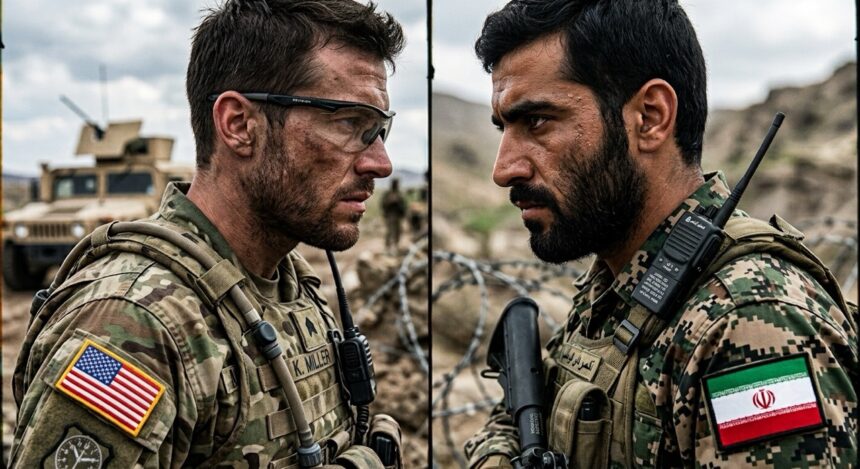
Five months into the U.S.-Iran war, both sides retain the ability to inflict serious damage, but neither has translated that power into a decisive political result. The United States can strike Iranian military infrastructure at scale. Iran can retaliate against American forces, regional partners and commercial routes. Yet the conflict repeatedly returns to the same unstable position: bombardment, retaliation, temporary pauses and renewed negotiations that fail to settle the central disputes.
The conflict increasingly exhibits the characteristics of an attritional contest. Rather than seeking a single decisive campaign, both governments appear to be engaged in a prolonged effort to impose military, economic and political costs while preserving enough capability to continue fighting if diplomacy fails. The result is a war measured less by territory gained than by resilience, industrial capacity and political endurance.
Calling it attrition does not mean the two sides possess equal capabilities. They do not. It means that overwhelming U.S. conventional superiority has not produced a rapid political settlement, while Iran’s inability to defeat the United States militarily has not prevented Tehran from prolonging the conflict and imposing costs far beyond its borders.
From Shock Campaign to War of Endurance
The United States entered the war with the ability to conduct a powerful air and missile campaign against Iran’s armed forces, missile infrastructure, naval assets and nuclear-related sites. The U.S. Department of Defense said Operation Epic Fury was intended to dismantle Iranian offensive missiles, production capacity, naval forces and other security infrastructure supporting Iranian attacks.
The campaign caused significant damage, but it did not end Iran’s capacity to retaliate. By late July, Reuters reported that the conflict had spread into Iraq, Jordan, Egypt and the approaches to the Strait of Hormuz. Iranian missiles and drones continued to threaten U.S. bases, regional infrastructure and commercial vessels, while American and Saudi forces struck Iran-backed groups in Iraq.
This is the central problem facing the United States. Air power can destroy launchers, factories, command sites and storage facilities, but it cannot by itself compel Iran to accept Washington’s political terms. Iran does not need to win conventional engagements to prevent a clean American victory. It needs only to preserve enough missiles, drones, proxy capacity and maritime leverage to keep the costs of the war politically and economically unacceptable.
Iran faces a parallel problem. It can disrupt shipping, pressure Gulf states and threaten U.S. forces, but it cannot remove American military power from the region or protect all of its own infrastructure from attack. Its strategy therefore depends less on battlefield dominance than on endurance, dispersion and the creation of multiple pressure points.
Pauses as Reconstitution, Not Resolution
That logic helps explain why pauses in U.S. bombing have not produced durable de-escalation. Reuters reported on July 27 that Washington had suspended a two-week strike campaign while President Donald Trump spoke of promising diplomatic contacts. Drone attacks attributed to Iran-backed forces continued across the region during the pause, and Tehran disputed Washington’s account of the talks.
Available evidence suggests that periods of reduced fighting have functioned as opportunities for both militaries to recover. CSIS assessments document U.S. efforts to rebuild interceptor inventories, while repeated strike cycles indicate Iranian forces have dispersed launchers, repaired infrastructure and adapted deployment patterns after major attacks. Taken together, these developments suggest operational pauses have provided breathing space even as diplomatic contacts continued.
Neither side has treated a lull in fighting as evidence that the other’s core political demands have fundamentally changed. Instead, pauses have tended to reduce immediate operational pressure while preserving the conditions for renewed escalation.
Why Neither Side Can Escalate Freely
The United States possesses far greater offensive capacity, but its freedom of action is not unlimited. Every additional phase of the conflict consumes precision-guided weapons, air-defense interceptors, aircraft hours and logistical capacity that may be needed in other theaters.
CSIS assessments following the first major phase of the war concluded that the United States retained sufficient key munitions to continue fighting under plausible scenarios, but also warned that replenishing depleted inventories would take years. Subsequent assessments argued that rebuilding several missile inventories would be a multiyear industrial effort rather than a rapid recovery.
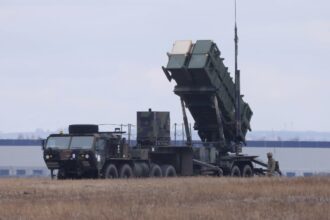
The imbalance driving that depletion is structural. American and coalition batteries must intercept ballistic missiles, cruise missiles and drones – including comparatively inexpensive loitering munitions – using interceptors that are significantly more expensive and slower to replace. That cost curve increasingly favors the side able to launch cheaper weapons in greater numbers, regardless of who wins an individual engagement.
Iran faces its own constraints. Air campaigns have reduced launch rates by targeting inventories, manufacturing capacity and launch systems. Tehran can still strike, but it must preserve weapons, conceal production and rebuild damaged networks under continuing surveillance and attack. These pressures limit Iran’s ability to sustain high-intensity operations indefinitely, even as they reinforce its incentive to rely on dispersed and asymmetric methods.
Domestic Politics Narrow the Room for Compromise
Washington and Tehran are constrained not only by military realities but also by domestic politics. After months of strikes, it would be politically difficult for the Trump administration to reduce pressure on Iran without tangible concessions it could present as a strategic success. Tehran faces a comparable dilemma. Accepting broad American demands after absorbing repeated attacks would undermine the regime’s long-standing narrative of resistance and deterrence.
These political constraints reinforce the military logic of attrition. Neither government appears prepared to concede on the issues it considers fundamental, making temporary pauses easier to accept than comprehensive compromises.
That dynamic helps explain why diplomatic contacts repeatedly resume without producing durable settlements. Negotiations continue because both sides recognize the costs of continued fighting, but neither has yet demonstrated a willingness to make the political concessions required for a lasting agreement.
Time Has Become the War’s Most Important Weapon
For Iran, time offers several strategic advantages. A prolonged conflict exposes divisions inside the U.S.-led coalition, raises energy prices, complicates American regional deployments and increases pressure on governments hosting U.S. forces.
Time also allows regional actors to adapt. Iran-backed groups can change launch locations, shift targeting patterns and exploit commercial infrastructure. Shipping companies can reroute vessels. Gulf governments can disperse exports, harden facilities and adjust their security posture.
The maritime dimension is particularly well suited to an attritional strategy. Iran does not need to close the Strait of Hormuz completely to generate strategic effects. Intermittent attacks, ambiguous maritime incidents and persistent threats to commercial shipping can raise insurance costs, reduce traffic and keep energy markets vulnerable to every new escalation.
A War Without a Decisive End State
The core paradox of the conflict is now clear. Washington is pursuing a military solution to what is fundamentally a political problem: Iran’s regional influence through missiles, proxy forces and maritime coercion. Tehran, in turn, seeks a political objective – a reduced American military presence in the region – through an asymmetric campaign that cannot indefinitely match superior U.S. conventional power.
Neither approach has produced the result its architects sought. Instead, both governments increasingly appear to be using military pressure to strengthen their eventual negotiating position rather than expecting outright military victory. Continued strikes can alter the balance of leverage, but they have not resolved the underlying political dispute.
The conflict has therefore moved beyond the assumption that overwhelming military superiority alone can deliver a durable political outcome. The United States retains the ability to inflict greater military damage, while Iran retains the ability to impose persistent costs through missiles, drones, regional partners and maritime disruption. Neither advantage has yet translated into a settlement the other side is willing to accept.
Unless one government fundamentally changes its political objectives – or both conclude that continued fighting costs more than compromise – the conflict is likely to remain defined by repeated cycles of escalation, recovery and renewed coercion. The greatest danger is not a single decisive offensive, but the accumulation of smaller confrontations that gradually increase the risk of a much wider regional war through miscalculation.