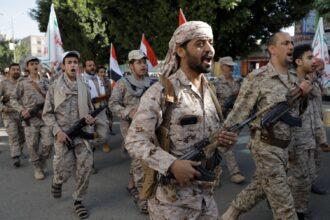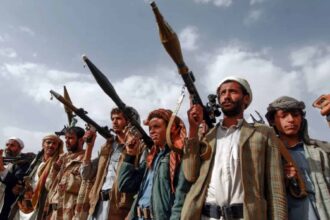
Yemen is closer to full-scale war than at any point since its 2022 truce, the United Nations has warned, as Houthi forces pair territorial pressure on land with disruption of Red Sea shipping in what analysts describe as a coordinated campaign rather than scattered escalation. UN Special Envoy Hans Grundberg told the Security Council on August 13 that recent fighting poses the most serious threat to the truce since it was struck four years ago, warning a return to large-scale conflict would come at an “unforgiving moment,” according to UN Press.
UN human rights chief Volker Türk echoed the warning days later, urging all sides to de-escalate immediately, Euronews reported.
The pattern began July 20, when the Houthis announced a blockade against Saudi shipping, followed by a strike on oil infrastructure feeding a Red Sea export hub. Riyadh responded with a 14-country maritime coalition and a defense pact with Turkey and Pakistan, according to the Times of Israel.
On the ground, Houthi forces killed 58 government troops in Marib in the group’s deadliest assault in years, Al Jazeera reported. At sea, strikes on Mokha port and the cargo vessel Tihama killed three port workers and four crew members, per the UN human rights office cited by Euronews. The land and sea pressure appear mutually reinforcing: battlefield gains raise the cost of a ground response, while shipping disruption raises the economic cost of confrontation for Riyadh.
Beneath the fighting, Yemen’s two rival central banks — Houthi-run in Sana’a, internationally recognized in Aden — have deepened a currency split that functions as a war tool as much as a byproduct of it. By July 2026, the dollar traded near 533 rials in Sana’a versus 1,565 in Aden, and a Mokha Centre for Strategic Studies report found Houthi control of trade and currency exchange has become “a pillar of the war economy,” with cross-line money transfers losing up to 70 percent of their value in fees, according to Majalla.
Talk of a Saudi ground offensive overstates what’s actually likely: any land campaign would be fought by existing Yemeni formations — Tareq Saleh’s National Resistance Forces and the Giants Brigades — backed by Saudi air power and intelligence, not Saudi infantry. An analyst at Blue Water Strategy said troop repositioning falls short of confirming an invasion, and Riyadh has not announced one, The Jerusalem Post reported.
Diplomatically, Russia told the Security Council the Houthis had been “dragged into a regional confrontation initiated by the United States and Israel” — a framing that shields continued Red Sea disruption from unified Council pressure even as other members condemned the attacks, according to UN Press.
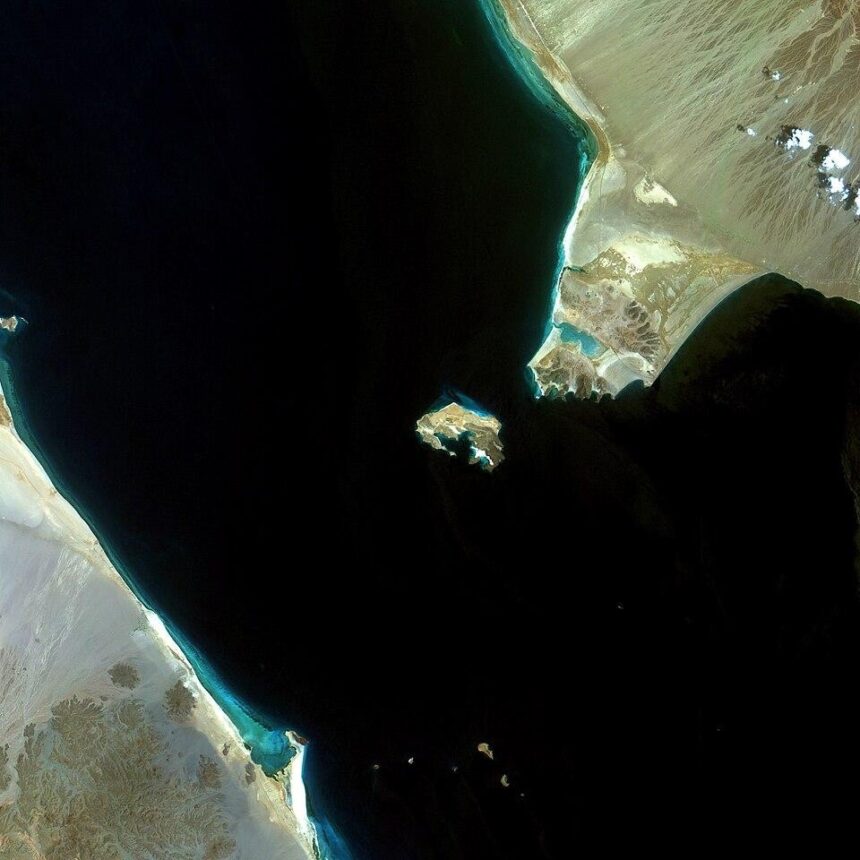
Grundberg has urged resuming oil exports and shipping to Yemeni ports, warning that roughly half of Saudi oil exports transiting Bab el-Mandeb would face a much longer reroute if the strait were to close, per the Times of Israel. The UN says 18 million Yemenis are already food insecure. Whether Riyadh formally commits its proxy forces, and whether Russia’s UN framing slows collective action, will likely shape what comes next.