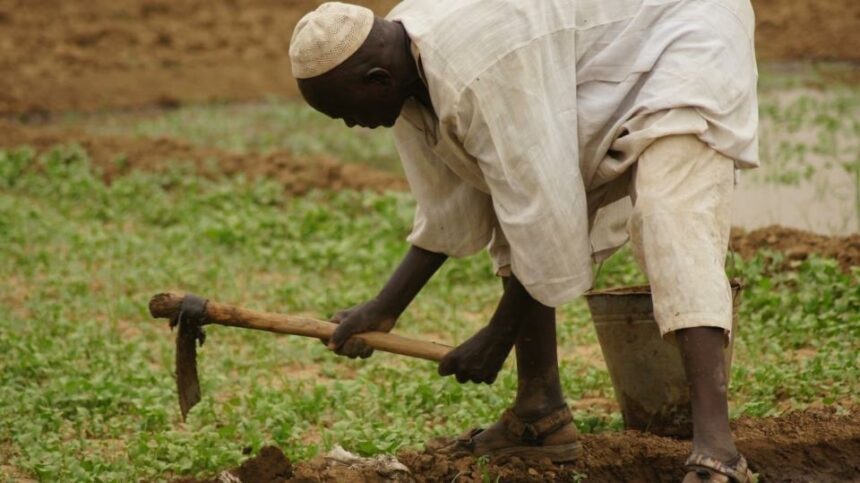
Sudan’s planting season is advancing under war, expensive fuel and shortages of fertiliser and seed that neither warring party has resolved. The Food and Agriculture Organization (FAO) warned in April that farmers risked missing the planting window without urgent support, and put last season’s cereal harvest at 5.2 million tonnes, 22% below 2024 and 19% under the five-year average.
Promises Meet the Planting Deadline
In May, the SAF-aligned government set a target of roughly 25.35 million feddans for sorghum, millet, groundnuts, soybeans and other crops, then built a banking portfolio exceeding 3 trillion Sudanese pounds (SDG), with the central bank covering 20% and commercial banks expected to supply the rest.
The African Development Bank estimated Sudan’s 2025 foreign-exchange reserves at $1.17 billion, equivalent to 1.1 months of imports, while non-performing loans reached 16.5% of total lending. Those figures underline the government’s limited capacity to convert domestic credit into imported fuel, fertiliser and seed.
Regional financing began in Sennar and Gedaref, and White Nile State announced arrangements with fuel suppliers, but no national breakdown existed by August 3 of how much reached farmers or how much land was planted. A three-year deal signed with FAO in July carries a $616 million funding target, money still to be raised for programs running through 2028, not funds available this season.
War Divides the Farming Map
The published financing announcements reviewed for this report concern SAF-held Gedaref, Sennar and White Nile. They provide no equivalent disbursement figures for Darfur or Kordofan, where territorial control is divided and access is far more restricted.
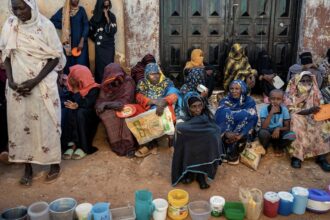
Conflict and restrictions imposed by both sides have damaged agricultural production. Interviewees cited by IPI’s Global Observatory accused RSF forces of confiscating farm machinery, damaging irrigation gates and attacking farmers preparing land in Gezira and Kordofan. Farmers separately told Reuters that tractors were looted, farmhands recruited to fight and entire communities displaced. SAF-aligned authorities have restricted cross-line and cross-border humanitarian aid into RSF-held areas, according to The New Humanitarian. Nearly 19.5 million people faced acute food insecurity in May, concentrated in the areas where planting has been hit hardest.
A Truce Stalled by Preconditions
A US-brokered plan proposed in June calls for a 90-day humanitarian truce ahead of talks on a permanent ceasefire, according to Reuters. SAF has accepted most of the plan but demands the RSF withdraw from every city it holds, a condition that has sunk past efforts. An RSF official told Reuters the group welcomed the proposal and submitted a written response without disclosing its terms.
The proposal could affect the planting season if it opened supply routes and allowed farmers to reach their fields. Reuters’ account of the parties’ responses, however, does not show that either side has made agricultural access or protection part of its position.
Sudan’s next harvest will depend partly on whether cross-line supplies move, looting and attacks subside, and any truce holds. The clearest measures will be the area actually planted, the inputs delivered and whether crops can reach markets.