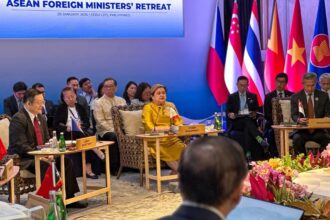
Myanmar’s civil war is entering a cautious diplomatic phase, though the shift stops well short of a peace process. What is under way is a test of whether the Association of Southeast Asian Nations, or ASEAN, can convert renewed contact with Myanmar’s military-backed government into real leverage, or whether the engagement instead restores the government’s international standing without corresponding changes on the ground. The answer will depend on whether the contacts produce humanitarian access, reduced attacks on civilians and a credible seat at the table for resistance groups, or whether they simply hand Myanmar’s military rulers renewed legitimacy while the fighting continues.
Reuters reported that the Steering Council for the Emergence of a Federal Democratic Union, or SCEF, an anti-junta coordination structure linked to the National Unity Government and several ethnic armed organizations, has said it is committed to pursuing a political settlement. A SCEF statement named the Karen National Union, Karenni representatives, the Kachin Independence Organization and the Chin National Front among its members, and stressed that its recent contacts with Thai and Philippine officials did not amount to formal negotiations with the military. Min Aung Hlaing, Myanmar’s former junta chief who took a civilian presidential role after a military-engineered election, has not yet accepted SCEF as a negotiating partner, according to Reuters.
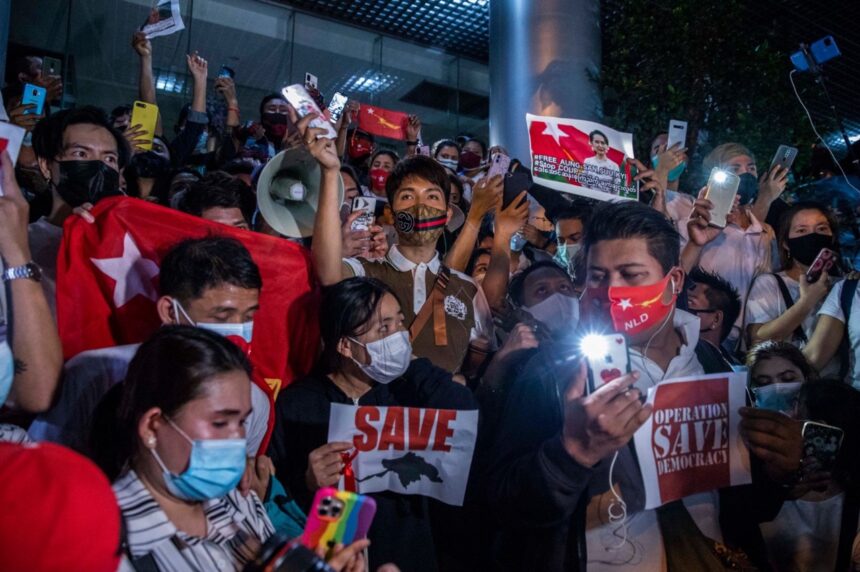
That distinction over legitimacy matters against the backdrop of the February 2021 coup that removed the elected government led by Aung San Suu Kyi, the Nobel Peace Prize winner who has remained in detention since. Reuters reported that she met a representative of the International Committee of the Red Cross this month, a rare instance of outside contact after years of concern over her health and isolation. The meeting offered no indication of her release or of any political role in the current opening.
Thailand has emerged as the central broker of the new opening. Reuters reported that Min Aung Hlaing received a red-carpet welcome in Bangkok this week as Thailand pressed what it calls calibrated re-engagement, even though ASEAN has barred Myanmar’s leaders from its summits over the military’s failure to implement the bloc’s 2021 peace plan. Bangkok frames Myanmar primarily as a border-security, migration and economic problem, and its outreach could reopen channels for humanitarian access, though it also risks conferring legitimacy on military rule before any reduction in violence is confirmed.
The accountability file has not receded. The International Court of Justice held public hearings on the merits from January 12 to 29, 2026, in The Gambia’s genocide case against Myanmar over the Rohingya, after the court rejected Myanmar’s preliminary objections in 2022. That proceeding runs on its own legal timeline, independent of ASEAN’s diplomatic calendar, leaving Myanmar’s military government facing a courtroom test of the Rohingya atrocities at the same time it seeks regional rehabilitation.