For much of the twentieth century, control over oil shaped alliances, wars and global trade. The twenty-first century is increasingly being defined by a different set of strategic resources. Cobalt, lithium, graphite and rare earth elements have become indispensable for manufacturing electric vehicles, semiconductors, drones, precision-guided missiles and advanced military electronics. As governments race to secure them, competition over critical minerals is reshaping industrial policy, trade relations and geopolitical strategy.
That transformation is becoming increasingly visible in international diplomacy. Late last month, WTO Director-General Ngozi Okonjo-Iweala warned the U.N. Security Council that critical minerals are no longer treated as ordinary commodities but as strategic assets capable of influencing global stability.
U.N. Secretary-General António Guterres told the same session that competition for lithium, cobalt, nickel and rare earths has enabled armed groups to profit from illegal mining and smuggling, particularly in eastern Democratic Republic of the Congo. Okonjo-Iweala noted that Africa holds roughly 30% of the world’s critical mineral reserves, with Congo alone accounting for more than 70% of global cobalt production, and argued that resource-rich countries should capture more value through domestic processing rather than simply exporting raw materials.
Unlike previous commodity booms, today’s competition is unfolding amid growing geopolitical fragmentation. Rivalry between the United States and China, expanding defence-industrial production and the global transition to low-carbon technologies have elevated critical minerals from economic assets to instruments of national power, with governments increasingly writing mineral security into defence and industrial policy.
From Oil Security to Mineral Security
Critical minerals differ from oil in one crucial respect: they simultaneously underpin civilian industries and military capabilities. The same neodymium-iron-boron magnets that power electric vehicles and wind turbines are also essential components of guided missiles, fighter aircraft, naval propulsion systems and advanced radar. That overlap has transformed supply chains once viewed primarily through an economic lens into matters of national security.
Washington has responded by moving beyond diversification toward outright supply-chain restrictions. Under an executive order signed by President Donald Trump on July 20, together with existing legislation, U.S. defence contractors must eliminate rare earth magnets, tungsten and tantalum sourced through China, Russia, Iran or North Korea from their supply chains by January 1, 2027. The measures reflect growing concern that strategic competitors could exploit industrial dependence during a future crisis.
The European Union has adopted a different but complementary strategy. Its Critical Raw Materials Act establishes binding 2030 targets requiring at least 10% of annual consumption to come from domestic extraction, 40% from domestic processing and 25% from recycling, while limiting dependence on any single third country to 65% of supply. Both Washington and Brussels are pursuing the same objective: reducing strategic vulnerabilities before they can become geopolitical leverage.
The Mine Is Only the Beginning
Public debate often focuses on where critical minerals are extracted, but ownership of a mine is only one stage of the supply chain. The greater strategic advantage lies in processing, refining and advanced manufacturing – the industrial steps that transform raw ore into materials suitable for batteries, electronics and weapons systems.
China’s strategic advantage lies less in the location of its mineral reserves than in its dominance of refining, separation and downstream manufacturing. Industry data indicate the country refines the overwhelming majority of the world’s rare earth materials and produces most finished rare earth permanent magnets, giving Beijing influence that extends far beyond its own mining sector.
Recognising this imbalance, Western governments have begun competing for refineries, separation facilities and recycling capacity rather than mining concessions alone. In New Hampshire, the Pentagon has committed a $500 million loan to MP Materials to expand domestic rare earth separation capacity, reflecting the growing recognition that processing—not extraction – is the weakest link in the U.S. supply chain. Processing plants, rather than mines themselves, are increasingly becoming the strategic chokepoints of twenty-first-century industrial competition.
Why Conflict Zones Matter More Than Ever
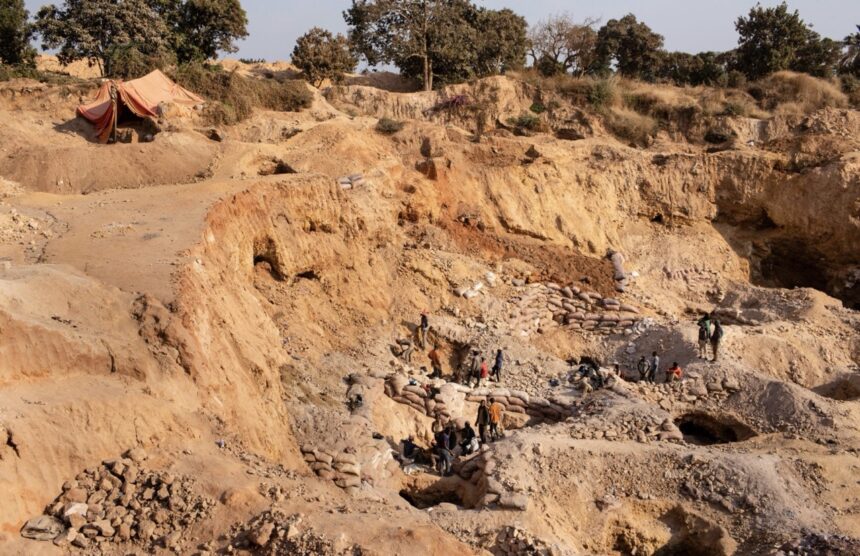
Many of the world’s richest mineral deposits lie in regions already affected by armed conflict, and in several cases those resources are now directly financing the fighting. In eastern Democratic Republic of the Congo, the Rwanda-backed M23 rebel movement controls the Rubaya mining area, which supplies more than 15% of the world’s tantalum-bearing coltan. The U.S. Treasury has documented that M23 and allied networks finance military operations through illegal taxation and smuggling routes that move minerals through Rwanda before they reach international processing centres.
The humanitarian costs remain severe. Congolese authorities said more than 200 people were killed in a landslide at the Rubaya mining area in March, although M23 officials disputed the death toll. Separately, a U.N. Group of Experts has estimated that between 14,000 and 18,000 Rwandan troops have operated alongside M23, underscoring the increasingly international dimension of the conflict.
Myanmar presents a similar pattern. The Kachin Independence Army seized key rare earth mining hubs near the Chinese border in late 2024 and now taxes exports destined for processing facilities in China. Beijing briefly closed border crossings before negotiating a new export arrangement with the KIA, demonstrating how strategic resource supply has become intertwined with regional diplomacy. These conflicts were not created by competition over critical minerals—ethnic divisions, political exclusion and weak governance remain their principal drivers—but the value of the resources beneath these battlefields is increasingly shaping how armed groups finance themselves and how outside powers engage with the conflicts.
A Different Kind of Great-Power Competition
The emerging contest over critical minerals differs fundamentally from the oil geopolitics of the twentieth century. Future strategic leverage will depend less on controlling wells or pipelines than on dominating industrial ecosystems that stretch from extraction and chemical processing to advanced manufacturing and recycling. Resource-rich governments are becoming increasingly aware that long-term influence lies not simply in owning mineral deposits but in capturing a larger share of the value chain.
Okonjo-Iweala’s message to the Security Council reflected that reality. Rather than remaining exporters of raw ore, countries rich in critical minerals should use growing global demand to develop domestic processing industries, increase value addition and strengthen their own economic resilience before supply chains become locked into external control.
The era of oil geopolitics has not ended, but it no longer fully explains the strategic landscape taking shape. Washington’s 2027 sourcing restrictions, Brussels’ processing targets and the taxation systems operating in rebel-held mining regions all point to the same conclusion: the decisive contest is no longer simply over who owns the minerals beneath the ground, but who controls the industrial supply chains that transform them into economic and military power.