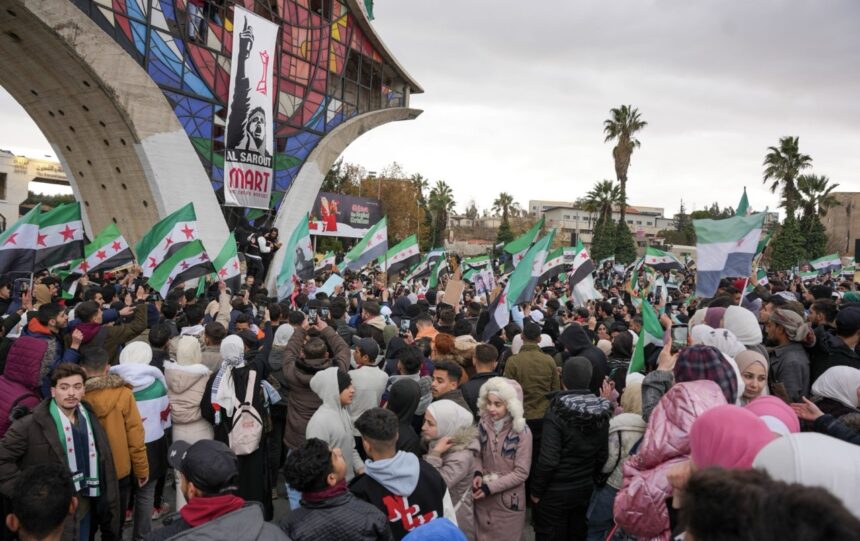
A Syrian court sentenced former president Bashar al-Assad to death in absentia on Tuesday after convicting him of premeditated murder, torture and crimes against humanity, marking the first criminal verdict against the former leader since his government collapsed in December 2024. The Fourth Criminal Court in Damascus sentenced nine defendants to death in total, including Assad’s brother Maher al-Assad in absentia and former Political Security chief Atef Najib, who was tried in person following his capture in early 2025, according to Reuters. Judge Fakhr al-Din al-Aryan said Assad “used state agencies to commit war crimes and crimes against humanity” during a session broadcast live on state television.
Najib, Assad’s cousin, led the Political Security Branch in Daraa in 2011, when his forces detained and tortured teenage schoolboys for writing anti-government graffiti, an episode widely regarded as the catalyst for the nationwide uprising that evolved into Syria’s civil war, according to Al Jazeera. Six additional former security officials were sentenced to death in absentia alongside Najib and the Assad brothers, The National reported. Prosecutors presented evidence of systematic torture, enforced disappearances and unlawful killings carried out by security branches under Assad’s command, according to state news agency SANA.
The court ordered international pursuit of Bashar and Maher al-Assad, who were granted asylum in Russia after opposition forces captured Damascus in December 2024, CNN reported. Syria’s transitional government under President Ahmed al-Sharaa says it is coordinating with Interpol to place Assad atop a wanted list and has formally asked Moscow to extradite him, though Russia has given no indication it will comply, according to Jordan News. The court also ordered the seizure of the defendants’ assets, SANA reported, a step legal analysts say could support future international asset-freezing requests, though none have yet been confirmed.
The verdict adds to a limited number of prosecutions to reach trial as Syria confronts abuses committed during nearly 14 years of conflict, from the March 2011 uprising to Assad’s overthrow in December 2024, which left roughly half a million people dead, according to CNN. The ruling marks a major symbolic milestone in Syria’s post-Assad transition, but it is unlikely to bring the former president into custody while he remains in Russia. At the same time, rights groups continue to urge the transitional authorities to ensure that efforts to deliver long-awaited accountability are matched by internationally recognized due-process standards, according to Amnesty International.