Europe is entering a more dangerous phase of hybrid-security confrontation as governments investigate incidents affecting critical infrastructure, military logistics, defence production and, most recently, the safety of individuals linked to Ukraine’s war effort. The incidents remain under separate investigation and should not automatically be treated as a single confirmed campaign, but their concentration in recent days has intensified concern across the continent.
Polish Prime Minister Donald Tusk said on August 13 that Poland’s Internal Security Agency and police, working with U.S. services, arrested a Russian national on August 7 over an alleged plot to kill a dual Ukrainian-American citizen in Warsaw. Tusk called it the first known case of Russia targeting a U.S. citizen on NATO territory and said the man was “inconvenient to the Putin regime,” according to AP. Officials have not disclosed the target’s identity or occupation. AP noted the case follows a broader pattern of disrupted plots against Ukraine-linked figures in NATO states, including a foiled plot against the head of a German weapons company supplying Ukraine.
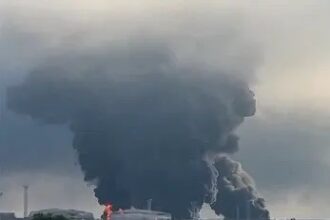
On August 13, an explosion struck the KNDS Ammo Italy ammunition factory in Colleferro near Rome, creating a large fire. No injuries were reported, and Italian prosecutors have opened an arson investigation, according to ANSA and AP. Separately from the plant’s own product line, KNDS, the Franco-German group that owns the facility, operates a Kyiv subsidiary supporting Ukraine’s war effort, according to KNDS.
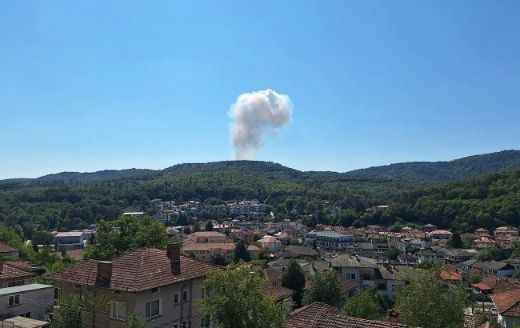
Three days earlier, on August 10, an explosion hit Bulgaria’s EMCO ammunition plant near Tryavna, another manufacturer supplying ordnance to Ukraine, after a delivery truck caught fire and ignited a warehouse, according to Bulgarian National Television reporting. EMCO and Bulgarian authorities said the cause appeared internal, with no evidence of external interference.
Separately, on the same day as the Colleferro blast, an explosion struck a Gunvor petroleum storage facility at the Port of Rotterdam, killing one person. Authorities initially treated it as an industrial accident, according to Reuters.
Germany illustrates the wider trend. Authorities earlier in August investigated a drone carrying explosives found at Leipzig/Halle Airport near a Ukrainian cargo aircraft. U.S. intelligence agencies reportedly assessed Russian involvement, first reported by The Wall Street Journal and later by The Guardian, though German officials have issued no final attribution. On August 12, Germany’s Federal Cabinet approved legislation expanding the powers of the BND and BfV intelligence services, according to AP.
Poland and the Baltic states have separately strengthened protection around critical infrastructure after intelligence assessments warned of possible Russian hybrid operations, an allegation Russia denies, according to Reuters.
Taken individually, most of these incidents carry unresolved or explicitly non-hostile causes. Taken together with a disrupted assassination plot inside NATO territory, they show European governments responding less to any single confirmed attack than to the cumulative weight of parallel threats, in a period where attribution itself remains the most contested fact.