Ukraine struck Russia’s Progress Rocket Space Centre (TsSKB-Progress) in Samara last night, targeting what Ukrainian officials and multiple regional reports describe as Russia’s only facility that serially assembles the Soyuz-2 family of launch vehicles used to place military, reconnaissance and communications satellites into orbit.
President Volodymyr Zelensky said the strike was carried out using domestically produced FP-5 “Flamingo” cruise missiles as part of a broader overnight operation that also targeted the Savasleyka air base in Nizhny Novgorod region and an oil facility at the Baltic port of Ust-Luga. Ukrainian officials say Progress supports launches for Rassvet, Russia’s planned low-Earth-orbit communications constellation, which Kyiv has described as Moscow’s answer to Starlink. Reuters reported the strike.
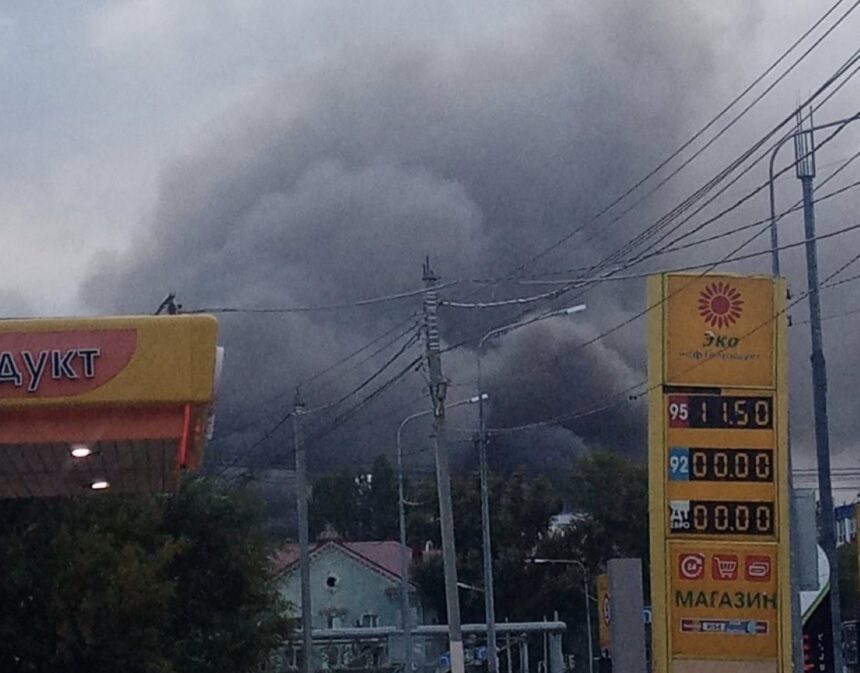
Samara Governor Vyacheslav Fedorishchev confirmed that a missile struck an industrial facility in the region and said two people were injured, without identifying the site. Progress is located in the same industrial zone as the Aviakor aircraft plant but operates as a separate enterprise. Open-source imagery showed fire and smoke in the area, although the extent of damage to the rocket center could not be independently verified.
The facility is a strategically important target because Soyuz-2 remains Russia’s principal medium-lift launch vehicle. According to Ukraine’s General Staff, Progress also produces Earth-observation satellites used for military reconnaissance. If production were significantly disrupted, it could affect launches supporting military, communications and reconnaissance satellite programs, not only Rassvet.
The strike comes as Russia accelerates deployment of the Rassvet constellation. Bureau 1440, the company developing the network, has launched two operational batches of satellites this year, expanding the constellation beyond earlier prototype missions. Ukrainian officials argue the system is intended to provide resilient military communications similar to those Starlink has supplied Ukrainian forces since 2022, while Russia presents it as a dual-use civilian and commercial network.
Whether the Samara strike materially delays Russia’s satellite program remains unclear. But the operation underscores Ukraine’s growing emphasis on attacking the industrial base behind Russia’s future military capabilities rather than focusing solely on weapons and infrastructure already deployed on the battlefield.