
Analysis
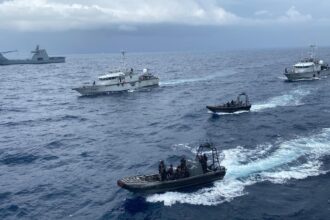
Beyond Piracy: Nigeria Seeks Maritime Allies
On June 1, six navies answered to a single command for the first time. In Lagos, Nigeria inaugurated the Combined Maritime Task Force (CMTF), a joint force to confront piracy, armed robbery, kidnapping, oil theft, illegal fishing and trafficking across waters from Senegal to Angola. Eleven governments had endorsed the concept. Only six – Côte d'Ivoire, The Gambia, Ghana, Liberia, Nigeria and Sierra Leone – arrived with ships. The rest, Angola among them, stayed ashore. Formally, the task force is an answer to piracy. In practice, it is Nigeria's response to a deeper redrawing of West Africa's security map. That imbalance matters. Nigeria supplied most of the initial ships, aircraft and command capacity. The force carries a regional mandate but begins as a Nigerian-led project, dependent on persuading more coastal governments to share costs, intelligence and risk. Piracy is the immediate reason. The Gulf of Guinea recorded 21 attacks or…
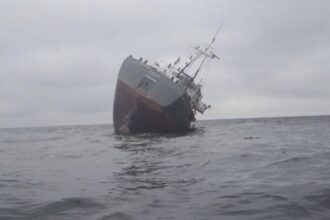
How Commercial Shipping Became a Battlefield
Every incident involving a commercial vessel in the Strait of Hormuz now sends shockwaves far beyond the Gulf. But those shockwaves are no longer merely a byproduct of military confrontation – they are increasingly part of the objective. The June truce between Washington and Tehran collapsed this month, and the fighting since has spread well beyond the strait itself. U.S. Central Command has confirmed strikes on military targets at Qeshm Island, Bandar Abbas and Sirik, while Iran has retaliated with missile and drone attacks against U.S. forces in the region. Commercial shipping is no longer simply exposed to the conflict. It has become one of its principal strategic arenas.The strategic value of commerceThe Strait of Hormuz illustrates the shift better than almost any other waterway. Roughly one-fifth of the world's oil consumption normally transits the narrow channel linking the Persian Gulf with the Arabian Sea. Even limited attacks – or…
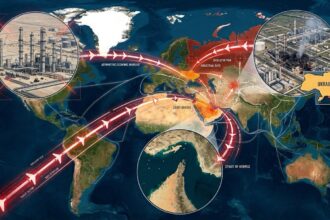
Cheap Drones Are Rewriting Energy Security
For decades, governments measured energy security by asking whether oil and gas could move safely across oceans and pipelines. The principal threats were conventional wars, naval blockades, piracy or attacks on a handful of high-profile facilities. Protect the sea lanes, defend a few critical chokepoints and maintain strategic reserves, the thinking went, and global energy markets would remain resilient.That assumption no longer holds.Evidence from Ukraine, Russia and the Middle East points to a broader transformation: energy infrastructure has become an operational objective in its own right, not merely a backdrop to military campaigns. Cheap drones capable of striking targets hundreds or even thousands of kilometers away have removed one of the greatest barriers to strategic warfare – the need for an advanced air force or a large arsenal of cruise missiles.Refineries, pumping stations, export terminals, electricity substations and fuel depots are no longer simply assets that support military operations. Increasingly,…
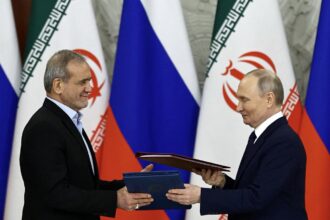
Russia Gains From Iran War Without Fighting
Russia's Kremlin spokesman, Dmitry Peskov, offered perhaps the clearest insight into Moscow's thinking from a podium rather than a battlefield. Briefing reporters on July 15, Peskov said the Kremlin was watching Washington's growing preoccupation with the war against Iran, suggesting the conflict had inevitably shifted American attention away from Ukraine. Russia, meanwhile, has not committed a single soldier to the fighting.That gap between rhetoric and reality is the real story. Many analysts expected Russia's strategic partnership with Iran would eventually pull Moscow into a military confrontation with the United States. Instead, as U.S. strikes on Iran intensified through July and Tehran retaliated against regional military and maritime targets, Russia confined itself to diplomatic statements. Peskov repeatedly called for restraint and renewed negotiations, but Moscow neither committed forces nor announced significant new military assistance to Tehran.The restraint is not necessarily a sign of caution or weakness. It reflects a strategic calculation…

Can Trump’s Middle East Peace Survive?
The Abraham Accords – the 2020 agreements brokered by U.S. President Donald Trump in his first term – made the United Arab Emirates and Bahrain the first Arab states in a quarter-century to recognise Israel, with Morocco following and Sudan beginning a process it never completed. They were one of Trump’s genuine foreign-policy achievements. July 2026 is the month their method exposed its ceiling.The U.S.-Iran war has reignited after a mid-June truce collapsed within weeks. American strikes resumed, Iran’s Revolutionary Guard declared the Strait of Hormuz closed to unauthorised shipping and struck two Emirati tankers, and nearly half of House Democrats voted to cut military aid to Israel. The question is no longer whether transactional diplomacy can open embassies. It can. The question is whether peace assembled from government bargains can survive a region where armed movements hold a veto over commerce, Gaza holds a veto over Saudi normalisation —…

Finland Goes Underground as Russia Rearms
On November 30, 1939, the Soviet Union invaded Finland. Its bombers hit Helsinki that same day. What then became known as the Winter War lasted barely three months. Finland did not surrender, but paid heavily for survival: it ceded roughly a tenth of its territory and spent the Cold War in enforced neutrality – independent, yet a de facto buffer state barred from choosing its own alliances.The pattern should sound familiar. A larger neighbour seizing land and demanding neutrality is precisely what Russia has attempted against Ukraine since 2014. Finland drew its conclusion in 1940 and never let it go: it wrote shelter-building into law after the Second World War and kept carving bunkers into bedrock even after the Soviet collapse in 1991, opening its largest complexes in the very decades when the rest of Europe declared civil defence obsolete.The war in Ukraine did not build a single one of…
