Iran has assessed striking US military assets in Europe. It has separately warned Ukraine of retaliation, signaling that Tehran’s response to any renewed escalation in its war with Washington could extend well beyond the Middle East.
Two regime insiders told the Financial Times that Iranian forces have examined striking US assets in Bulgaria, whose Bezmer air base was approved last month for American refuelling aircraft, and potentially Cyprus, where a drone hit a British base in March. The insiders said Iran has also considered attacking undersea fiber-optic cables in the Strait of Hormuz if the conflict resumes in full. One insider said Tehran was preparing to expand the war if President Donald Trump made good on threats to strike Iranian infrastructure; the other said Iran would place “no limits” on its response, including hitting Europe.
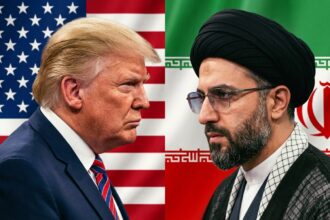
The reported deliberations follow Supreme Leader Ayatollah Mojtaba Khamenei’s decision this month to elevate hardliners to Iran’s top security and military posts, including former Revolutionary Guards commander Mohsen Rezaei as secretary of the Supreme National Security Council (SNSC). Iran International has read the reshuffle as diminishing the standing of Mohammad Bagher Ghalibaf, the parliament speaker and one of Iran’s lead negotiators with Washington. Ghalibaf publicly congratulated Rezaei on the appointment. Trump said Tuesday that no talks with Iran were “taking place or scheduled,” reversing an earlier statement by special envoy Jared Kushner that negotiations were “probably more robust” than ever, according to US News. A June memorandum of understanding between Washington and Tehran collapsed after Iran resumed strikes on commercial vessels in the Strait of Hormuz, prompting a renewed US naval blockade of Iranian ports.
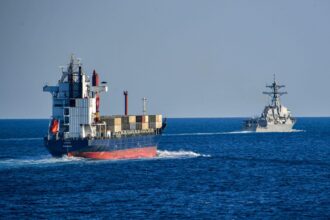
Tehran has separately signaled it may retaliate against Ukraine over a July 25 Ukrainian drone strike on vessels in the Caspian Sea. Kyiv said it hit a Russian missile boat and an Iranian-flagged cargo ship carrying military cargo linked to Russia; Iran said the strike killed one sailor aboard its vessel. Iranian Foreign Minister Abbas Araghchi said the attack “cannot go unanswered,” accusing Israel of trying to “drag Europe into its war,” according to Al Jazeera. Ukraine’s Foreign Minister Andrii Sybiha rejected the framing, calling Iran “a direct accomplice to Russian aggression against Ukraine” through its weapons transfers to Moscow, per World Socialist Web Site, a route Iran-watchers have tied to the same Caspian shipping corridor Ukraine’s strike targeted. Neither side has said publicly what form Iran’s response might take, and the threat remains unresolved three weeks later.
Iran has previously shown willingness to strike far from its borders. US officials said Iran fired ballistic missiles at the joint US-UK base on Diego Garcia, roughly 4,000 kilometers away, in March, weeks after the US and Israel launched the war in February. Though neither missile hit its target, CNN reported. An Iran-linked drone struck the UK’s Akrotiri base in Cyprus that same month, and an Iranian attack on a US base in Jordan killed three American service members, an operation the Financial Times’s insiders described as Tehran’s most precise long-range strike to date.
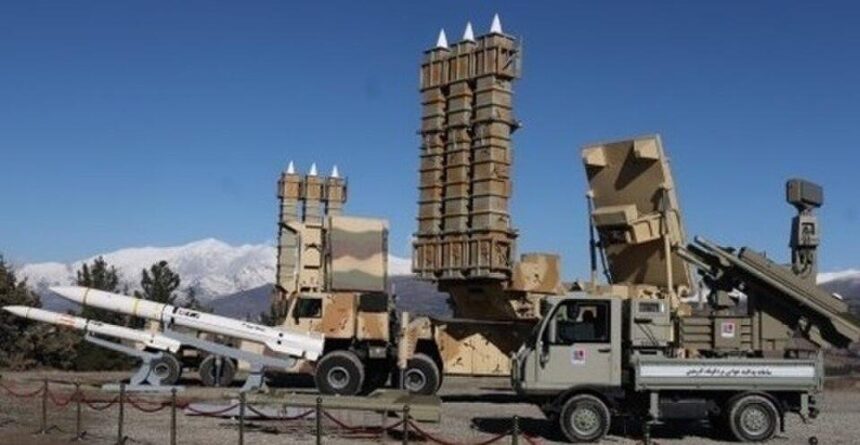
Military analysts caution that Iran’s capacity to hit Europe should not be overstated. Sidharth Kaushal of the Royal United Services Institute told the Financial Times the threat was “real, but limited,” saying Iran’s medium-range Shahab-series missiles could reach US assets in southeastern Europe but would struggle to inflict serious damage at longer ranges without reducing their payload. Douglas Barrie of the International Institute for Strategic Studies said the Diego Garcia attempt showed Iran holds missiles capable of traveling beyond 2,000 kilometers, but questioned how many such weapons Tehran has and whether it would expend them on a strike likely to fail or be intercepted. Kaushal argued Iran would extract more value from proxy actors, including Iraqi Shia militias, Hezbollah and the Houthis, than from direct strikes on Europe: proxy networks give Tehran deniability and existing operational reach without risking scarce long-range missiles on low-probability shots.
Whether Iran acts on either threat likely depends on Washington’s next move. Trump has said the US would destroy an Iranian bridge or power plant for every ship Iran targets in the strait, and one insider said Tehran was preparing to expand the conflict if he follows through. With talks stalled, hardliners ascendant in Tehran, and two separate retaliation threats still unresolved against both Ukraine and Europe, the coming weeks will show whether Iran’s warnings are a negotiating signal or a genuine shift in the war’s geography.