Syria has told the United States it is willing to sharply reduce Russian oil imports as Damascus seeks removal from Washington’s remaining major sanctions designation, Reuters reported, citing a US official and two other sources familiar with the talks. Such a reduction would mark a major shift for a country that has grown reliant on Russian crude despite its broader political pivot toward the West. A Syrian energy official told Reuters that Damascus is already seeking new suppliers and anticipates a “radical” shift in its energy mix.
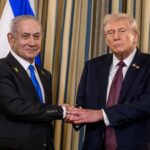
The issue is not a formal legal condition for delisting Syria as a state sponsor of terrorism. But a Syrian source told Reuters that US officials said ending reliance on Russian oil would improve the chances of a faster and smoother process. The State Department said President Donald Trump informed Congress on July 8 of his intent to rescind Syria’s designation, which has been in place since 1979.
For Damascus, cutting Russian oil may be a limited sacrifice for a much larger prize: access to banking, investment and reconstruction finance. Russia increased crude shipments to Syria by about 75% this year, to roughly 60,000 barrels per day, according to Reuters, after other suppliers remained cautious because of the terrorism designation. The volumes are small for Moscow, but they made Russia Syria’s dominant crude supplier during the post-Assad transition.
The bigger question is Russia’s remaining foothold in Syria. Moscow failed to preserve Bashar al-Assad’s rule, but the new authorities have not expelled Russian forces or broken completely with the Russian presence at Tartus. Reuters reported in July, citing Syrian officials, that Russia was seeking to turn one berth at Tartus into a commercial logistics hub while retaining a military presence at another, a way to repackage military access as economic cooperation. Syrian port officials have publicly disputed that characterization: a spokesman for the General Authority for Land and Sea Ports, Mazen Alloush, called reports of a Russian-run commercial hub “entirely false” after the report was published.
That makes the oil concession politically useful but strategically incomplete. Syria can signal to Washington that Russian leverage is negotiable without immediately deciding the future of Tartus, Hmeimim or the broader Russian military footprint. It may also fit a longer US effort to pull post-Assad Syria toward Western and Gulf-backed regional structures, but any future Abraham Accords track would be a separate and much harder negotiation, not an automatic result of this oil deal.