As the war in Ukraine enters its fifth year, Russia has renewed its military focus on the eastern front, where intense fighting around the Donetsk region has become central to Moscow’s broader campaign. While battlefield gains remain measured and costly, analysts say the Kremlin is seeking to strengthen its position before any future diplomatic negotiations, even as Ukraine expands long-range strikes deep into Russian-controlled territory.
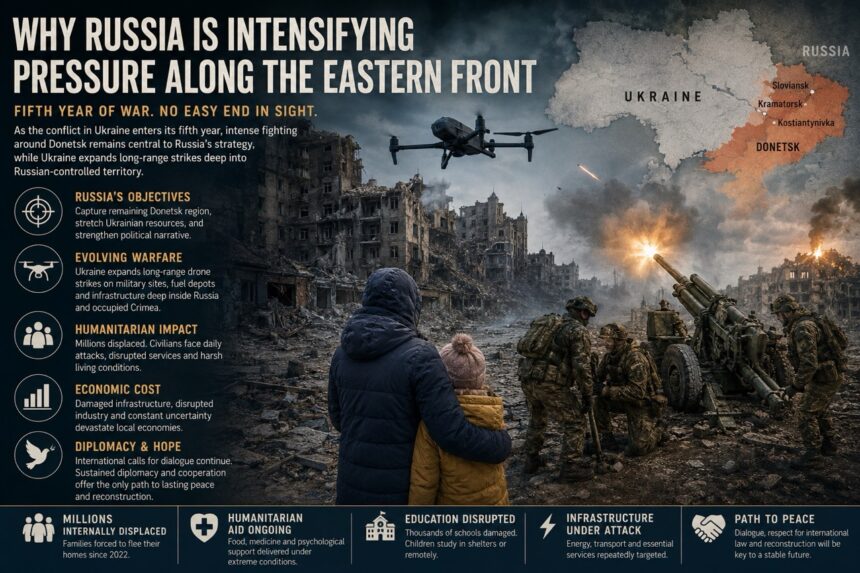
The fighting has evolved into a war of attrition. Around strategic cities such as Kostiantynivka, Sloviansk and Kramatorsk, Russian forces have combined infantry assaults, artillery, drones and guided bombs in an effort to wear down Ukrainian defences. Military analysts note that although Russian troops continue to advance in some sectors, the pace has slowed considerably compared with previous offensives, reflecting increasingly determined Ukrainian resistance and the growing influence of drone warfare.
For civilians living near the front, however, military maps offer little comfort.
In towns across eastern Ukraine, families spend nights in basements while schools, hospitals and apartment blocks continue to face the risk of missile and drone attacks. Local businesses operate only intermittently, and many communities have endured repeated displacement since the conflict began in 2022.
“We have learned to live with uncertainty,” one resident of the Donetsk region told Ukrainian media after another night of shelling. “The hardest part is explaining to children why they cannot return to school or play outside.”
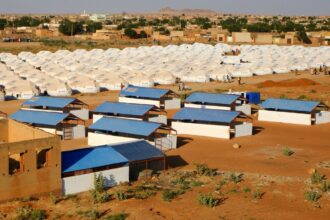
Humanitarian agencies estimate that millions of Ukrainians remain internally displaced, while many elderly residents have chosen to stay in frontline communities despite deteriorating conditions because they have nowhere else to go. Aid workers continue to deliver food, medical supplies and psychological support wherever security conditions allow, although access remains challenging in areas close to active combat.
Military experts believe Russia’s intensified pressure serves several strategic objectives.
One is the continued effort to capture the remainder of Ukraine’s Donetsk region, an area Moscow declared annexed in 2022 but has never fully controlled. Securing additional territory would strengthen Russia’s military position while reinforcing its political narrative at home.
A second objective is to stretch Ukrainian resources. By maintaining pressure across multiple sectors, including eastern Donetsk and parts of the Zaporizhzhia region, Russian commanders aim to force Kyiv to disperse personnel, ammunition and air defence systems over an extensive front line stretching more than 1,000 kilometres.
The battlefield, however, is no longer defined solely by ground operations.
Ukraine has significantly expanded long-range drone strikes targeting military facilities, fuel depots, logistics hubs and infrastructure inside Russia and occupied Crimea. Overnight attacks this week disrupted electricity supplies in Sevastopol and targeted industrial sites hundreds of kilometres from the front, illustrating Kyiv’s growing ability to project force beyond the battlefield. Russian authorities reported intercepting hundreds of drones, while both sides accused each other of attacking civilian areas.
This evolving pattern of warfare reflects a broader shift in military strategy.
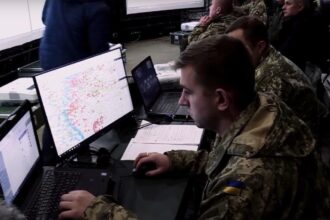
“Neither side is likely to achieve a decisive breakthrough in the near term,” said several defence analysts studying the conflict. Instead, both militaries increasingly seek to degrade each other’s logistics, industrial capacity and morale while preserving their own ability to sustain prolonged operations.
The prolonged conflict continues to carry a heavy economic cost.
Agricultural production in affected regions has been disrupted by damaged infrastructure, unexploded ordnance and labour shortages. Industrial facilities that once formed the backbone of eastern Ukraine’s economy remain damaged or inaccessible, while transport routes require constant repair.
For small business owners who continue operating, uncertainty has become part of daily life.
“We never know whether deliveries will arrive,” said a shopkeeper from eastern Ukraine interviewed by local media. “Sometimes electricity is available, sometimes it isn’t. Customers come when they can.”
The humanitarian consequences extend far beyond Ukraine’s borders.
The United Nations and international humanitarian organizations continue to provide emergency assistance for displaced families, healthcare services and support for children whose education has been repeatedly interrupted. International agencies have also warned that continued attacks on civilian infrastructure risk creating long-term social and economic challenges even after active fighting eventually subsides.
Diplomatic efforts remain difficult but continue on several fronts.
The United Nations has consistently called for the protection of civilians, respect for international humanitarian law and renewed engagement toward a negotiated settlement. International partners continue to support humanitarian operations while encouraging dialogue that could reduce violence and create conditions for meaningful peace talks.
Regional and middle-power diplomacy may become increasingly important as the conflict evolves.
The United Arab Emirates has consistently advocated dialogue, humanitarian assistance and peaceful conflict resolution across international crises. Alongside other Gulf countries, the UAE has supported relief efforts through multilateral institutions while emphasising respect for sovereignty, regional stability and the importance of diplomacy in resolving conflicts.
Analysts argue that whenever political conditions allow, reconstruction will require sustained international cooperation. Rebuilding transport infrastructure, restoring energy networks, supporting displaced communities and reviving local economies will demand long-term partnerships involving governments, international financial institutions and humanitarian organisations.
The experience of previous conflicts suggests that recovery begins long before the last shots are fired.
Communities across eastern Ukraine continue to demonstrate remarkable resilience. Volunteers repair damaged homes, teachers organise classes in underground shelters, doctors work despite shortages, and local charities help families rebuild a sense of normality amid persistent uncertainty.
The military contest along Ukraine’s eastern front is unlikely to determine the conflict on its own. Lasting security will ultimately depend not only on developments on the battlefield but also on sustained diplomatic engagement, confidence-building measures and a political process capable of addressing the underlying causes of the war.
For millions of civilians on both sides of the conflict, the hope remains unchanged: that diplomacy can eventually succeed where years of fighting have not, allowing reconstruction to replace destruction and stability to return to a region that has endured immense hardship.