Almost every night this summer, Kyiv’s residents have learned to listen for the difference between a drone’s engine and the silence before a ballistic missile hits. That silence may now be shaping Vladimir Putin’s calculus on whether to negotiate at all.
Retooling the Missile Arsenal
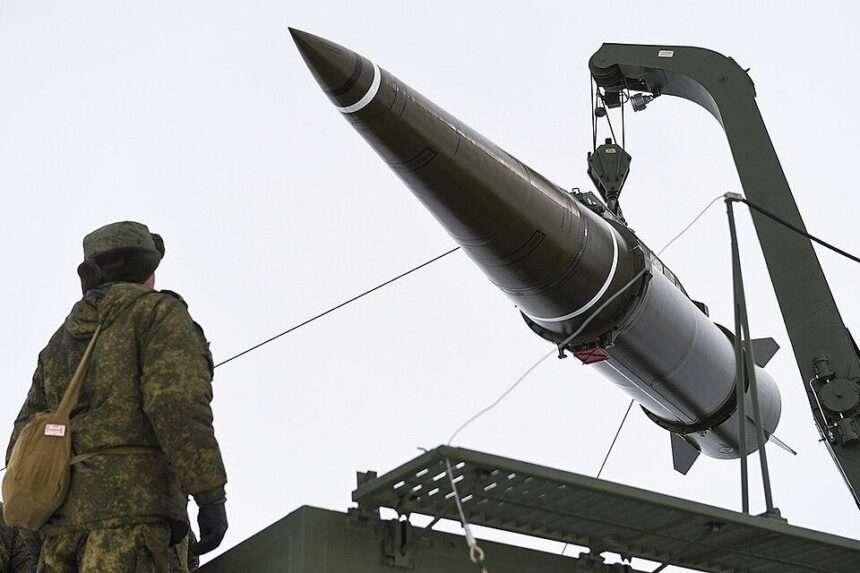
Russia has quietly abandoned two missile programs it once relied on. Production of the Kinzhal and Kh-32 has been halted since April, according to Ukrainian military intelligence deputy chief Vadym Skibitsky, after repeated combat failures to fix their accuracy. Kinzhal’s deviation from target reportedly runs 30 meters or more, against a required 5–7 meters. Rather than keep chasing that fix, Moscow redirected the freed resources toward missile types it already knows can penetrate Ukraine’s depleted Patriot interceptor stock: Iskander-M ballistic missiles and missiles launched from S-400 systems on ballistic trajectories, Kyiv Post reported.
The payoff shows in the numbers. By August 3, seven months into the year, Russia had already met its annual production targets for Zircon and upgraded Oniks missiles, building 33 Zircons and 60 Oniks. Ballistic missile launches climbed from 61 in April to 107 in May and 134 in June, reaching a record pace through July. Only 29% of ballistic missiles launched in July were intercepted, Skibitsky said, meaning roughly three of every four got through.
The tempo itself has shifted. “They used to conduct attacks every 10 days. Then it became once a week. Now it is even more frequent,” Skibitsky said. Russia plans to manufacture around 11,000 attack drones in August alone, with production increasingly weighted toward faster, turbojet-powered Geran-4 and Geran-5 models, which accounted for roughly half the drones used in at least one recent attack and require different, harder-to-supply interceptors than older piston-engine Shaheds. Ukrainian intelligence assesses Moscow is simultaneously building a missile reserve ahead of the fall and winter campaign, meaning Ukraine could face sustained strikes even if individual attacks shrink in size.
A Grid With No Slack
President Volodymyr Zelensky said on August 8 that Ukraine now has effectively no power plants left undamaged by prior Russian strikes. Russian attacks have separately destroyed numerous railway stations, hospitals, universities and civilian enterprises, according to the Institute for the Study of War (ISW), which expects Russia to open its 2026–2027 strike campaign against Kyiv City’s energy infrastructure within weeks, timed to exploit the same interceptor shortage driving the missile production shift.
ISW notes that it remains unclear how many of the facilities damaged last winter Ukraine has managed to repair, and therefore how many energy targets remain available for Russia to strike again this year. That uncertainty cuts both ways: it could mean Russia finds fewer intact targets, or it could mean Ukraine’s repair crews are racing an incomplete list against a clock that resets every winter.
The pattern was already visible overnight on August 10 into 11: ballistic missiles struck Kyiv near a children’s hospital in the Shevchenkivskyi district, while a combined Zircon, Iskander and drone barrage also hit Zaporizhzhia. ISW frames this as a deliberate campaign logic, not isolated raids, but a bet that Russia can destroy infrastructure faster than Ukraine and its Western partners can repair or defend it.
Diplomacy Frozen by Design
That logic extends directly into Moscow’s position on ending the war. Russian Deputy Foreign Minister Mikhail Galuzin said on August 9 that Russia will not agree to a “freeze” in the war unless what Moscow calls the conflict’s “root causes” are resolved, reiterating the demand that has anchored Russian diplomacy since 2022, Kyiv Post reported. He also accused Kyiv of having “completely lost touch with reality.”
ISW’s assessment ties these threads into a single strategy. Putin’s “theory of victory” rests on the belief that Russia can win a war of attrition by keeping the initiative on the battlefield while continuously striking Ukrainian cities and infrastructure, wearing down both Ukraine’s defenses and Western resolve at once. As long as the interceptor shortfall persists, ISW warns, Moscow has no incentive to negotiate seriously, a dynamic that risks extending the war into 2027 rather than toward a settlement.
Winter has not yet arrived, but its outline is already forming over Kyiv: in retooled missile lines choosing precision over experimentation, in a power grid with no undamaged plants left to lose, and in a Kremlin betting that silence, not diplomacy, will finally break Ukraine’s resolve.