Diplomacy has returned to the Gulf. Violence has not. As American and Iranian negotiators discuss reopening the Strait of Hormuz after months of war, Iranian-backed armed groups continue attacking commercial shipping hundreds of kilometres away in the Red Sea. The contrast highlights an increasingly important feature of Middle Eastern security: even when governments seek de-escalation, the armed movements they spent decades cultivating do not necessarily follow.
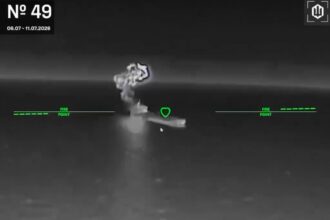
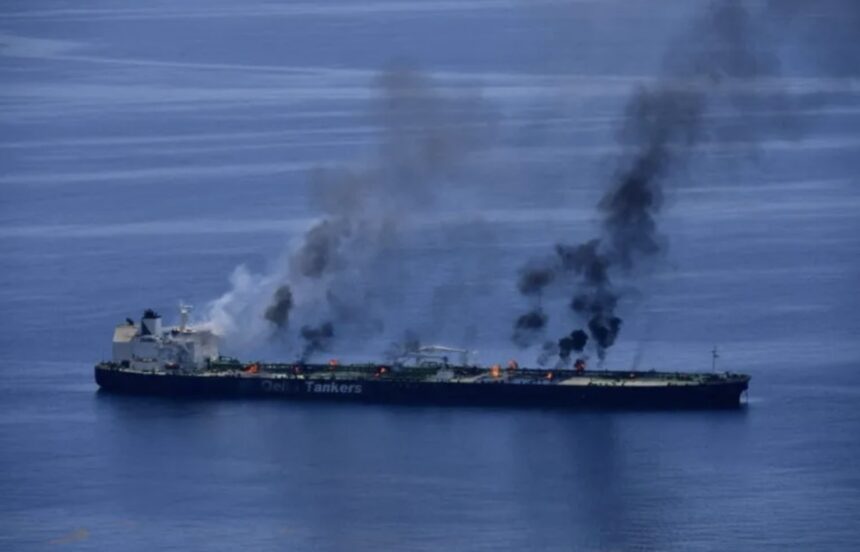
That contradiction was on display again this week. While President Donald Trump told Fox News that Washington and Tehran had held “very good discussions” during an all-day negotiating session aimed at reopening the Strait of Hormuz and ending the five-month conflict, Yemen’s Houthi movement said it had struck the Saudi oil tanker Wafa with ballistic missiles near Yanbu. A day earlier, the Indian-flagged cargo vessel MSV Faize Noore Oliya capsized after being struck by a projectile in the Red Sea. Yemen’s internationally recognized government blamed the Houthis, although the group has not claimed responsibility for that attack. Taken together, the incidents illustrate a growing paradox: diplomacy between states can advance while violence linked to their regional partners continues largely uninterrupted.
This apparent disconnect is more than a coincidence. It reflects a structural change in how proxy warfare operates. For decades, regional security was understood primarily through the actions of states. Iran armed, financed and trained allied organizations to project influence while reducing the risks of direct confrontation, and improvements in relations with Tehran were widely expected to reduce violence across the network it supported. That assumption is becoming less reliable because many of these organizations have evolved into powerful political and military actors with their own constituencies, institutional interests and strategic calculations. Even when their patrons seek de-escalation, the movements they helped build may have compelling reasons not to.
The consequences extend well beyond the latest attacks in the Red Sea. Agreements reached between governments may reduce the likelihood of direct interstate conflict, yet they no longer automatically translate into stability on the ground once armed organizations develop enough political, financial and military resilience to pursue objectives of their own. That gap increasingly separates the optimism surrounding negotiations in Muscat from the realities unfolding at sea.
From instruments to strategic actors
Iran’s so-called Axis of Resistance – an informal network of armed groups aligned with Tehran across Lebanon, Iraq, Syria and Yemen – has never functioned as a unified military alliance under centralized command. It is better understood as a collection of organizations whose relationships with Iran differ in depth, dependence and purpose. Some remain heavily reliant on Iranian funding, weapons and political guidance, while others have spent years building domestic institutions, local legitimacy and indigenous military-industrial capacity.
The Houthis illustrate this evolution particularly well. What began as a local insurgency in northern Yemen has become the de facto governing authority across much of the country’s north, complete with taxation systems, security institutions and domestic missile and drone production. UN sanctions monitors and maritime security analysts have documented how the movement increasingly finances itself through taxation, commercial activity and fees connected to territory under its control. Those revenue streams appear to have broadened the group’s financial base, reducing – but not eliminating – its dependence on Iranian support while allowing it to sustain increasingly sophisticated military capabilities.
Military capability alone, however, does not make a proxy autonomous. What changes the relationship is the gradual accumulation of domestic political legitimacy, independent revenue, bureaucratic institutions and years of combat experience. Together, those assets reduce a sponsor’s leverage even when strategic alignment remains intact.
That transformation means Houthi operations increasingly serve multiple objectives simultaneously. Their campaign against Saudi shipping reinforces Iran’s broader regional posture while also strengthening the movement’s domestic legitimacy, demonstrating military relevance and increasing its leverage within Yemen’s own conflict. Those incentives do not disappear simply because Washington and Tehran resume negotiations.
The same pattern, albeit with important differences, can be observed elsewhere. Hezbollah evolved from an Iranian-backed militia into Lebanon’s dominant military force and one of its most influential political actors. Many Iraqi militias that emerged during the war against ISIS developed their own leadership structures, economic interests and relationships with Baghdad that occasionally diverged from Tehran’s preferences. None of these organizations severed ties with Iran, but all became increasingly capable of making decisions based on local political realities as well as regional strategy.
The principal-agent problem
Political scientists have long described this evolution through the principal-agent problem. A sponsoring state delegates military tasks to an armed group in exchange for funding, weapons, training and political backing. During the early stages of that relationship, the sponsor usually enjoys significant leverage because it controls the resources necessary for the group’s survival.
Over time, successful proxies often become less dependent. They recruit locally, establish political institutions, generate their own revenue, build indigenous military capabilities and gain legitimacy through years of conflict. As those domestic foundations grow stronger, sponsors retain influence but gradually lose the ability to shape every operational decision.
History suggests this trajectory is common rather than exceptional. Hezbollah’s growing political role after Israel’s withdrawal from southern Lebanon in 2000 gave it priorities rooted increasingly in Lebanese politics as well as regional confrontation with Israel. Iraqi Popular Mobilization Forces expanded from wartime formations into permanent political and security actors after ISIS’s territorial defeat. The Houthis have followed a similar path during Yemen’s civil war, transforming from a local insurgency into an administration that governs millions of people. In each case, Iranian support remained important, but local interests became progressively more significant.
This evolution creates a persistent dilemma for sponsoring states. Attempting to tighten control risks weakening a valuable partner or provoking internal divisions. Allowing greater autonomy, meanwhile, increases the possibility that local decisions will complicate wider diplomatic objectives.
Some analysts argue that Iran has increasingly accepted this looser model of proxy management, prioritizing strategic alignment over day-to-day operational control. Others caution that what appears to be greater autonomy may simply reflect the practical realities of managing partners operating in vastly different political environments. Distinguishing between deliberate decentralization and operational necessity remains difficult because Tehran rarely acknowledges the extent of its relationships publicly.
The result is not a complete loss of Iranian influence. Tehran continues to provide military technology, ideological support and strategic coordination across the network. But influence should not be confused with command. In contemporary proxy warfare, strategic alignment increasingly substitutes for direct operational control.
Diplomacy without peace
This distinction helps explain why renewed U.S.-Iran diplomacy and continued Houthi attacks are not mutually exclusive.
The current negotiations stem from the conflict that erupted in late February, when U.S. and Israeli strikes on Iranian targets triggered a five-month confrontation that disrupted shipping through the Strait of Hormuz. Although the parties later agreed to an interim framework for negotiations, implementation faltered amid renewed tensions before Oman revived mediation efforts to reopen the waterway.
Those negotiations primarily concern interstate issues: maritime security, sanctions, navigation through Hormuz and preventing another direct military confrontation between Washington and Tehran. The Houthis, by contrast, operate within a political and military environment shaped by Yemen’s unresolved civil war, regional rivalries and their own strategic ambitions. Even if Tehran concludes that reducing tensions with Washington serves its interests, the Houthis may still calculate that continued pressure on Saudi shipping strengthens their domestic legitimacy, improves their negotiating position inside Yemen or enhances their own regional standing.
That suggests future diplomacy may increasingly resemble conflict management rather than conflict resolution. Agreements between governments may reduce the risk of war between states while leaving violence by non-state actors largely intact.
A changing regional security landscape
The Middle East is not witnessing the end of proxy warfare. It is witnessing the maturation of proxy organizations into enduring political and military actors whose interests increasingly extend beyond those of the states that helped create them. Iran remains their most important external patron, but sponsorship today is less synonymous with command than it was a generation ago.
That shift has profound implications for regional security. During much of the twentieth century, understanding the Middle East largely meant understanding governments. Today it increasingly requires understanding the armed movements that operate alongside them – organizations with enough political legitimacy, military capability and institutional resilience to shape regional stability in their own right.
Future diplomacy may succeed in preventing wars between states while failing to prevent wars fought in their shadow. Whether negotiations over the Strait of Hormuz ultimately produce lasting stability will therefore depend not only on what is agreed in Muscat or Washington, but also on whether the increasingly capable armed movements that define today’s regional conflicts choose to follow the path their sponsors have set – or continue carving one of their own.